
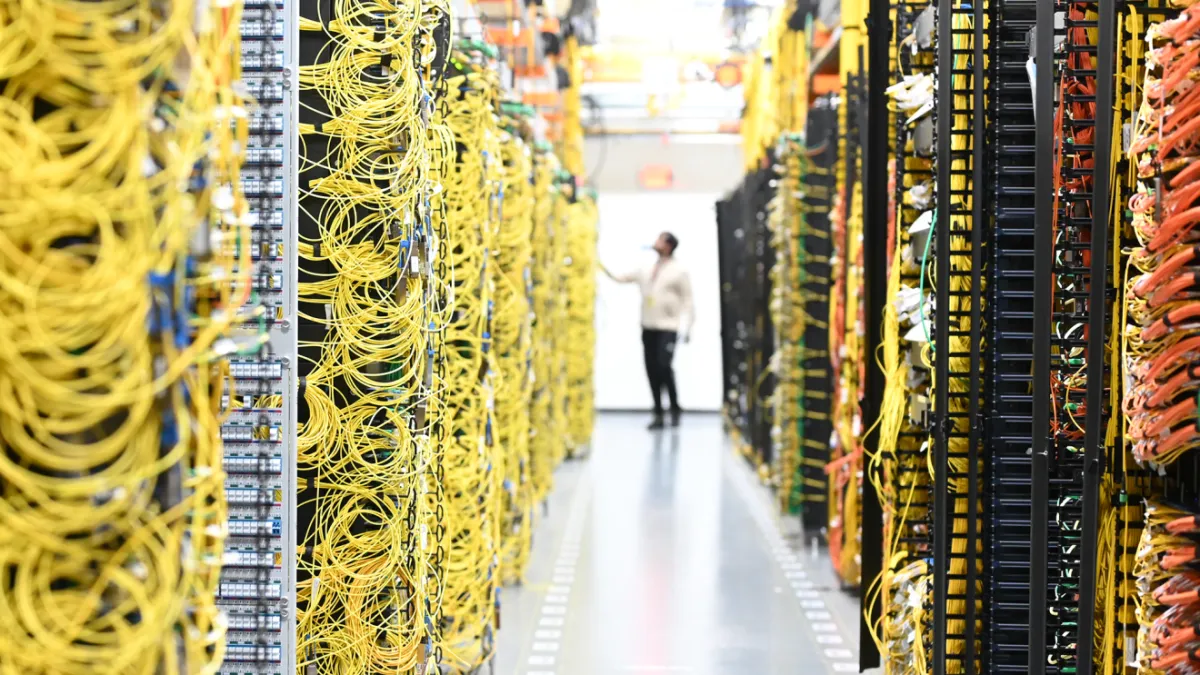
China has released its latest five-year plan, and artificial intelligence isn't listed as an industry. It's listed as infrastructure — alongside roads, power grids, and telecommunications. That's not a rhetorical distinction. It's a strategic one, and it changes the frame for everything that follows in the global AI race.
What China's Plan Actually Says
Beijing's economic blueprint calls for deep AI integration across manufacturing, healthcare, education, and public administration. The plan ties AI adoption directly to national productivity, economic competitiveness, and technological self-reliance — framing it not as a sector to invest in, but as a capability to embed everywhere simultaneously. AI, robotics, quantum computing, biotech, and next-generation networks like 6G all appear across the roadmap as horizontal capabilities that other industries plug into, rather than standalone bets.
This is what "AI as national infrastructure" looks like when a government operationalizes it. The United States has produced executive orders, funding bills, and policy white papers. China has produced a five-year plan with implementation timelines and sector-by-sector integration mandates. The difference in ambition framing — not necessarily in outcomes — is significant.
What This Means for the U.S. AI Ecosystem
The American AI industry has spent the last three years operating in a policy vacuum that oscillated between regulatory anxiety and laissez-faire acceleration. The Trump administration's recent directive requiring AI vendors to permit "any lawful" use of their models in civilian government contracts signals a further tilt toward permissive deployment over guardrails — in direct contrast to the EU's regulatory posture and, in different ways, China's state-directed integration model.
For American AI companies — particularly the ones building at the infrastructure layer — China's five-year plan creates a specific kind of competitive pressure. It's not about model capability. DeepSeek demonstrated in January 2025 that the capability gap between American frontier labs and Chinese open-source models is narrower than the industry wanted to believe. The harder competition is about deployment scale and state coordination. A government that mandates AI integration across its entire industrial base — with procurement power, data access, and policy alignment behind that mandate — is a different category of competitor than a private market where adoption is optional.
For startups and chipmakers, the practical read is: more state-backed Chinese competition is coming, across more layers of the stack, more coordinated than before.
The Parallel Story: Apple, Google, and Siri's Reinvention
Stateside, Apple has confirmed that a fundamentally rebuilt, AI-powered version of Siri is targeting a March 2026 release alongside iOS 26.4. The new Siri runs on Google's Gemini model through Apple's Private Cloud Compute architecture — a partnership that would have seemed absurd two years ago, and that tells you everything about how quickly the AI landscape has forced realignments even between the industry's oldest rivals.
The new Siri promises "on-screen awareness" and cross-app integration — capabilities that put it meaningfully closer to the kind of context-aware assistant that AI labs have been demoing for two years. Whether it delivers on that promise in daily use is the question that separates an interesting product announcement from an actual shift in how people interact with their devices.
The Larger Pattern
Put the China plan and the Apple-Google Siri deal next to each other and a single theme emerges: AI in 2026 is no longer a technology story. It's a geopolitical strategy story, a corporate alliance story, and an infrastructure story — simultaneously. The companies and countries that treat it as any one of those things in isolation are already behind the ones that understand all three are in play at once.
Comments