
Last night at the Dolby Theatre, Michael B. Jordan stood at the podium holding his first Academy Award, thanking his mother, his father, Ryan Coogler, and every Black actor who carved the path before him. Sidney Poitier. Denzel Washington. Halle Berry. Jamie Foxx. Forest Whitaker. Will Smith.
He didn't mention Wallace. But Wallace was there.
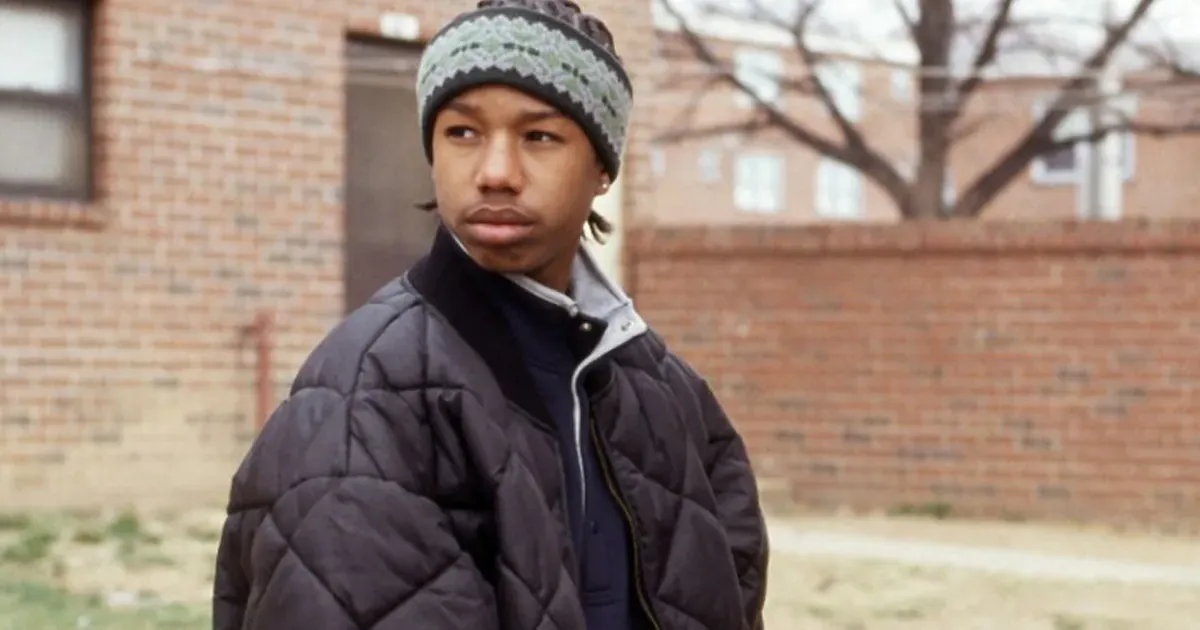
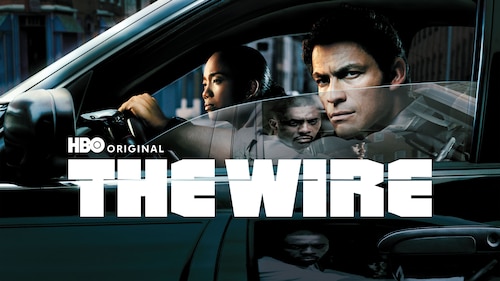
Before Adonis Creed. Before Erik Killmonger. Before Smoke and Stack — the twin brothers at the center of Sinners that finally delivered Jordan his Oscar — there was Wallace. A teenage drug dealer in West Baltimore. A kid who could count. A kid who wasn't built for the corners but had nowhere else to go. Michael B. Jordan played him in the first season of The Wire in 2002, and the performance was quiet and devastating in ways that television at the time didn't quite know what to do with.
Wallace got you before you even realized it. That's what Jordan does.
The through-line from Wallace to Smoke and Stack is not just a career arc. It's a study in what happens when a performer locks in — methodically, patiently, over two-plus decades — and refuses to let the industry define the ceiling. Jordan went from a teenager on The Wire to a teenager on Friday Night Lights to a franchise cornerstone to a director to a producer. Each role wasn't just a job. It was a deliberate brick in an architecture that only makes sense now that you can see the whole building.
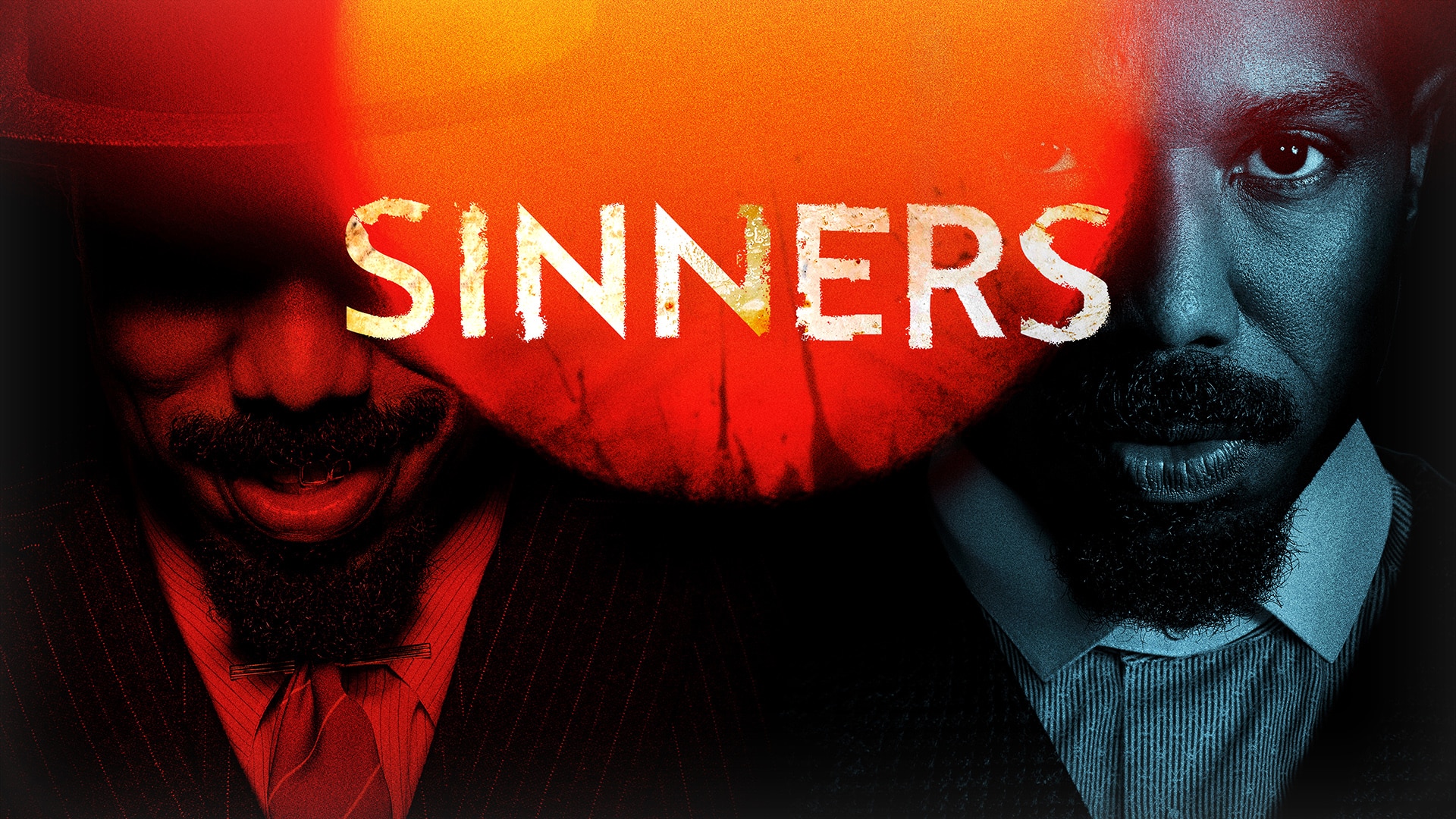
Sinners is a 1930s Mississippi supernatural horror film — Ryan Coogler's most ambitious and fully realized work — where Jordan plays identical twins Smoke and Stack, who return home after World War I, open a juke joint, and find themselves in a confrontation with vampires that functions as a thinly veiled allegory for the forces historically arrayed against Black prosperity in the American South. Jordan plays two distinct men inhabiting the same body and bloodline, and the performance is a technical achievement as much as an emotional one. The Academy of Motion Picture Arts and Sciences gave it a record 16 nominations. It won four, including Best Actor.
Jordan beat out Timothée Chalamet, Leonardo DiCaprio, Ethan Hawke, and Wagner Moura. He was not the frontrunner for most of the season — Chalamet led with critics, Moura won the Golden Globe, Aramayo took the BAFTA. Jordan's turn came at the Actor Awards, formerly known as the SAG Awards, right in the middle of Oscar voting. When the industry itself voted for him, it was a signal. Actors recognize what other actors are doing when the cameras are rolling.
Wallace recognized it too, in the way only a character can. There's a version of the story where Jordan takes a different path after The Wire — chases studio safety, plays the sidekick, softens the edges. Instead, he played a kid shot by a corrupt cop in Oakland (Fruitvale Station). He played the underdog in the boxing ring (Creed). He played the villain with a point (Black Panther). Every character he chose had something at stake beyond the plot. Something structural. Something about what it costs to be who you are in a world designed to limit that.
That's the Wallace inheritance. A kid on a corner who could see exactly what was happening to him and couldn't find the exit in time. Jordan found the exit, and then he built a door for other people to walk through, too.
On stage Sunday night, he put it plainly: "I stand here because of the people that came before me. To be amongst those giants, amongst those greats, amongst my ancestors, amongst my guys."
Twenty-four years after Wallace, that sentence lands differently. It's not just gratitude. It's a map of where the work went and what it was always for.
He locked in. The Oscar was just the receipt.




Comments