
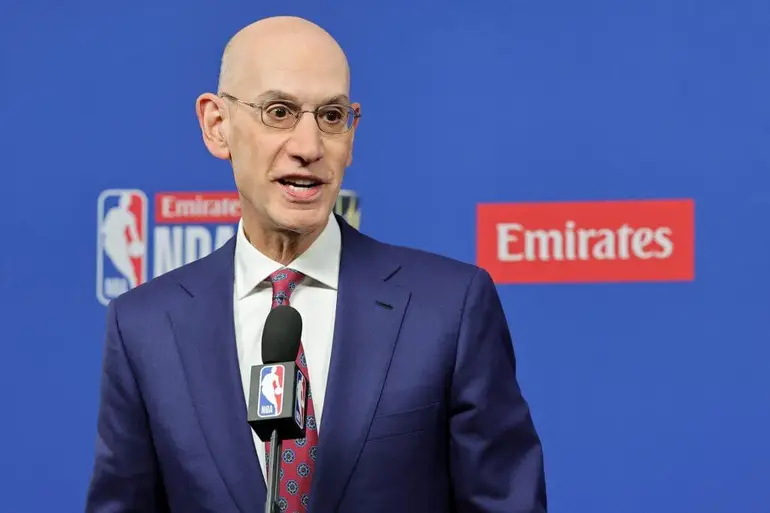
The NBA is officially in expansion mode. The league's Board of Governors voted unanimously on Wednesday to explore bids for new franchises in Las Vegas and Seattle, clearing the first major procedural hurdle toward a 32-team league. All 30 owners voted in favor.
The numbers alone tell you how serious this is. Industry executives project that bids for each franchise will land in the $7 to $10 billion range — figures that would have been unthinkable just a few years ago. For context, the Los Angeles Lakers sold for $10 billion in 2025, still the largest sum ever paid for a U.S. professional sports franchise. The Boston Celtics fetched $6.1 billion before that. The expansion teams, before playing a single game, are expected to be valued in the same neighborhood as legacy franchises that took decades to build.
The two cities aren't interchangeable, and neither is what expansion means for each of them.
For Seattle, this is a homecoming that's been two decades in the making. The SuperSonics left after the 2007-08 season when a new ownership group relocated the franchise to Oklahoma City, where it became the Thunder. The Thunder have since won a championship and built their own identity — but they don't claim the Sonics' history as their own, and that history, the banners, the records, the legacy, would transfer back to Seattle if a new franchise is awarded. Dejounte Murray, who grew up watching the Sonics, said it simply: "It's a basketball city, basketball culture, so it's mandatory I think that they get it back over there." The Kraken's ownership group has already moved — forming One Roof Sports and Entertainment and acquiring majority control of Climate Pledge Arena, the likely home for a returning NBA franchise.
For Las Vegas, the vote opens the door to the first-ever NBA franchise in the city. Las Vegas has spent the last decade proving it can sustain major professional sports — the Golden Knights won the Stanley Cup, the Aces are three-time WNBA champions, the Raiders relocated from Oakland, and the A's are arriving in 2028. The formula is becoming a blueprint, and the NBA is the last major league yet to plant a flag.
Wednesday's vote is the first of two required steps. A final vote, expected as soon as the July Board of Governors meeting during Las Vegas Summer League, would need the same 23-of-30 threshold to pass and would formally authorize the expansion transactions. The league and the two cities are targeting a 2028-29 debut, which would bring Seattle back exactly 20 years after the Sonics' departure.
There are still structural questions to work through: how an expansion draft gets constructed, what salary cap treatment new franchises receive, and how the conferences realign to 16 teams each. League executives expect either the Minnesota Timberwolves or Memphis Grizzlies to shift to the Eastern Conference when Seattle and Las Vegas join the West.
Not every owner is ready to rubber-stamp the final vote. Some are hesitant about diluting their equity from 1/30th to 1/32nd and want to see the actual bid numbers before committing. That's a legitimate concern when you're talking about a piece of a $10 billion asset. But the broader momentum is clear. Commissioner Adam Silver said in December 2025 that the league would decide on expansion in 2026. That decision is arriving right on schedule.
The NBA hasn't expanded since the Charlotte Bobcats joined in 2004. Twenty-two years later, the league is preparing to add not one market, but two of the fastest-growing cities in the country. The era of the 30-team NBA is almost over.
Existing franchises are being marked up on the same math — Rogers valued its consolidated Toronto sports group above US$18.25 billion ahead of a minority stake sale.

Comments