
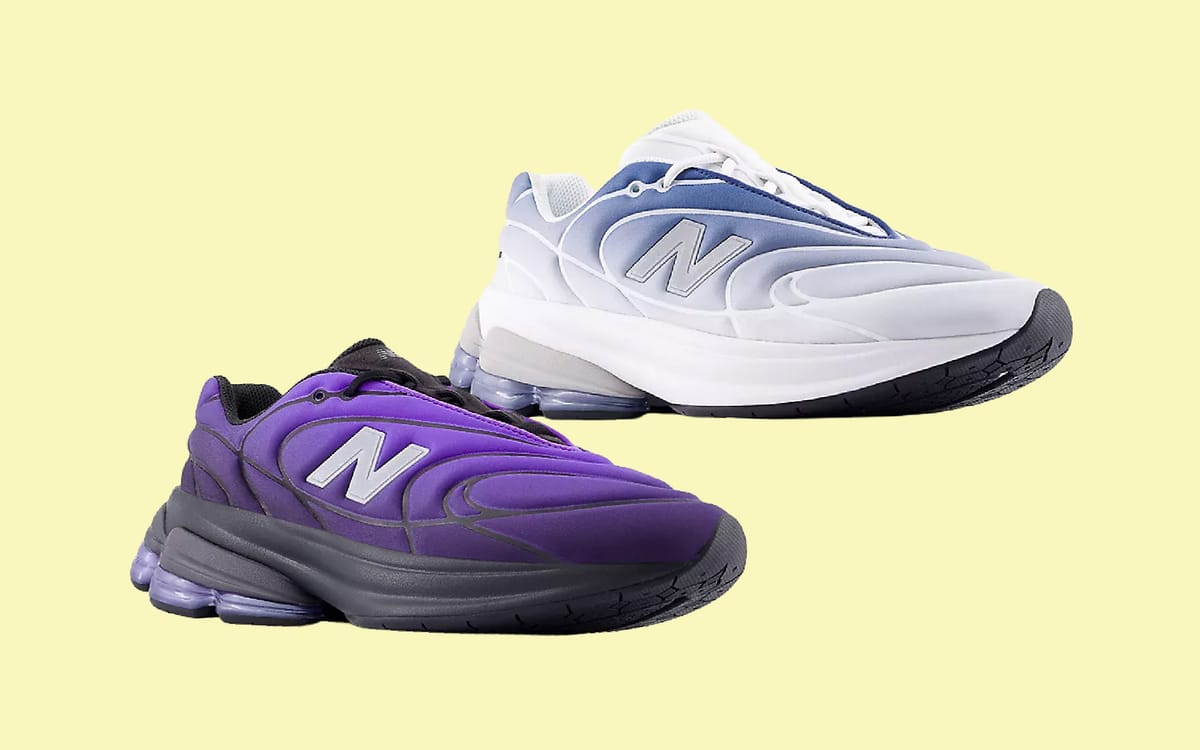
Three years. That's how long New Balance designer Joe Walsh and his team spent developing the 5030 — a shoe that, by Walsh's own description, you should recognize without being able to say exactly why.
That's not a design failure. That's the whole point.
The 5030 dropped in April 2026 as the latest entry in New Balance's quietly expanding ABZORB family, joining the 2000 and 2010. All three share the same proprietary cushioning platform. All three share a visual language in the midsole. And all three are New Balance trying to answer the same question: what does a running shoe look like when performance logic and cultural appetite are given equal weight?
The 530 Connection
The 5030 traces back to the 530 — a mesh runner from 1992 that became a sleeper hit on social media over the last several years, beloved for its affordability, its clean lines, and the kind of low-key cool that doesn't announce itself. It's the shoe people wear when they don't need to signal that they care about sneakers but clearly do.
Walsh's team hadn't done an "expressive take" on the 530 yet. The 5030 is that take. The wavy contoured lines across the upper echo the original's form while pushing into something distinctly contemporary. There's an oval C-shape that appears throughout. The overall silhouette is minimal — less construction, more intention.
Paris Before the People
The 5030 made its public debut not at a retail launch but at Paris Fashion Week, where European retailer Slam Jam unveiled the first sample in a metallic silver colorway. That preview is a tell. New Balance isn't positioning this shoe for the sneaker news cycle. It's positioning it for the room that sets the tone the cycle eventually follows.
The April 2026 retail launch brought two colorways — purple mesh and sky blue/white — at $120. A black/white version follows in June.
What New Balance Is Actually Doing
The ABZORB family is a design system, and the 5030 is its newest node. New Balance is betting that the same instinct that made the 530 a cultural staple — a shoe you reach for because it's right, not because someone told you to — can be rebuilt and extended with modern proportions and better cushioning.
That bet is long. The 530 didn't become culturally relevant on anyone's schedule. But the 5030 is well-positioned for the same kind of slow accumulation. The design has enough logic behind it that it earns its place in the rotation rather than demanding it.
At $120, it's accessible enough to actually get there.


Comments