
Key Points
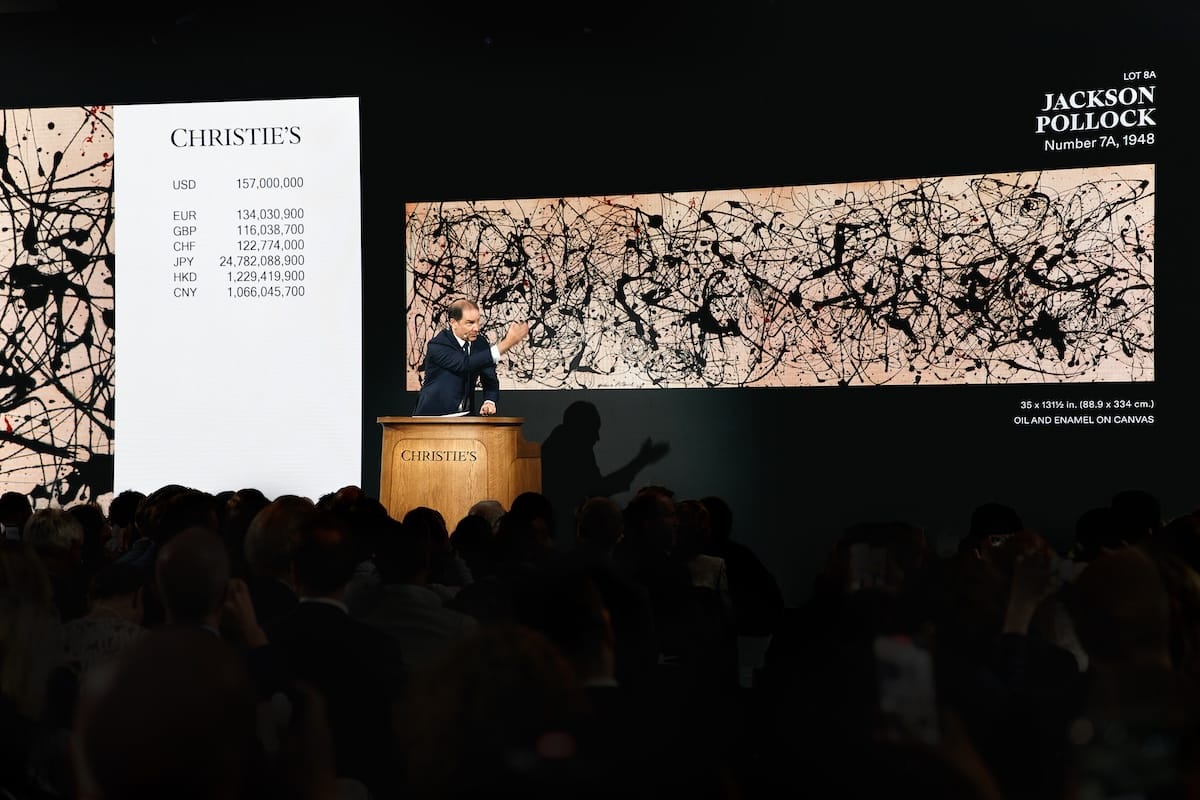
- Jackson Pollock's "Number 7A, 1948" sold for $181.2 million at Christie's on May 18, 2026.
- The price nearly tripled Pollock's previous auction record of $61.2 million.
- The work led the S.I. Newhouse collection; Christie's week totaled about $1.1 billion.
- A Brancusi sculpture sold for $107.6 million, also an artist record.
The top of the art market is not sticky. The middle is. That is the real lesson of Christie's May sales in New York, where a single Jackson Pollock did more business than entire mid-tier auctions and the gap between trophy assets and everything else widened in public.
On May 18, Pollock's "Number 7A, 1948" sold for $181,185,000 with fees at Christie's New York, the top lot of "Masterpieces: The Private Collection of S.I. Newhouse." The number nearly tripled the artist's previous auction record of $61.2 million, set in 2021. The painting is the largest of Pollock's drip canvases, made in 1948 on the floor of his barn studio near East Hampton at the moment his work tipped fully into abstraction.
It did not move alone. Christie's evening sales cleared roughly $1.1 billion across the week — the strongest result for the house since the 2022 Paul G. Allen collection, which made $1.5 billion in a single night. A Constantin Brancusi sculpture sold for $107.6 million, a record for the artist, and a Mark Rothko reset its own benchmark in the same series of sales.
The read underneath the fireworks is narrower than the totals suggest. Records cluster at the very top because a specific kind of buyer — global, liquid, and looking for assets that hold value across currencies — is paying up for the handful of names that function as stores of wealth. Provenance like the Newhouse collection is part of the price; a clean ownership history is collateral. Meanwhile dealers and advisors describe the real middle market, works between roughly $100,000 and $1 million, as still slow, the part of the business where confidence has not returned.
That bifurcation is the story collectors should watch. A masterpiece is now closer to a Treasury bond than a painting in how it is bought, while the layer below — where most artists and galleries actually live — keeps grinding. The same instinct that turns a Pollock into a $181 million instrument is visible in how seriously the art world now treats artists as institutions, from museum-scale shows to Jack White's first gallery exhibition at Damien Hirst's Newport Street Gallery. The trophies keep setting records. The question is whether anything beneath them follows.
Source: ARTnews, Artnet News.


Comments