
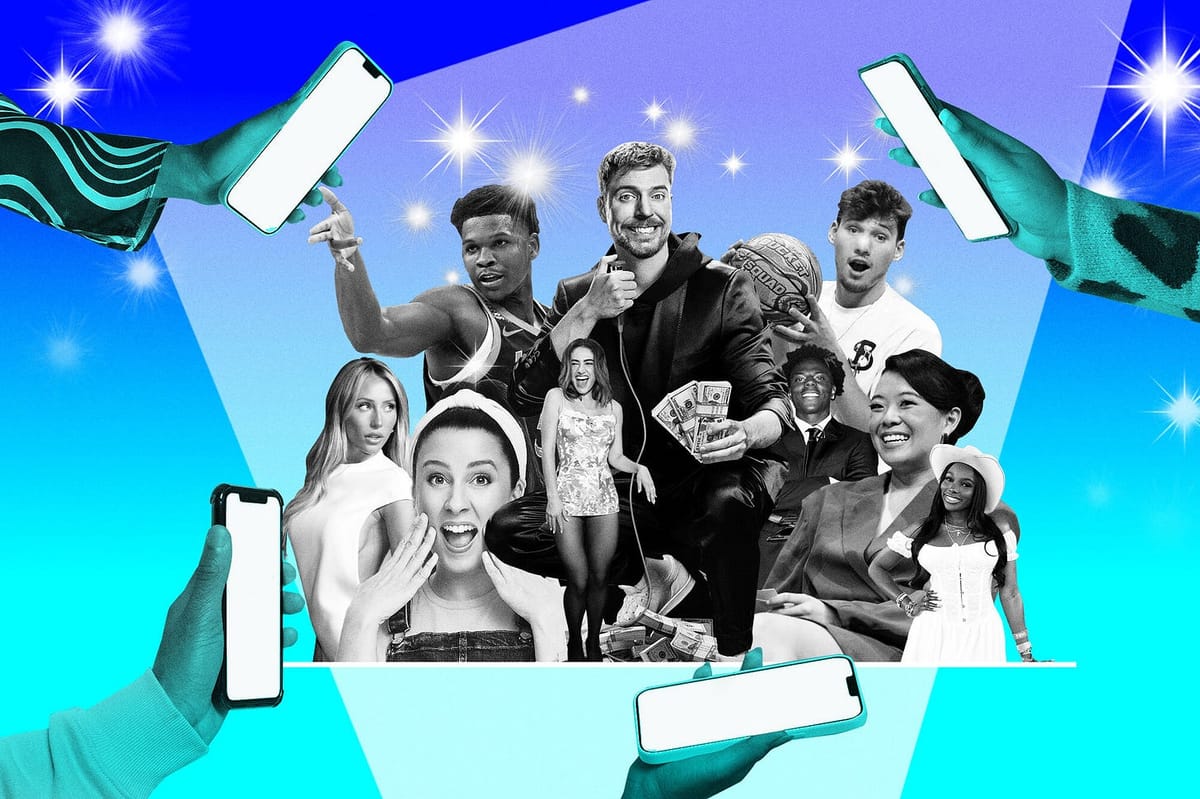
The Ankler just published its annual survey of creator-economy power brokers — agency execs from CAA and Gersh, platform leads from Snap, talent managers running nine-figure businesses — and the headline they led with says everything you need to know about where 2026 is headed: Scale Is Losing Leverage.
Read the full Ankler piece for the operator quotes. The short version: the people who built their careers monetizing reach are now telling you reach is overpriced.
What Changed
For a decade, the creator economy operated on a simple equation. Followers equaled leverage. Leverage equaled brand deals. Brand deals equaled income. The whole machine rewarded creators who could grow audiences quickly and monetize them through sponsored posts at flat fees.
That equation is breaking in three places at once.
First, discovery is being rewired. The algorithmic feeds that built the last generation of creators are no longer optimizing for follower-based reach the way they did in 2019. TikTok's "for you" model trained every other platform to surface content based on signal density, not on who you follow. The result: a creator with 5 million followers and a creator with 50,000 are competing for the same impression on the same post. Follower count became a vanity metric and a starting line, not a moat.
Second, AI is flooding the feed. As Stan's recent 2026 trends report puts it, the volume of synthetic content has crossed the threshold where audiences can't reliably tell what's real. The natural counter-move is a flight to verified humans — creators with documented track records, real opinions, and audiences who know their voice. As the Ankler quotes one operator: AI doesn't make every creator obsolete, it makes trusted creators more valuable.
Third, the monetization model itself is shifting. The flat-fee sponsorship is giving way to hybrid deals — a base fee plus performance bonus, with creators who can prove conversion commanding premiums. The creators with strong owned audiences (newsletters, podcasts, communities, paid memberships) are running real businesses. Everyone else is renting reach and hoping the algorithm doesn't change.
What's Replacing Scale
The Ankler's predictions are specific. 2026 will be the year of the sports creator. The year of the friend group. The year a creator-first company files for an IPO. The year Hollywood and creators stop being separate industries and start co-producing.
What ties them together is community at the cost of reach. A friend group with 200,000 deeply engaged listeners — Trash Taste, the New Heights brothers, Bad Friends — is now worth more in the deal market than a generic lifestyle creator with 4 million followers. The reason is simple: the friend group has a defensible thing. Other creators can copy your content style. They can't copy your relationship with three other people the audience already loves.
The same logic explains why Substack just raised $100M at a $1.1B valuation with Rich Paul and Jens Grede on the cap table. The bet isn't that newsletters are the future. The bet is that direct creator-audience relationships, monetized without algorithmic intermediation, are. Substack happens to be the cleanest infrastructure for that today. Tomorrow it might be something else. The underlying model is the new default.
What This Means If You're Building
Three implications.
One: if you're a creator, audit your audience. How many of your followers would still find you if Instagram shut down tomorrow? Whatever number that is — that's your real audience. Everything else is rented impressions.
Two: if you're a brand running creator deals, stop optimizing your spend on follower count. Start optimizing on conversion data and audience intimacy. A 30,000-subscriber newsletter with a 50% open rate and a buying audience will outperform a 3-million-follower account on most product launches. The deal market is starting to price this correctly. The creators who can prove it are about to get expensive.
Three: if you're investing in this space, the asset class is changing. The play used to be backing creator-led talent agencies and MCNs. The play now is backing infrastructure for owned audience — newsletter platforms, community tools, podcast monetization, paid membership rails. The Ankler's source list — Reed Duchscher, Brent Weinstein, Jade Sherman, Jim Shepherd — is unanimous on this part.
The 2010s creator economy got built on the idea that anyone could go from zero to a million followers and turn that into a career. The 2020s creator economy is being built on the idea that the million followers were never the asset — the relationship with a much smaller, much more loyal audience always was. The power brokers are right: scale is losing leverage. What's gaining it is the only thing the algorithm can't manufacture, which is trust.

Comments