
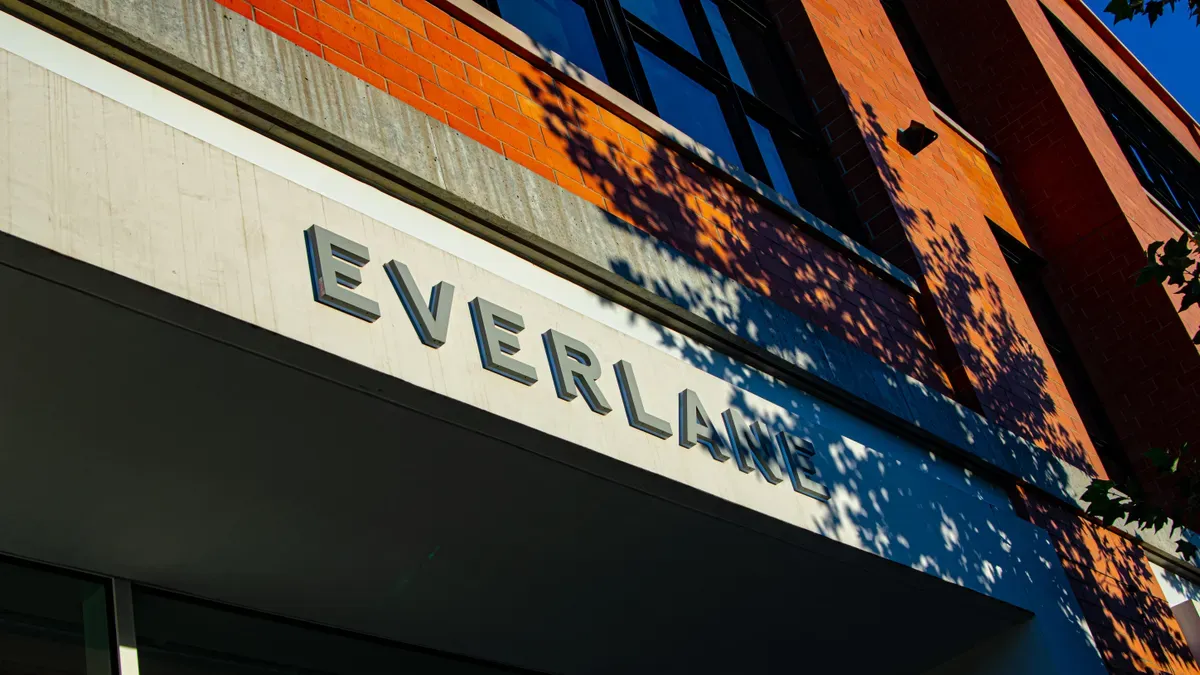
Key Points
- Shein agreed to acquire Everlane in a deal valued at about $100 million.
- Everlane carried roughly $90 million in liabilities; owner L Catterton chose to sell.
- Everlane will operate as an independent subsidiary, CEO Alfred Chang said.
- Holders of common stock receive nothing from the transaction.
The pitch that built Everlane was "Radical Transparency" — show customers the factory, the true cost, the markup, and trust them to pay for honesty. Fifteen years later, that brand has been bought by Shein, the fast-fashion giant that is the closest thing the industry has to transparency's opposite. The deal, valued at roughly $100 million and approved by Everlane's board, is being framed as a rescue. It reads more like a verdict on the direct-to-consumer era.
Everlane's balance sheet explains the sale. The company had accumulated about $90 million in liabilities — a $25 million loan from Gordon Brothers and a $65 million asset-based credit line — and its majority owner, the private-equity firm L Catterton, chose to sell. Founder Michael Preysman started Everlane in 2010 as a transparent-pricing label and handed control to L Catterton years ago. Under the terms, holders of common stock receive nothing. That last detail is the DTC decade in miniature: a cohort of mission-brands that raised on a story, scaled on cheap capital, and never closed the unit economics.
For Shein, the logic is about narrative as much as merchandise. The company has spent years trying to convert regulatory and labor scrutiny into something investors can underwrite ahead of a long-rumored IPO. Bolting on a "sustainable," American, design-led label gives Shein a more balanced story to sell — proof, on paper, that it is more than disposable dresses. Everlane CEO Alfred Chang says the brand will stay independent and keep "our longstanding brand values, sustainability commitments, and exceptional quality." Whether shoppers who bought Everlane precisely because it wasn't Shein accept that is another question.
That is the bind. Everlane's entire equity was the trust of a customer who cared where her T-shirt came from. Selling to the poster child of fast fashion converts that trust into a liability overnight; as GlobalData's Neil Saunders put it, "salvation comes at a price." Sustainability programs can be ported. The signal a brand sends through its ownership cannot.
It fits a pattern playing out across consumer brands, where the founder's vision and the cap table's math keep ending up on opposite sides. Lululemon's recent proxy fight with founder Chip Wilson was a public version of the same collision. Everlane's was quieter and more final: the founder long gone, the private-equity owner out of patience, and a buyer whose name undoes the original pitch. Everlane survives. What it stood for is the thing that got sold.
Source: Retail Insight Network, Retail Dive, ESG Dive.
Comments