

On May 14, Supreme released its Spring 2026 collaboration with SALEM, the electronic duo widely credited with inventing witch house. The collection arrived in U.S. stores and online the same day SALEM released Red Dragon, a surprise 31-track album running an hour and 41 minutes. The pairing of a streetwear drop with a full-length record is the clearest signal yet of how Supreme now treats music: not as soundtrack, but as co-author.
What's in the collection
The capsule is six pieces, built around athletic silhouettes and SALEM's hand-drawn iconography — the duo's "pill" mascot and a recurring star motif. It runs jacket-down-to-socks, so there is an entry point at almost every budget.

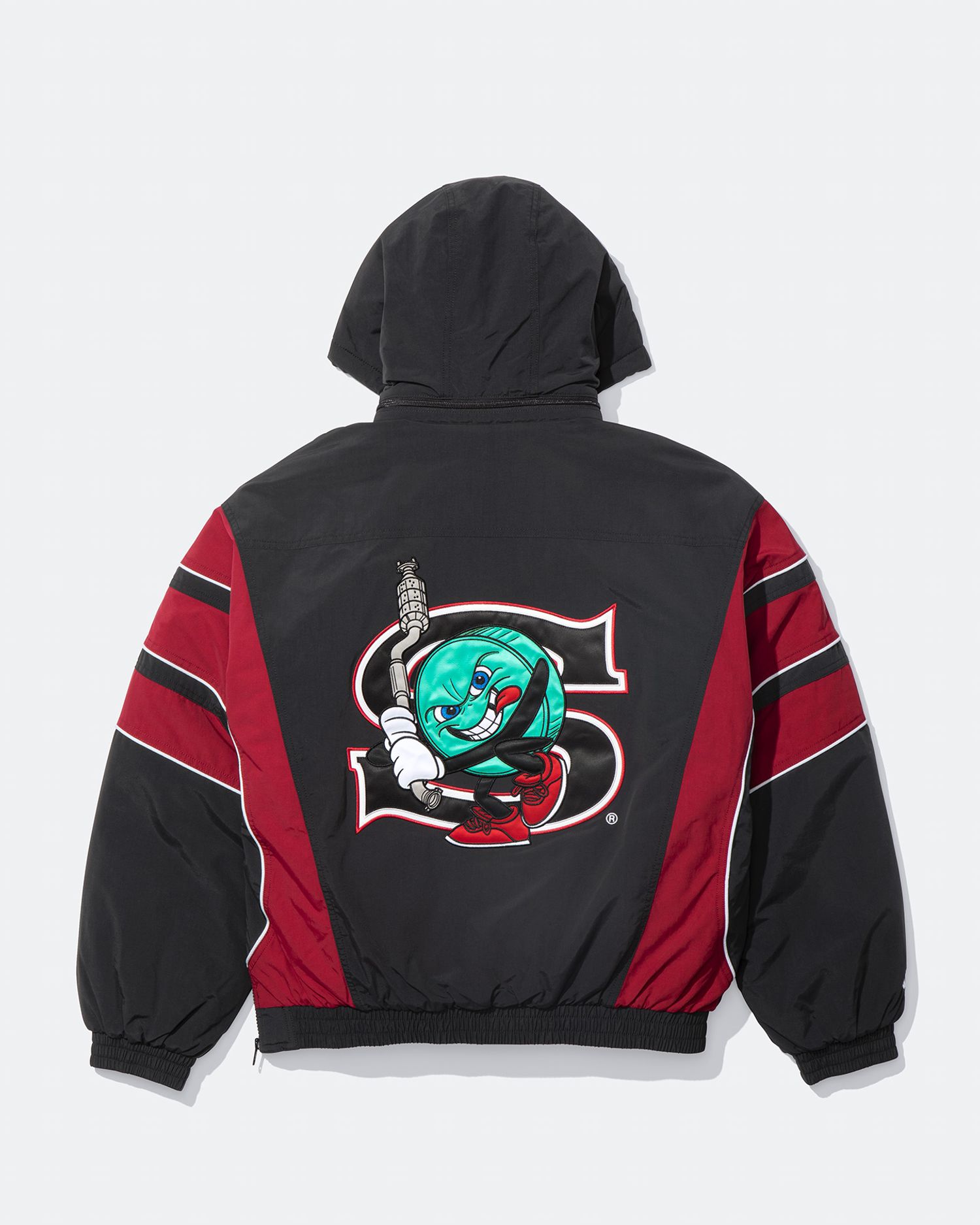
- Half Zip Stadium Jacket — the centerpiece, in a plaid-lined athletic cut.
- Zip Up Hooded Sweatshirt — with a plaid liner echoing the jacket.
- S/S Top — a short-sleeve button-up.
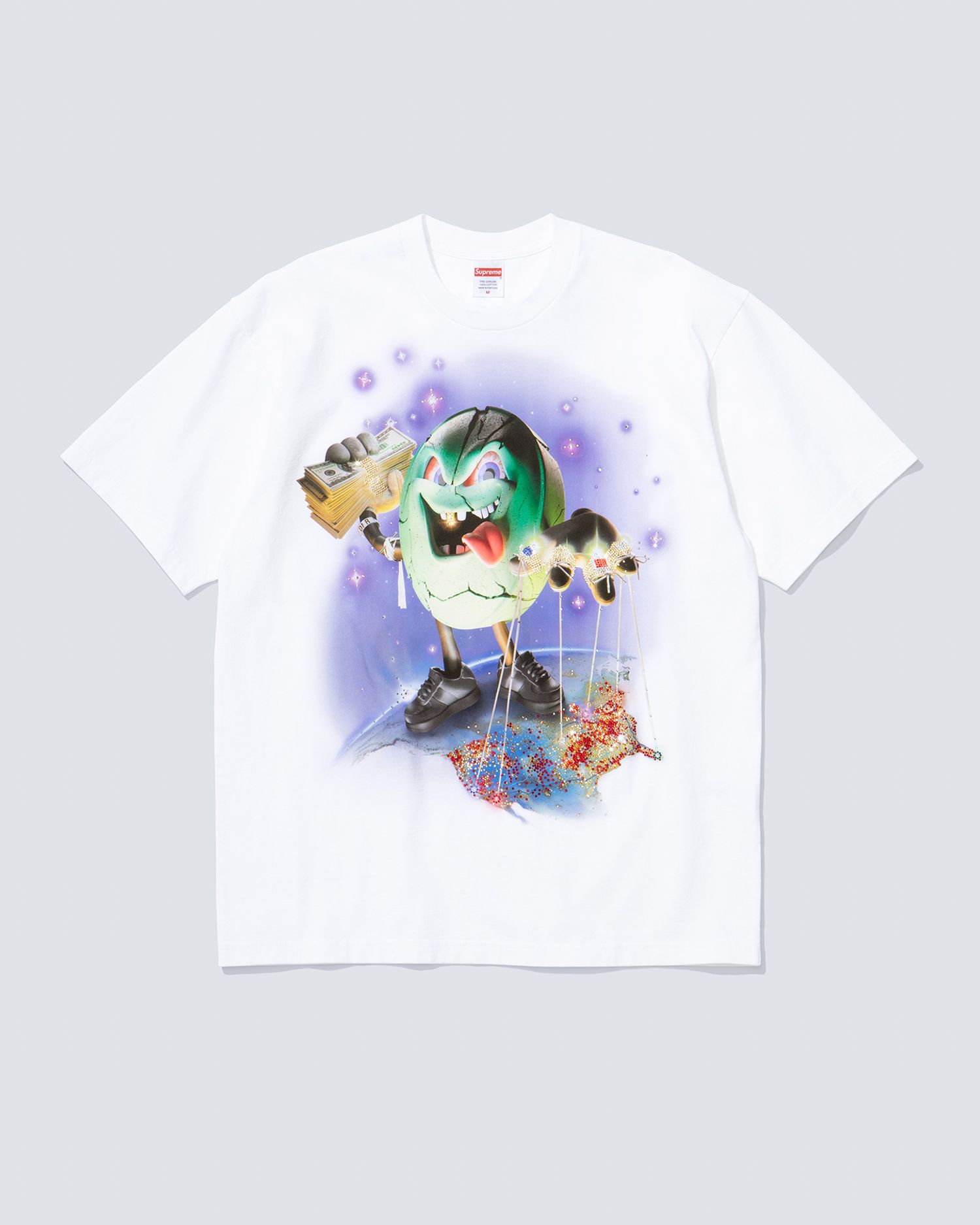
- Graphic Tee — carrying SALEM's "pill" mascot.
- New Era® fitted cap — in teal/black or navy, with the SALEM character logo.
- Hospital Socks — anti-slip socks in light blue or black, with SALEM's star motif printed as the grip pattern on the sole.

What it costs
Pricing, U.S. retail:
- Half Zip Stadium Jacket — $368
- Zip Up Hooded Sweatshirt — $198
- S/S Top — $110
- Graphic Tee — $48
- Hospital Socks — $24
- New Era® fitted cap — check supreme.com for current pricing
For a Supreme collaboration this is mid-range: the tee and socks put a piece of the drop within reach of almost anyone, while the jacket sits where most Supreme outerwear lands. If you only want one item, the hospital socks are the collection's signature object and its cheapest — the clearest distillation of the SALEM partnership.
Where to buy
The collection dropped May 14 at 11 a.m. ET on Supreme's webstore and at Supreme brick-and-mortar locations, with an Asia release following on May 16. Your options now:
- Supreme webstore — us.supreme.com. Direct product pages for the Half Zip Stadium Jacket and Zip Up Hooded Sweatshirt. Sizes and pieces sell through quickly after a drop, and Supreme periodically restocks, so it is worth checking back.
- Supreme stores — the brand's retail locations in New York, Los Angeles, San Francisco, Chicago, London, Paris, Milan, Berlin, and Tokyo carry seasonal drops in person.
- Resale — for anything sold out, the secondary market (StockX, Grailed, eBay) is the realistic route. Expect the jacket and hoodie to carry the steepest markups; tees and socks tend to stay closest to retail.
Should you buy it? If you already follow Supreme drops or have a connection to SALEM and the witch-house era, this is an easy yes — it is a coherent, well-priced capsule with a genuine cultural story behind it. If you are a casual buyer, the tee or socks are a low-risk way in. The jacket is the commitment piece, and at $368 it asks you to actually want the collaboration, not just the logo.
Why SALEM
Formed in Northern Michigan in 2006 by Jack Donoghue, John Holland, and former member Heather Marlatt, SALEM built a sound out of Houston chopped-and-screwed, Chicago juke, shoegaze, drone, and classical music. The result was witch house — a genre that lived almost entirely online, on Tumblr and early SoundCloud, defined as much by its triangle-and-Unicode typography as by its music. For roughly two years around 2010, witch house was internet aesthetic culture.
That is the asset Supreme is buying. The brand has spent years collaborating with established names whose cultural weight is already priced in. SALEM is something different: a cult act whose influence vastly outruns its commercial footprint. Tapping them is less a celebrity placement than an argument about lineage — a claim that the visual language of the 2010s internet belongs in the streetwear canon.
The drop as album rollout
The more interesting move is Red Dragon itself. Donoghue and Holland timed a surprise album to the Supreme release, which inverts the usual arrangement. Normally a brand licenses a musician's relevance. Here, the collaboration functioned as the album's distribution channel — Supreme's drop calendar and global retail footprint did the work a label rollout used to do.
It is a pattern Supreme has been testing for a while. The brand has increasingly used product drops as cultural release vehicles, the same way it has positioned sneaker collaborations as music-industry moments — a logic visible in how Jeezy and Nigel Sylvester linked for the "Brick After Brick" Air Jordan 4. The hospital socks will sell out. The lasting question is whether Red Dragon finds the audience that a 31-track surprise album from a long-dormant cult duo would never have reached on its own.
The takeaway
Supreme x SALEM is small in dollar terms and large in what it signals. A streetwear brand is now confident enough in its cultural authority to revive a niche genre, stage an album release, and treat both as a single product. The collaboration is not selling clothes that reference music. It is selling the music itself, with the clothes as the packaging.


Comments