
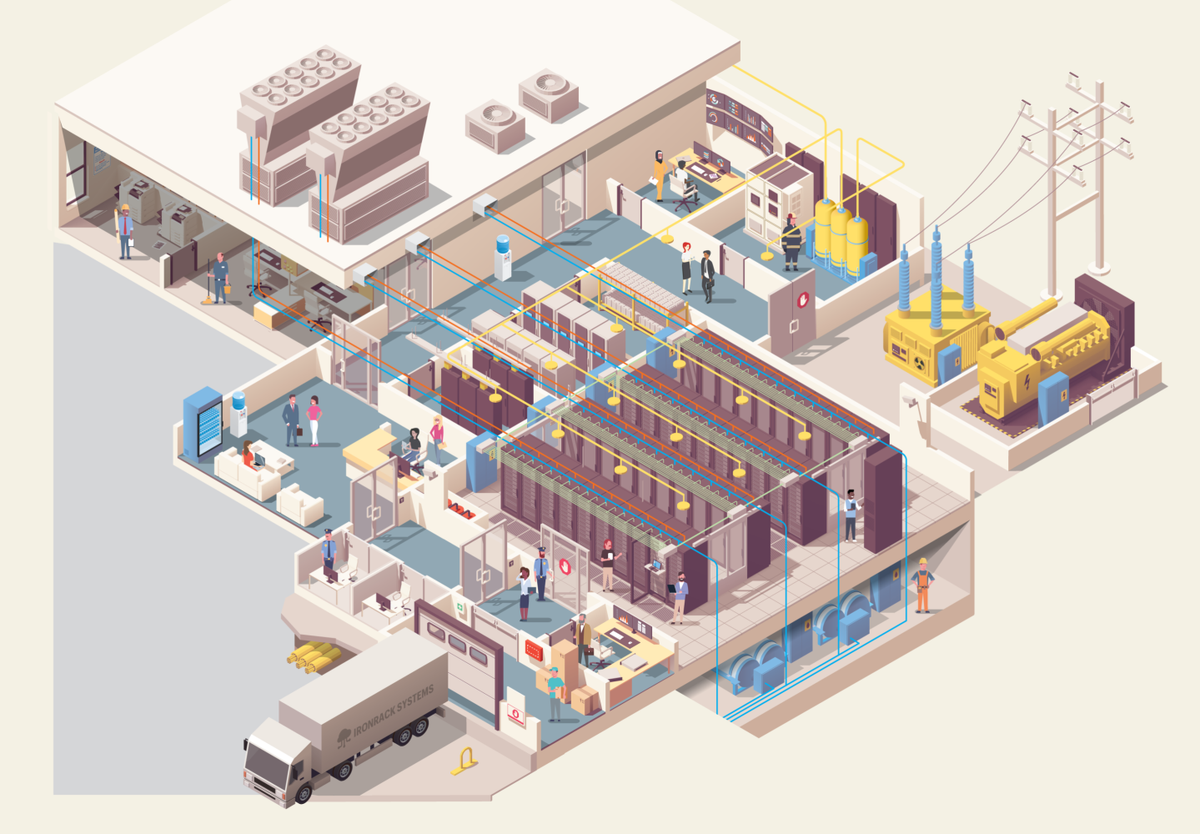
While the public debate around AI has largely centered on job displacement, creative ownership, and the philosophical weight of machine consciousness, something more concrete has been happening in Virginia neighborhoods: electricity bills have risen over 250% in some areas. Residents are breathing air degraded by the particulate matter produced by the power plants that keep data centers running. And no one is offering them compensation.
A study from Carnegie Mellon economist Nicholas Muller, published this week in Fortune, puts a number on this: $25 billion annually. That's the total environmental and public health damage that U.S. data centers imposed on the broader economy in 2025. AI-specific activity accounts for $3.7 billion of that figure.
Who's Actually Paying
These costs are what economists call externalities — expenses generated by one party and absorbed by another. In this case, the party generating the costs is the AI industry. The party absorbing them is communities living near data center infrastructure.
The mechanism is PM2.5: inhalable particulate matter from power generation. It's the kind of pollution you can't see or smell until you're already breathing it. It triggers lung disease, heart conditions, and in concentrated exposures, premature mortality. The people most exposed are not the engineers building AI systems or the executives signing off on infrastructure deals. They're the residents who happened to live in the flight path of the build-out.
Virginia and Texas: The Sacrifice Zones
Virginia and Texas together account for roughly 30% of the $25 billion in health costs. Virginia's "data center alley" — home to approximately 200 facilities — is the most concentrated example. The economic logic that put those facilities there (cheap land, favorable regulations, proximity to fiber networks) is completely disconnected from the health logic that the surrounding communities now have to navigate.
The Productivity Escape Hatch
The tech industry's answer to this critique is that AI's promised productivity gains will eventually more than offset these costs — that the economic transformation will come, and when it does, the math will favor the build-out. That may be true. But "eventually" and "right now" are different timelines, and local residents are on the right now timeline, not the eventually one.
Until AI actually delivers the macro productivity shift its proponents have been projecting, these $25 billion in annual costs represent a transfer: value flowing to companies and consumers who use AI products, health and financial burden flowing to communities that host the infrastructure making those products possible.
That's not a technical problem. It's a political one. And as public opinion toward AI infrastructure sours — a quarter of U.S. adults now believe AI will have a net negative impact on the environment — the pressure to close the gap between who benefits and who pays is only going to grow.
Comments