
Supreme's streetwear dominance peaked somewhere around 2019. The box logo is still on bags, still on resale markets, still on people who are now technically too old to be trend-setters. But the search data tells a cleaner story: interest in logo-heavy drops has plateaued, while queries for Brunello Cucinelli, The Row, and Fear of God — brands that communicate through fabric weight and silhouette rather than wordmarks — have climbed 24% since 2024.
Streetwear went quiet. Not dead. Quiet.
What Changed
The shift didn't happen in a vacuum. Three converging forces pushed it along.
The first is Gen Z fatigue with hype culture. The generation that grew up watching Supreme drops and SNKRS queues has, in significant numbers, concluded that the chase itself is exhausting. The person you become by waiting in line for a box logo tee is not the person you want to be anymore. Status through scarcity is a game that gets old.
The second is a broader economic and political backlash to conspicuous consumption. Streetwear's logo-heavy phase coincided with a period of aggressive wealth display in popular culture. As income inequality became a more explicit political issue, and as the cost of everyday life climbed, the optics of paying $400 for a shirt that exists primarily to announce how much you paid for it started to curdle.
The third is sustainability. The premium placed on recycled materials, extended product lifespans, and intentional consumption has grown into a genuine purchasing driver — not just a feel-good checkbox. Logo chasing is, almost by definition, trend-driven. Quiet dressing is almost by definition anti-trend: invest in something that lasts, that transcends the moment it was made in.
What Quiet Streetwear Actually Looks Like
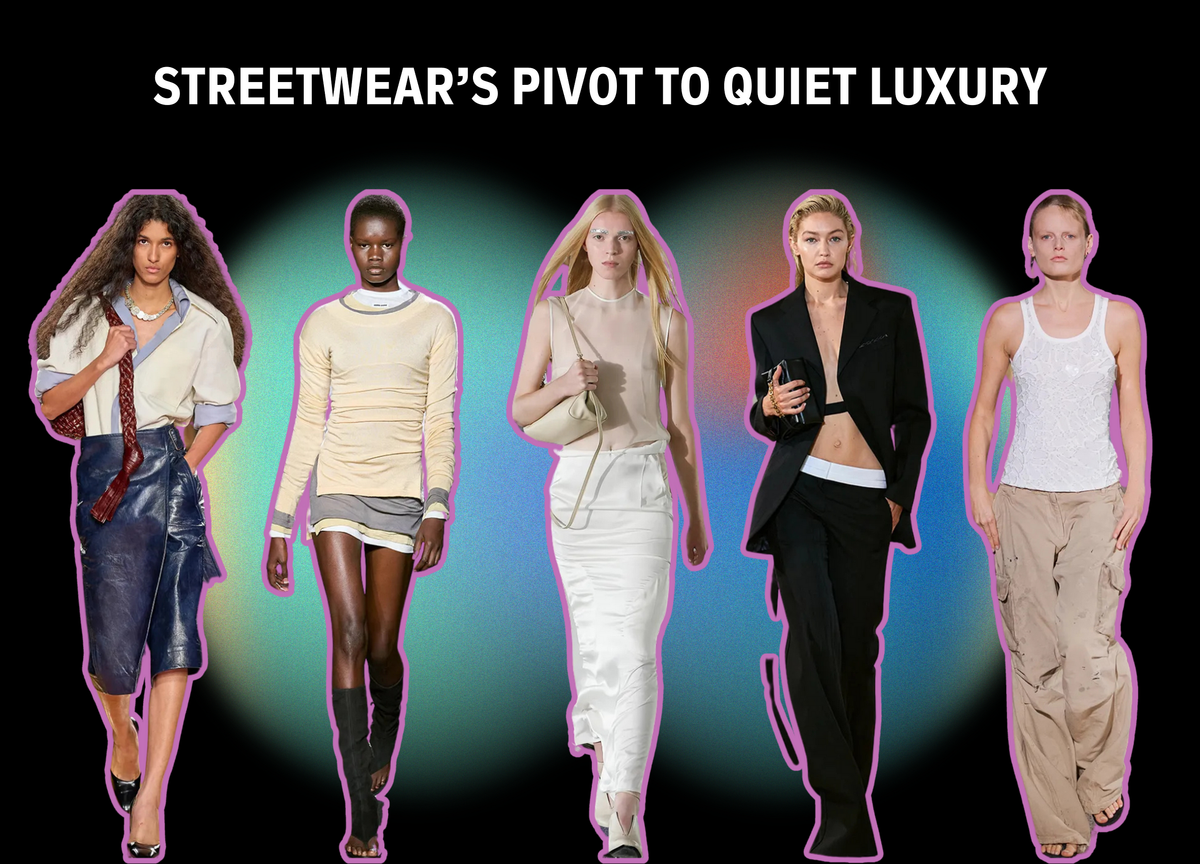
The aesthetic convergence that's happening isn't streetwear becoming luxury. It's streetwear borrowing luxury's grammar. Oversized silhouettes remain — the boxy shoulder, the dropped hem — but they're executed in better fabrics, with cleaner construction, without the branding on the chest that announces what you paid. The hood is thick. The seams are precise. The colorway is muted. Status is communicated through material knowledge, not logo recognition.
Brands like Fear of God, Essentials, and emerging minimalist labels have found the sweet spot: accessible enough to reach streetwear's traditional consumer, crafted enough to satisfy the appetite for quality. The price points are not low — but they're spending on construction rather than co-sign.
The paradox is real, though. Streetwear's origin is not quiet. It emerged from Black and Latino youth, from skate culture, from communities that were excluded from luxury's traditional gatekeeping — and who built their own system of status and recognition. The visible logo was a declaration, not an affectation. It said: we're here, we built this, this belongs to us.
When the logo goes away and the price point stays (or climbs), the question of who this evolution actually serves becomes pointed. An $800 unbranded hoodie has a lot in common with an $800 branded hoodie — which is that very few of the people who made streetwear culturally significant can afford it.
Where It Goes
The smartest version of quiet streetwear is not the erasure of the culture that made it, but an expansion of its visual vocabulary — one that holds space for both the restrained and the expressive, that doesn't treat "quieter" as synonymous with "better." Some of the most interesting emerging brands are doing exactly that: building collections where materiality matters and craftsmanship is visible, while keeping the cultural POV that makes streetwear different from mall fashion.
The logo isn't dead. It's just not the whole sentence anymore. The fit is speaking, and it's saying something more complicated than a wordmark ever could.
Comments