Willy Chavarria's adidas Jabbar: When Heritage Meets the Court
Willy Chavarria's adidas Jabbar collaboration connects Chicano heritage with Kareem Abdul-Jabbar's civil rights legacy, transforming a 1978 basketball icon into a statement about representation, cultural power, and institutional recognition in contemporary fashion.

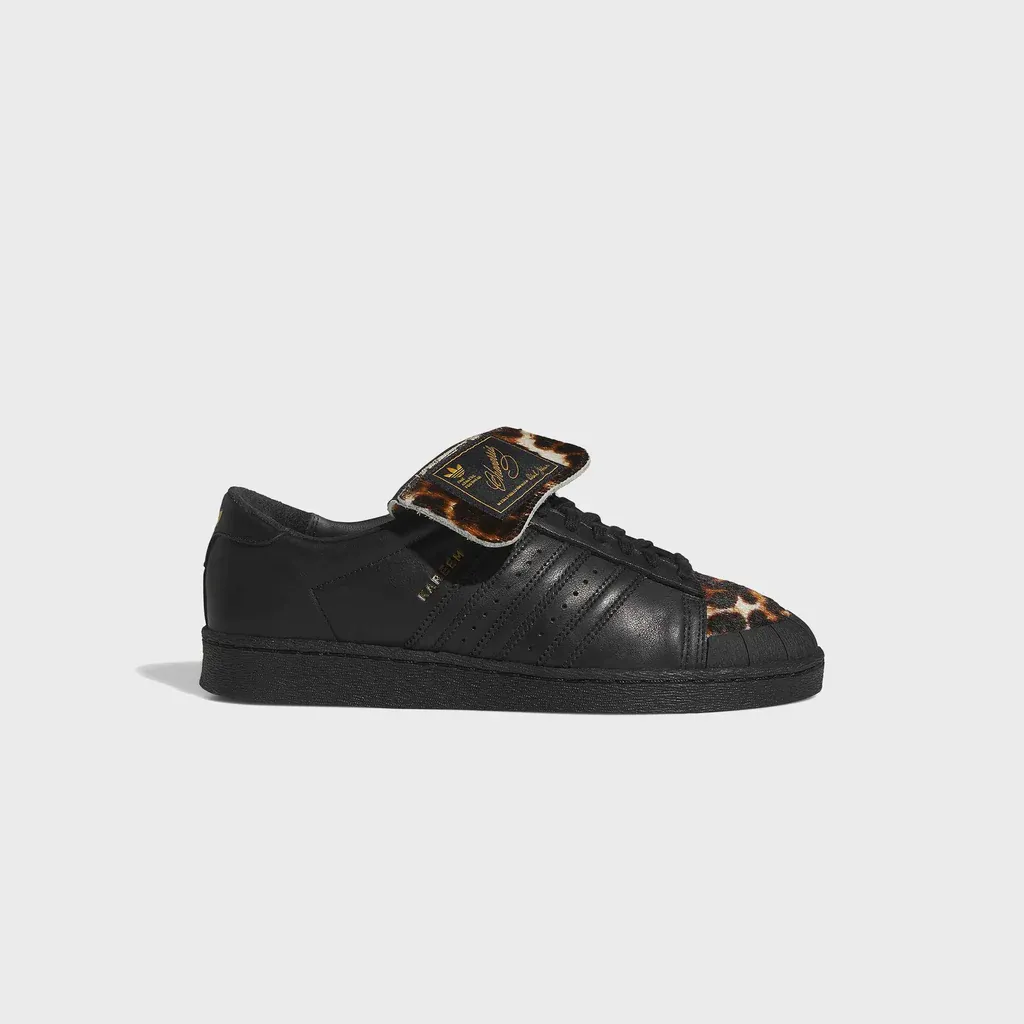
Willy Chavarria has transformed the adidas Jabbar into something that looks equally at home on a runway and cruising through South Central L.A.
The Institutional Weight of a Name
Kareem Abdul-Jabbar's 1978 signature shoe marked the first time a basketball athlete's face appeared on a sneaker tongue, predating the celebrity endorsement industrial complex by nearly a decade. But Abdul-Jabbar's significance extends beyond pioneering athlete branding. Throughout his career, the center used his platform to champion civil rights, challenge racial inequality, and fund programs supporting Black and Latino students—a political commitment that makes him an ideal namesake for Chavarria's mission.
This alignment isn't coincidental. Chavarria, raised in the farmworker community of Huron, California, by a Mexican-American father, grew up learning about César Chávez and the United Farm Workers movement. His design philosophy explicitly centers working-class, immigrant, and marginalized communities—the same populations Abdul-Jabbar has advocated for throughout his post-basketball career. When Chavarria told media outlets that "adidas' place in Chicano culture is a bit of an untold story," he was signaling something larger: this collaboration repositions the Jabbar as a vessel for communities whose relationship with sportswear runs deeper than marketing demographics.
Designing Space-Taking
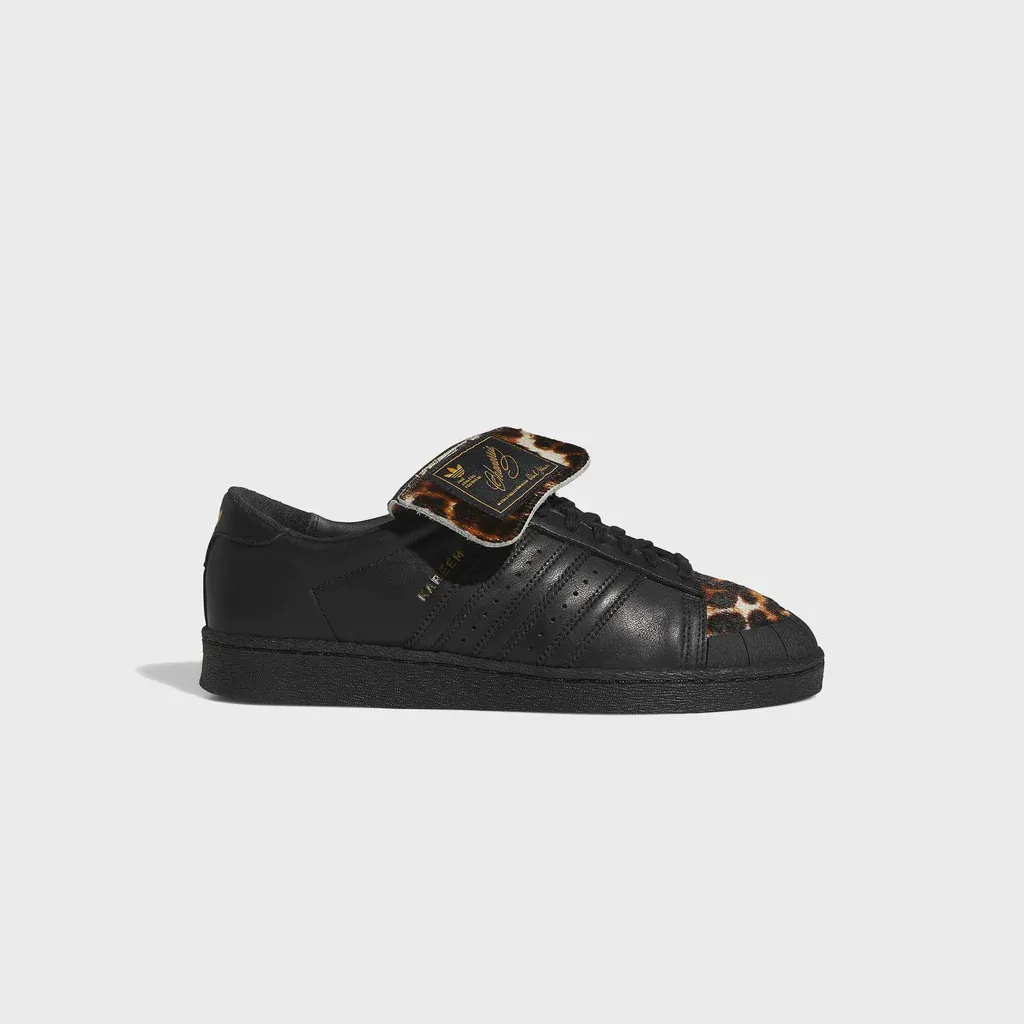
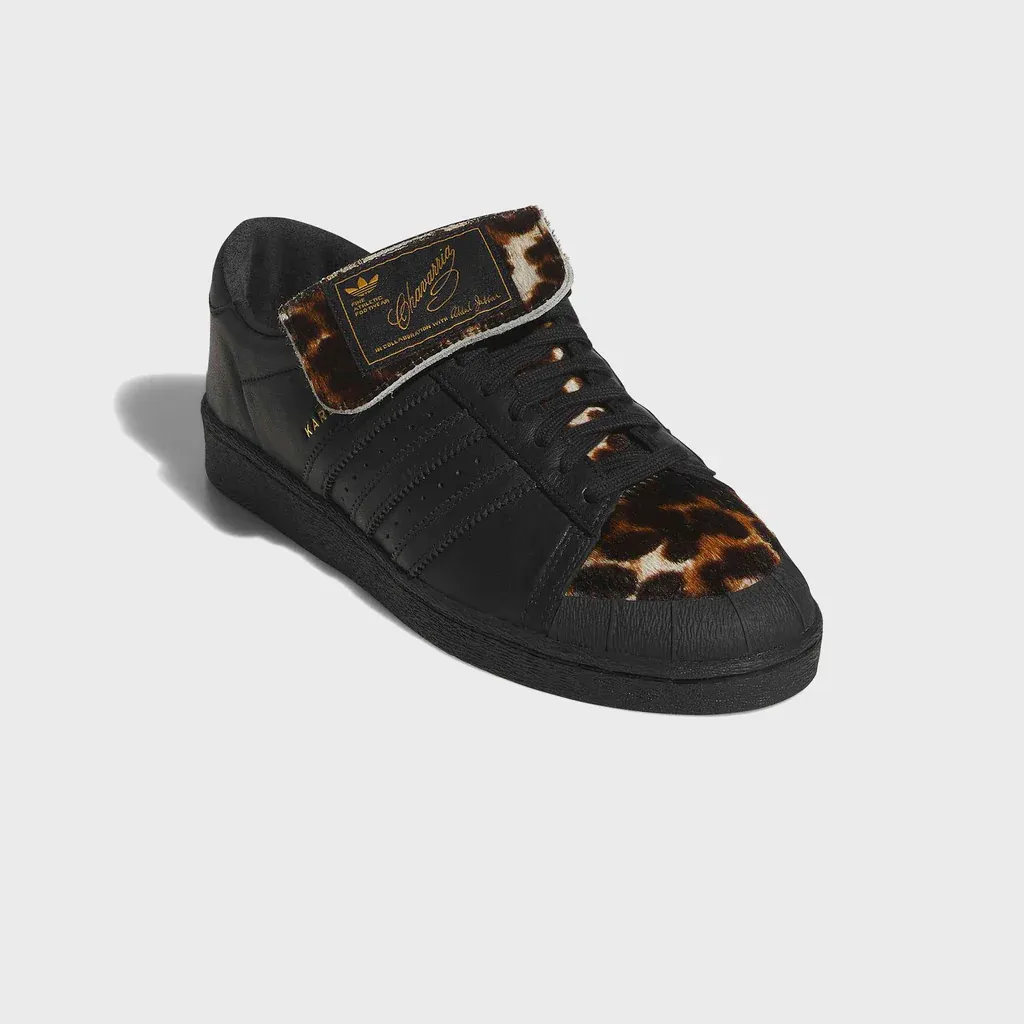
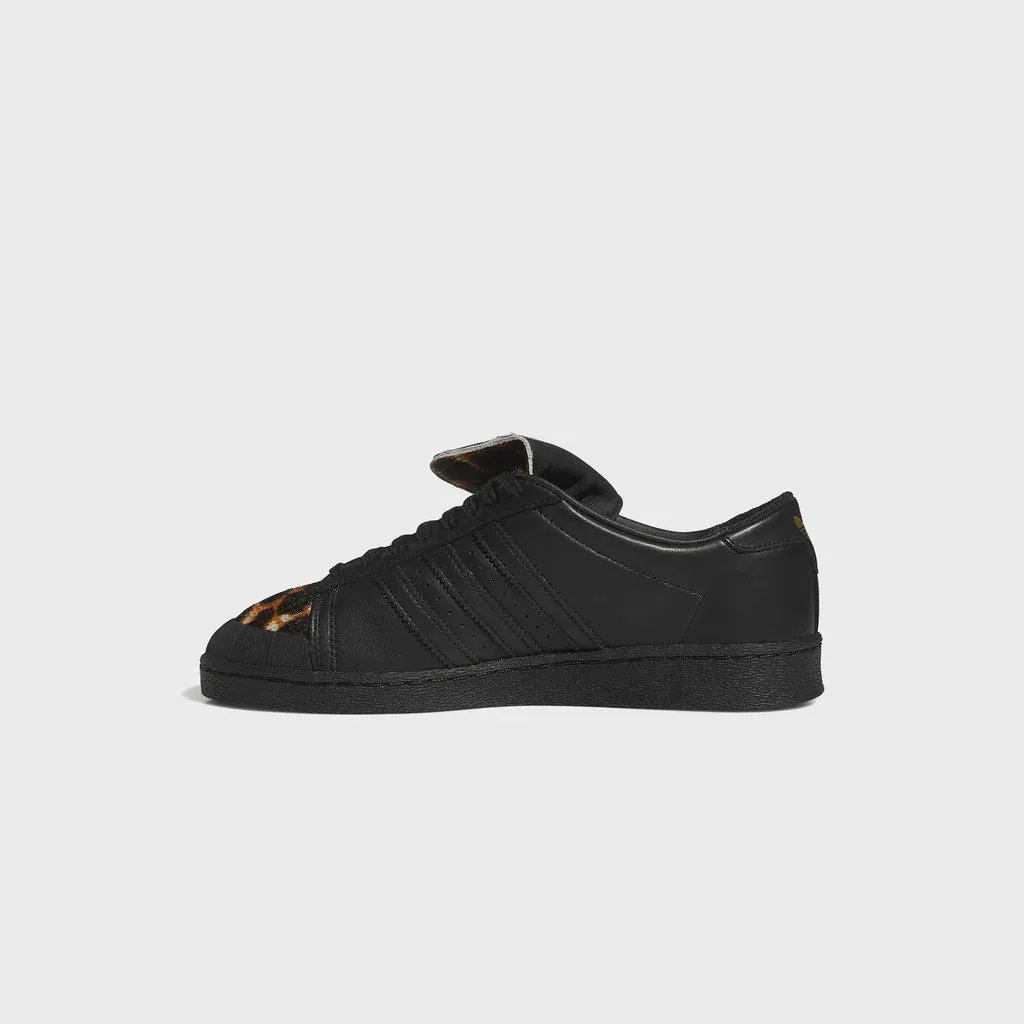
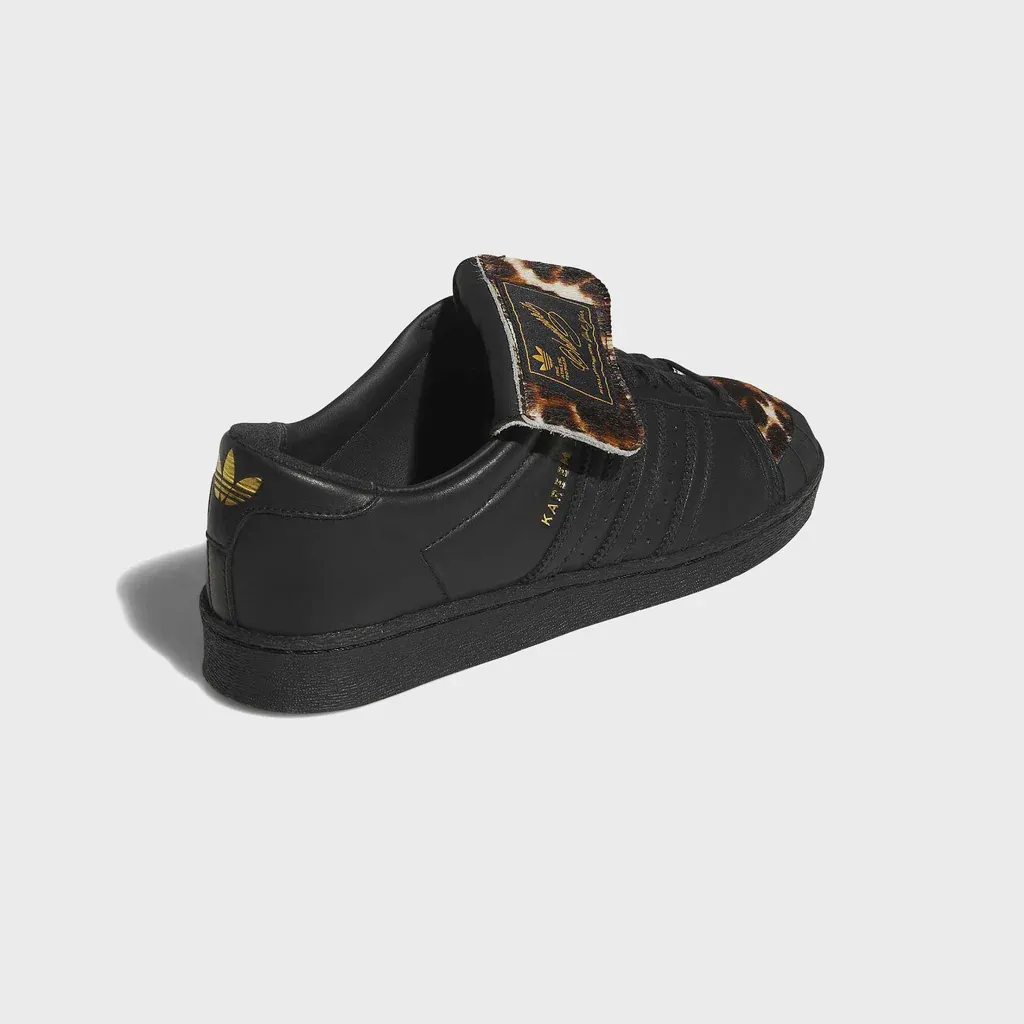
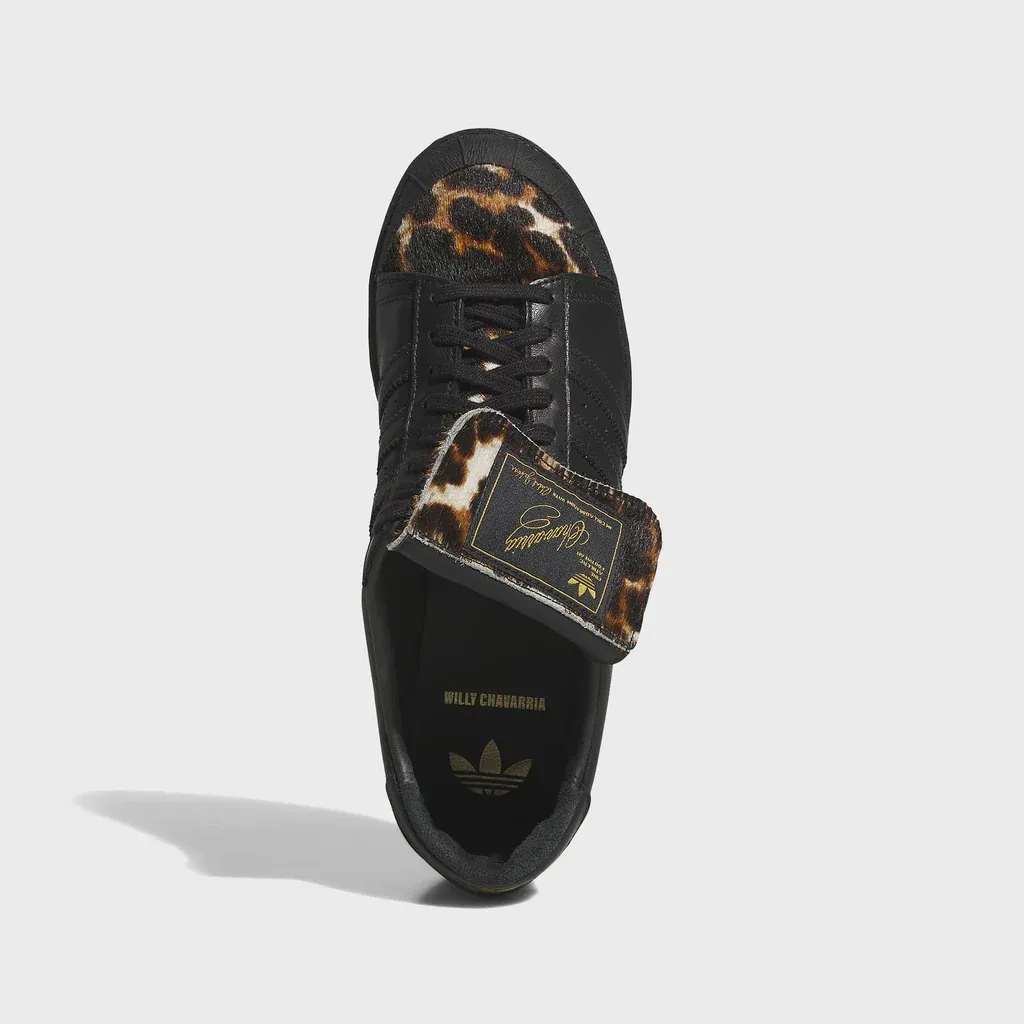
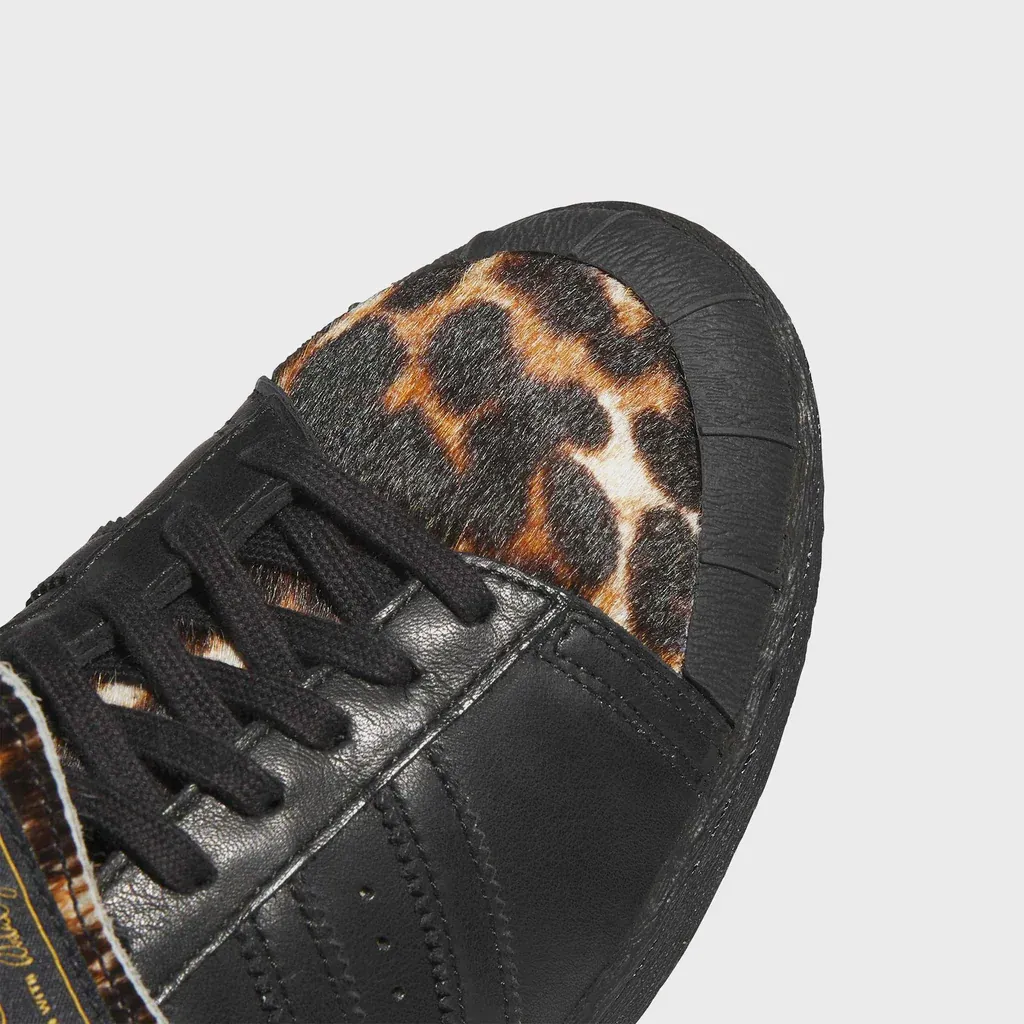
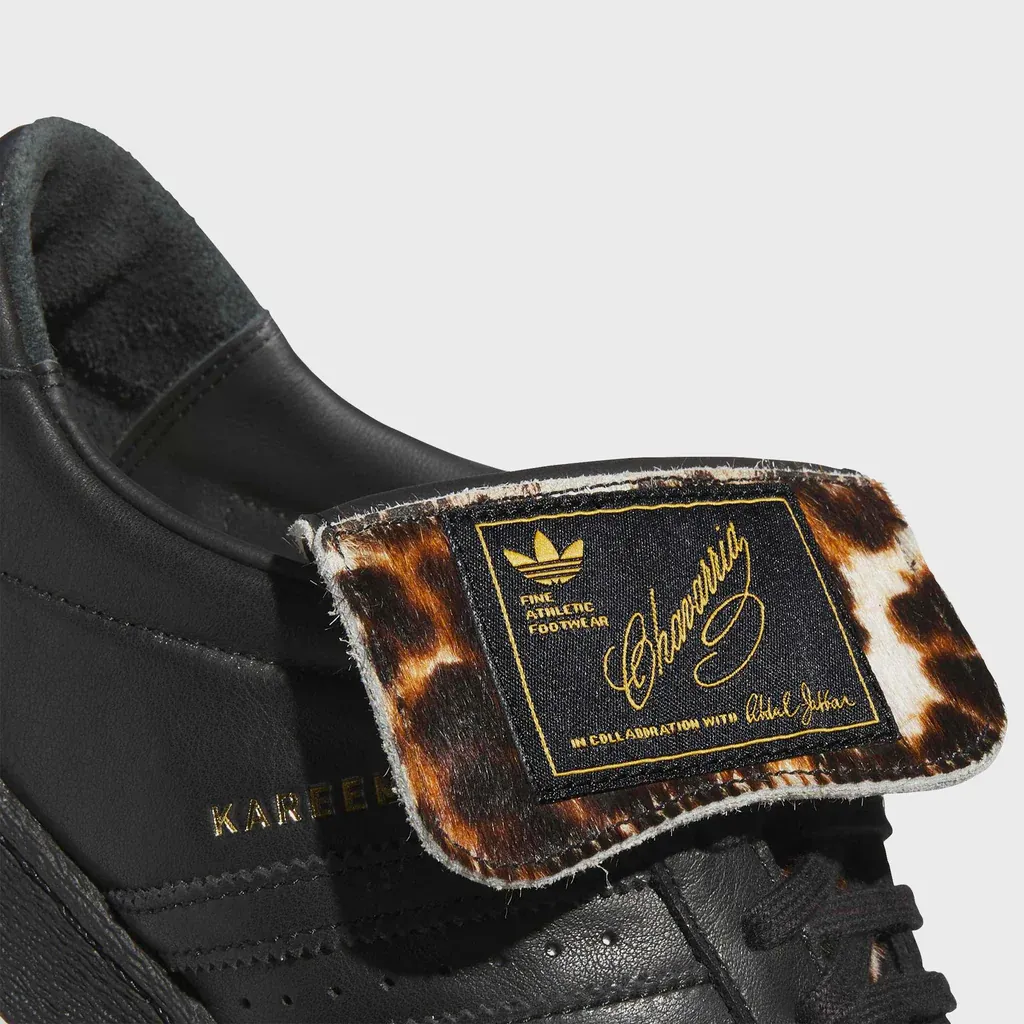
The Chavarria Jabbar Low features premium leather uppers, gold-foiled "KAREEM" and "WILLY" callouts on opposing shoes, waxed laces, and a signature folded tongue bearing both the Kareem Abdul-Jabbar logo and Chavarria branding. But the most striking design element might be the pointed toe—a deliberate departure from traditional basketball silhouettes that transforms the shoe into something closer to a dress oxford.
This isn't arbitrary styling. Chavarria's work consistently draws from the oversized silhouettes of zoot suits, which served as uniforms of resistance for Black and Brown communities in the 1940s before becoming illegal to wear. "It evolved into a look that stayed within the Chicano identity as a way to define territory by taking up space," Chavarria explained in interviews. The pointed toe on the Jabbar operates similarly—it's formal, aggressive, unapologetic. It announces presence rather than requesting permission.
The collaboration spans multiple colorways, including off-white/black, ink blue, and a black/red variant, alongside the more formal Jabbar Dress shoe that fully leans into the oxford aesthetic with nubuck, suede, and leather construction. Each iteration maintains the premium materials and clean lines that define Chavarria's "quiet luxury"—a term that, in his hands, becomes politically charged. If quiet luxury typically signals old money discretion, Chavarria recodes it as working-class dignity elevated to its most refined form.
The Campaign as Cultural Documentation
The Spring/Summer 2025 campaign, shot by Los Angeles-based photographer Carlos Jaramillo, featured WNBA star Candace Parker, basketball player Skyy Clark, and Mexican actor Alejandro Speitzer alongside models from Chavarria's extended community. The campaign wasn't selling shoes as much as documenting a cultural perspective—showing how the Jabbar exists within the visual language of Chicano culture, where adidas has always been present but rarely acknowledged at the institutional level.
At $160 for the Jabbar Low and similar pricing across the range, Chavarria's adidas collaboration sits comfortably within premium sportswear territory without approaching luxury fashion's stratospheric price points. This positioning matters. Unlike collaborations that use limited availability and extreme pricing to manufacture exclusivity, the Chavarria Jabbar remains accessible to the communities it represents—the same demographic that made adidas central to Chicano style for decades.