
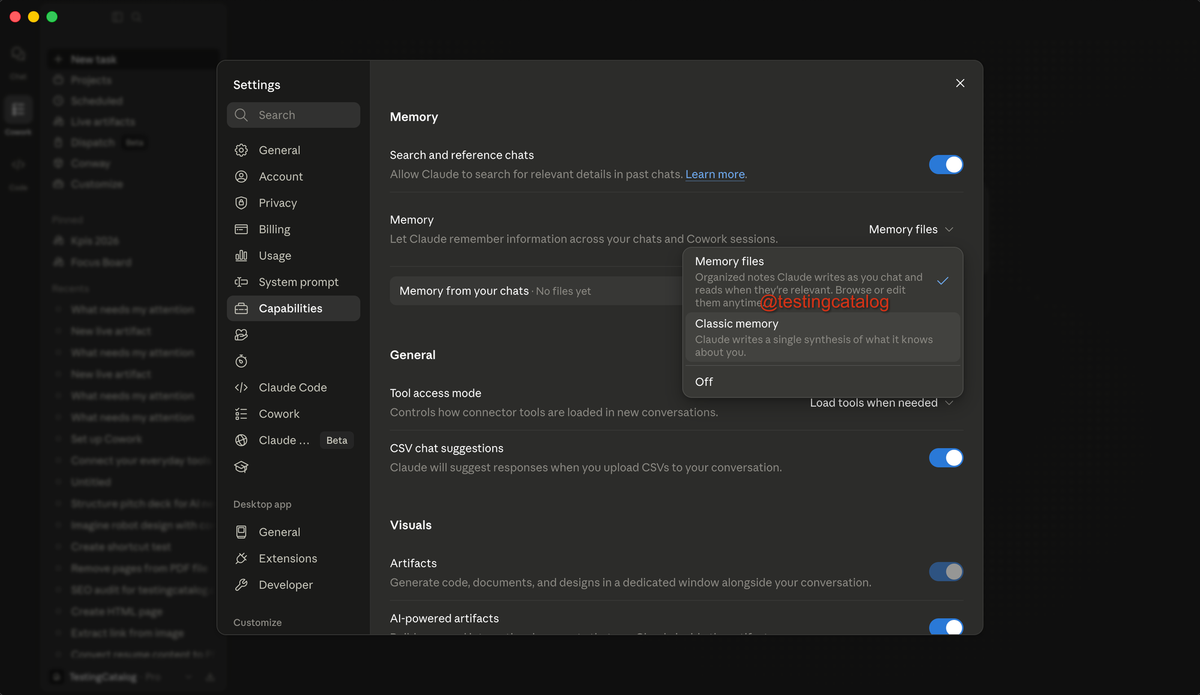
Anthropic is testing a new memory architecture for Claude that splits user context across multiple structured documents instead of a single summarized note, according to a report on internal testing surfaced over the weekend. The feature, called Memory Files, would run as an option alongside the current Classic memory mode rather than replace it.
What Changes
Today, when Claude remembers something about a user across sessions, it compresses that context into one summarized note. The Memory Files mode would instead distribute that information across several documents organized by topic, project, or context — what the report describes as a "built-in personal wiki" the model can consult selectively depending on the conversation. Users would be able to read, edit, or remove specific files without wiping out everything Claude has learned.
Anthropic has not announced a public rollout timeline, the Claude tier that will get the feature first, or a final name. The screenshots circulating with the report are dated May 23.
Where It Fits
The consumer memory work tracks the Memory on Managed Agents capability Anthropic moved into public beta on April 23. On the developer side, memories are already stored as files on a filesystem, and developers can export, edit, and version them via the API or the Claude Console. The Memory Files mode extends that file-based pattern to the end-user product — and avoids the context-window pressure that single-summary memory creates once it grows past a few hundred words.
The other May beta on the developer side is Dreams, an asynchronous job that periodically runs over accumulated memory files to merge duplicates, refresh stale entries, and surface patterns the model missed during live sessions. Memory Files makes that compaction work matter more: the more documents Claude maintains, the more value a scheduled tidy pass has.
Why It Matters
Anthropic has spent the last year hiring aggressively into the model and platform stack — including bringing Andrej Karpathy onto the pre-training team earlier this month — and pushing Claude toward longer-running, agentic work. Persistent memory is the missing piece of that posture. A model that remembers your projects across weeks behaves differently than one that re-learns you every session, and the file-based architecture gives users the audit trail that the single-summary version never offered.
Whether Memory Files ships as a Plus/Pro perk, a team feature, or a default depends on a rollout schedule Anthropic has not yet shared.


Comments