
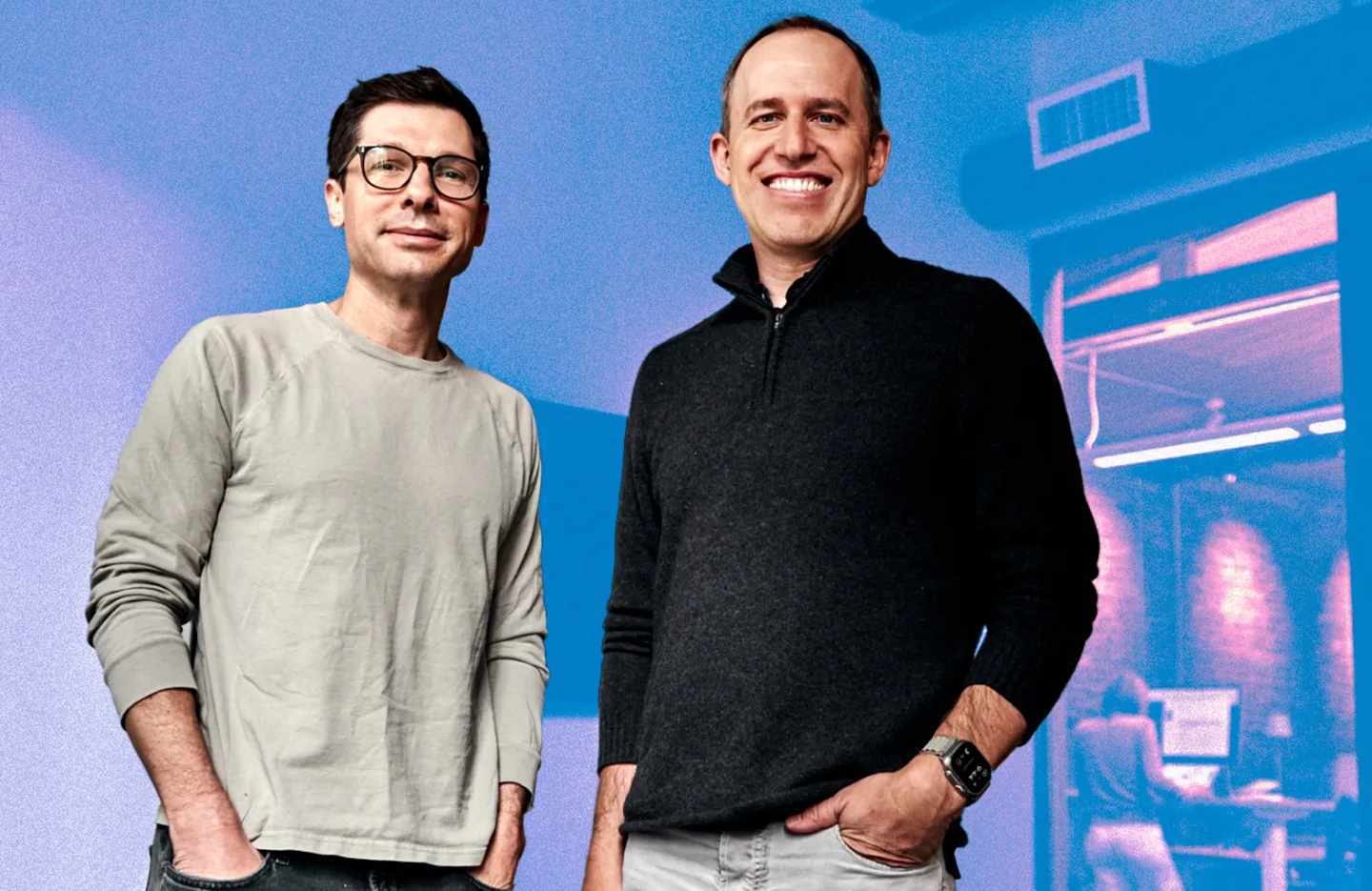
Bret Taylor's enterprise AI company Sierra raised $950 million on Monday at a $15.8 billion post-money valuation, led by Tiger Global and Google's GV with participation from Benchmark, Sequoia, and Greenoaks. The company now has more than $1 billion in cash on its balance sheet and a valuation that has gone from $10 billion to $15.8 billion in roughly six months.
The numbers underneath
The valuation is the headline. The ARR curve is the story. Sierra hit $100 million in annual recurring revenue in late November. By early February, the same metric was at $150 million. That's a 50% jump in about ten weeks — a growth rate the public-market AI cohort has not produced in any consistent way, and one Sierra is producing while selling a customer-service product to enterprise buyers who historically take six to nine months to procure software.
Sierra now claims more than 40% of the Fortune 50 as customers, with use cases that go well beyond support deflection — mortgage refinancing for major lenders, insurance claims processing, returns management for retailers, and nonprofit fundraising. Bret Taylor framed the bet on X as "becoming the global standard for companies wanting to transform their customer experiences with AI." The customer roster suggests that framing is closer to true than not.
What's actually being sold
Sierra builds AI agents that handle customer interactions end-to-end — voice, chat, and increasingly multi-step workflows that involve calling APIs, looking up customer records, and making decisions inside enterprise systems. That's a different product than a chatbot. A chatbot answers questions. A Sierra agent processes a return, approves a refund, and updates the order in your warehouse system without a human in the loop.
The Uber CTO quote making the rounds is the data point that matters most for understanding why this is working. Uber's AI deployment "blew through" its budget and now produces about 10% of its code autonomously. That's the enterprise AI economic case stated plainly: AI tools deliver enough business value that buyers are willing to overspend on them. Sierra is on the receiving end of that overspending, in the customer-service category specifically.
Why the timing matters
The Sierra round comes the same week Cerebras filed for a $26.6B IPO and four days after JPMorgan reclassified its AI spending as core infrastructure. Read together, the three events form one coherent picture: AI is now an enterprise-balance-sheet category, not an experimental one. Cerebras is the chip layer. JPMorgan is the buyer signaling intent. Sierra is the application layer attached to that buyer's wallet.
Bret Taylor's career shape matters here. He's run Facebook's CTO function, co-founded Quip, sold it to Salesforce, ran Twitter's board through the Musk acquisition, and currently chairs OpenAI. Sierra is his fourth or fifth swing at owning the productivity layer of the enterprise. Each previous swing taught him something about distribution, integrations, and what enterprise buyers actually want. The investor list — Benchmark, Sequoia, Tiger, GV — reads like a vote of confidence not in the technology but in the operator.
Clay Bavor, the co-founder, is the underrated half of the team. He spent over a decade running Google Labs and Google's VR efforts. The combination — Taylor's enterprise distribution instincts plus Bavor's research-org operating chops — is a lot of why Sierra has scaled product and revenue in parallel rather than the usual lopsided pattern.
The competitive read
The enterprise AI agents space has gotten crowded fast. Decagon, Cresta, Ada, and a long tail of vertical-specific players are all selling some version of "AI for your customer support function." Sierra's edge isn't a model architecture or a unique technology stack. It's distribution. Forty percent of the Fortune 50 is a customer base no early-stage challenger can replicate, and enterprise software is sticky once it's deployed at scale. Tiger and GV aren't paying $15.8B for the technology. They're paying for the embedded position.
The next phase is whether Sierra can extend horizontally — from customer service into adjacent enterprise workflows like sales, HR, and IT — before competitors carve those out. The $1B in cash gives Sierra two clear options: build that expansion organically, or buy companies that already have it. Sierra's April acquisition of YC-backed Fragment suggests the M&A path is already in motion.
Either way, the read on this week is clear. The enterprise AI market is consolidating around a small number of well-capitalized leaders. Sierra is now one of them, with a billion dollars to spend deciding what comes next.

Comments