
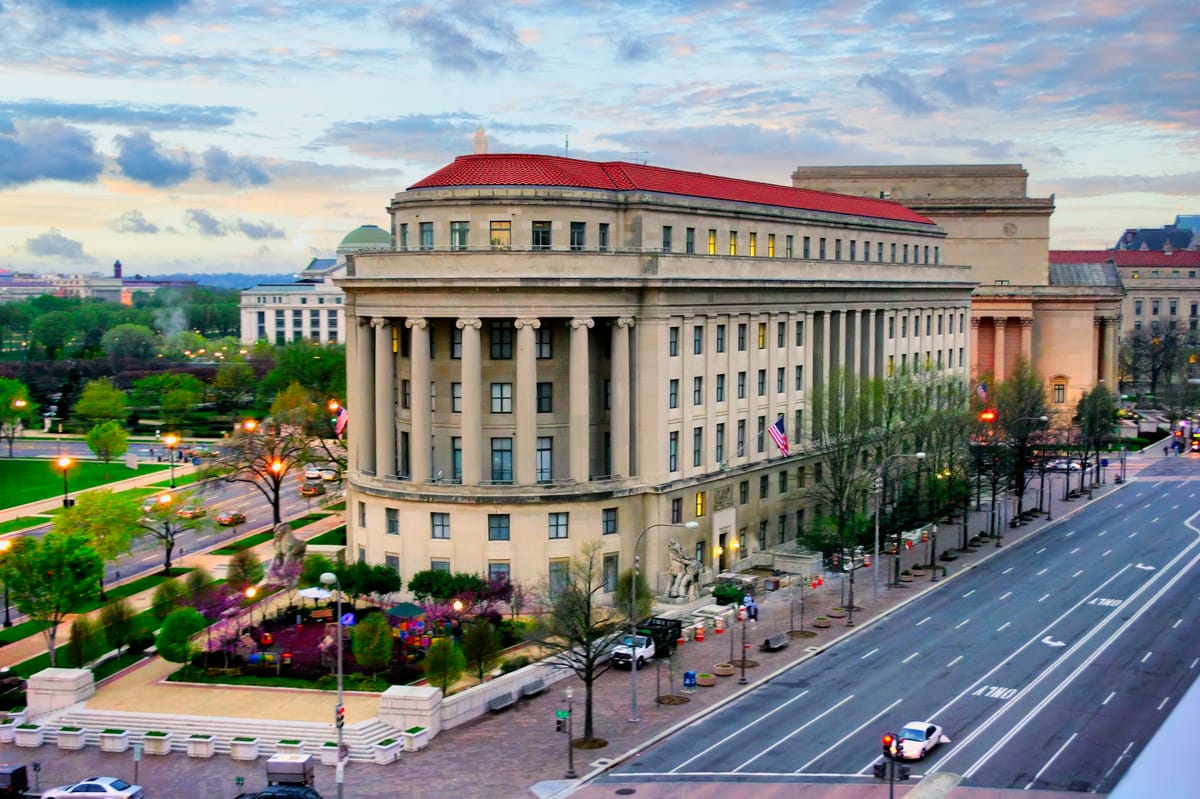
The Federal Trade Commission and the attorneys general of 22 states sued Amazon on August 31, 2026, alleging the company secretly added an undisclosed surcharge to its advertising auctions in 2019 and then spent years concealing it from the advertisers paying it. The complaint was filed in the U.S. District Court for the Western District of Washington. The Commission vote authorizing the filing was 2-0.
The FTC says the scheme affected more than one million brands and sellers, including over 500,000 small and medium-sized businesses, and "likely extracted tens of billions of dollars" from them. CNBC reports the suit argues Amazon may have taken in more than $20 billion through the surcharges.
What the auction was supposed to be
The ads at issue are Sponsored Products, Sponsored Brands and Display placements that appear alongside keyword search results on Amazon.com and its mobile app. Advertisers bid for those keywords, and placements go to the highest-ranked bidder.
According to the complaint, Amazon told advertisers for years — on its website, in training videos, in public materials and in pitches from hundreds of sales staff — that it ran a generalized second-price auction, the accepted industry standard, in which the winner pays "one cent more than the next highest bidder."
The type of auction matters to advertisers because it changes how they bid. In a second-price auction, bidders bid close to what a keyword is actually worth to them, because the rules cap what they will pay. In a first-price auction, where the winner pays their own bid, bidders shade their bids downward over repeated auctions to find the minimum that still wins. Advertisers who believe they are in a second-price auction bid higher.
What the FTC says Amazon actually did
Beginning in 2019, the complaint alleges, Amazon changed its auction rules without notice by adding an undisclosed surcharge it called internally a "soft reserve price," converting what it described as a second-price auction into something that functioned as a first-price auction. The FTC alleges the share of Sponsored Products auctions in which advertisers paid their own full bid rose from between 30% and 40% in 2021, to 70% in 2022, to roughly 80% in 2024.
The complaint quotes Amazon's own documents. The executive in charge of Amazon Ads is quoted saying the price advertisers pay "isn't set by an actual bidder" but is a "proxy 2nd price that we calculate." Another document describes an "invented auction participant" used to increase prices — what the FTC characterizes as shill bidding. A 2024 discussion among senior executives, including the head of Amazon Ads and Amazon's chief digital economist, called the arrangement a "clever non-transparent way to charge first price" and an "incredibly effective way to drive revenue." Internal documents cited in the complaint warned that disclosure would cause "irrevocable damage to advertiser trust" and a "downward spiral" of lowered bids.
The FTC also alleges Amazon applied far larger increases on high-volume shopping days such as Prime Day and Black Friday, ramping surcharges up gradually to disguise the inflation.
"Amazon has millions of advertising customers who were misled into paying significantly higher prices," FTC Chairman Andrew Ferguson said. "These higher costs were largely passed on to American consumers."
Amazon's response
Amazon called the lawsuit "misguided" in a blog post and said the complaint "fundamentally misunderstands how advertisers operate," adding that the FTC presented no evidence of consumer price increases. The company said its auction systems saved advertisers $8 billion between 2021 and 2025. "We've provided advertisers with guidance about our auctions and pricing in the main tools they use to manage their campaigns, and we continue to update that guidance," Amazon said. "We look forward to making our case in court."
Amazon's ad business and prior FTC cases
Advertising is one of Amazon's largest profit engines. The company runs the third-largest digital advertising business in the world behind Google and Meta, and took in more than $68 billion in ad revenue last year, CNBC reports, most of it from Sponsored Products — the exact placements at the center of the complaint. Third-party sellers have publicly complained about rising ad costs on the platform, with some large merchants withholding spend in a boycott.
The FTC and the states allege violations of federal and state consumer protection law and are seeking civil penalties, restitution and unspecified damages. It is the third major FTC action against the company in recent years: Amazon settled a probe of its Prime membership signup and cancellation practices for $2.5 billion in September 2025, and is expected to go to trial next year in a separate monopolization case brought by the FTC and 17 states. Amazon has denied wrongdoing in each.
The suing states are Alaska, Arizona, California, Colorado, Florida, Idaho, Illinois, Indiana, Iowa, Kentucky, Louisiana, Maryland, Nebraska, New Jersey, New York, North Carolina, Oklahoma, Pennsylvania, Rhode Island, South Carolina, Vermont and Washington.
Amazon crossed a $3 trillion market capitalization for the first time in August 2026 and announced it would shut down Mechanical Turk on September 30 after 21 years.
Source: Federal Trade Commission


Comments