
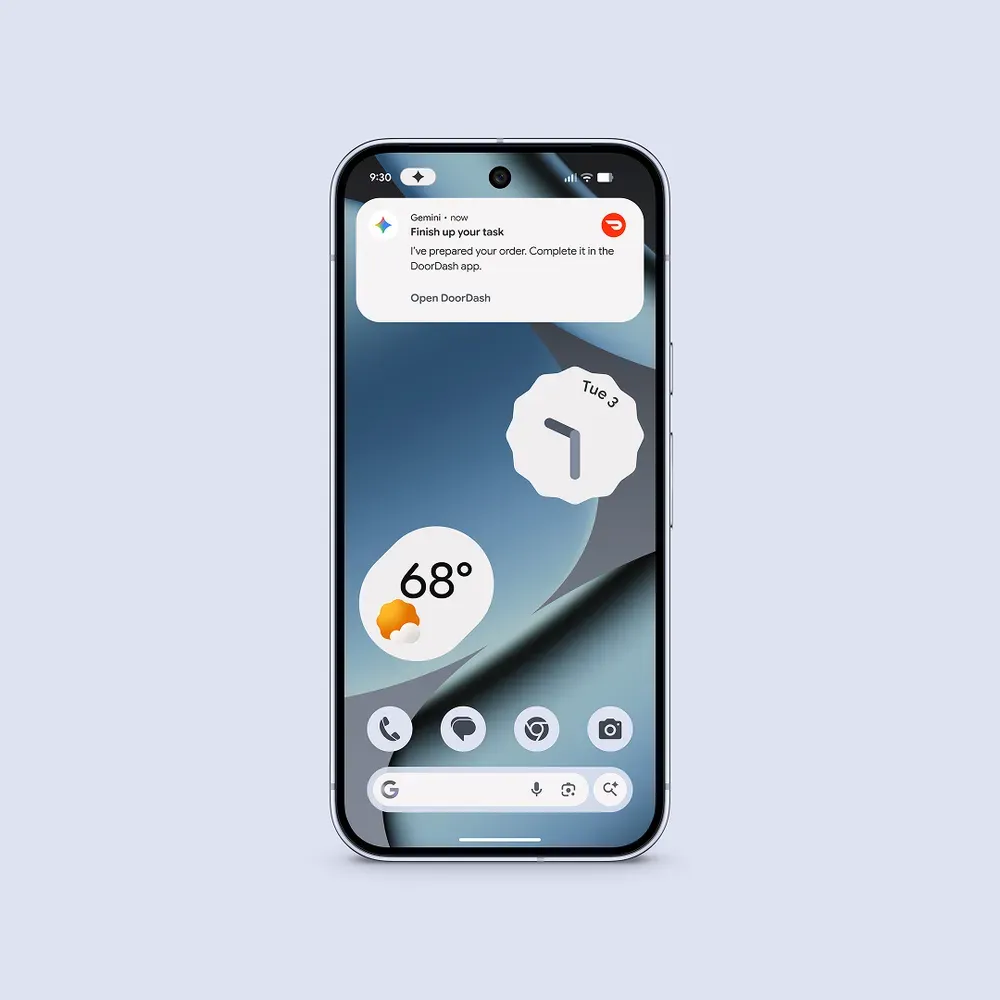
Google is rolling out a beta feature for the Gemini app that lets Android users hand off multi-step tasks — like booking a rideshare or reordering food on DoorDash — directly to the AI, without lifting another finger after the initial command. And unlike most AI feature announcements, this one actually works.
The feature is triggered by a long press of the power button. Tell Gemini what you need, and it handles the rest in a secure virtual window running in the background, separate from the rest of your device. You can use your phone fully while it works. A notification stream lets you monitor progress in real time, jump in, or stop the task entirely. Early testers report it's slow — noticeably slower than just opening Uber or DoorDash directly — but functional. As The Verge put it, the feature is "slow, clunky, and super impressive."
The rollout is starting narrow — Pixel 10, Pixel 10 Pro, and Samsung Galaxy S26 series, initially in the U.S. and South Korea, with support limited to food, grocery, and rideshare apps at launch. Google quietly announced it last month; the feature only started appearing on devices over the past week or so, following a software update. No press event. No keynote. Just a low-key blog post and a silent rollout.
That restraint is deliberate, and it's worth noting. Google has learned, from Google Glass to Google+ to Stadia, what happens when you over-announce and under-deliver. This is the opposite approach — ship something narrow, let it prove itself, expand from there. OpenAI, by contrast, tends to announce features at scale and walk them back when they don't land. Its Instant Checkout shopping feature is the latest example. Google is letting the product speak before the press does.
The practical value for someone running a full day from their phone is immediate. You're in a meeting, you need a car in 20 minutes, and you need lunch. One voice command handles both without requiring you to context-switch into three separate apps. The privacy design — Gemini operates in an isolated virtual window with no access to the broader device — is the kind of guardrail that makes this feel usable rather than invasive.
Whether consumers actually want AI handling transactions they can do themselves in 30 seconds remains an open question. But that's not the right frame. The right frame is where this is in two years, when the app list expands beyond food and rides, when the latency improves, and when the handoff between Gemini and third-party apps gets smoother. Google isn't trying to win the announcement cycle. It's trying to own the Android execution layer.



Comments