
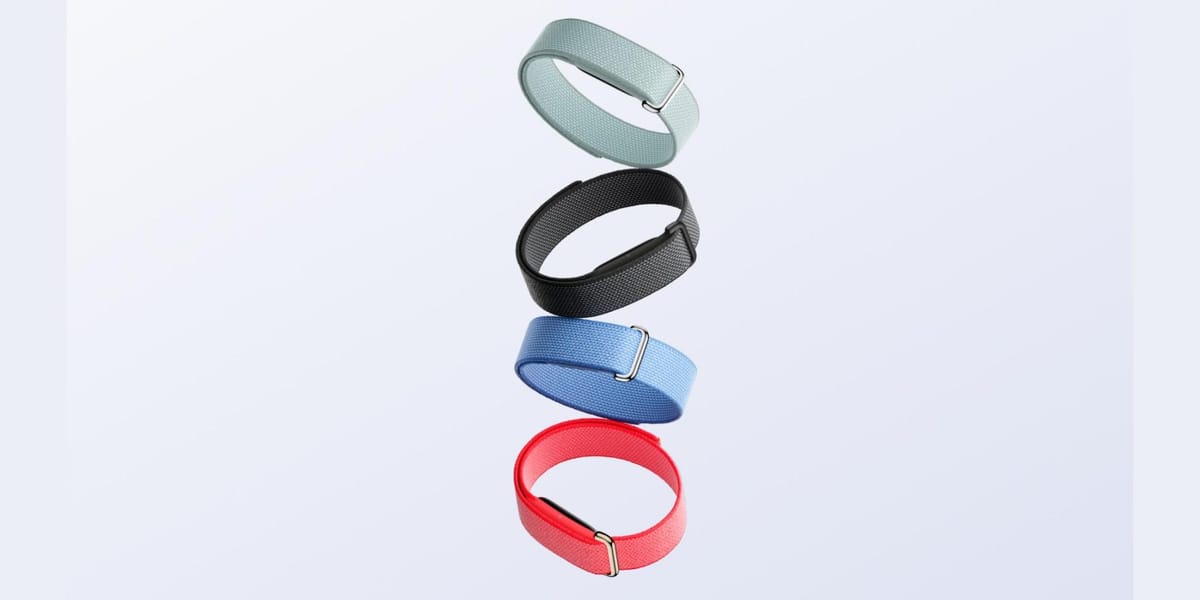
Google has announced the Fitbit Air, a screenless health tracker that opened for pre-order on May 7 and reaches shelves on May 26, 2026. The standard model is $99.99; a Special Edition runs $129.99. It tracks 24/7 heart rate, heart rhythm with AFib alerts, SpO2, heart rate variability, and sleep stages, runs about a week per charge, and ships in Obsidian, Fog, Lavender, and Berry.
The spec that matters is the one that's missing
There is no display. Google describes the Air as built "so you can live in the moment" — a device with no glass to glance at, no notifications to clear, no interface to manage. All of the data lives in the Google Health app, and the band itself is just a sensor you forget you are wearing. At 5.2 grams without a strap, that is close to literally true.
That is a deliberate, almost contrarian product decision. The wearable category has spent a decade adding: bigger screens, more apps, watch faces, on-wrist payments, and most recently a layer of generative AI on top of all of it. The Fitbit Air subtracts. It is positioned squarely against WHOOP — the screenless fitness band that proved a meaningful number of people will pay for body data without wanting a tiny computer on their arm — but at a one-time $99 price instead of a subscription.
Ambient computing, the quiet version
It is worth noting what the Air is not. It is not an AI-first device. It includes a three-month trial of Google Health Premium and its coaching features, but the hardware's whole pitch is restraint — health tracking that recedes into the background instead of demanding engagement.
That makes it a useful counterpoint to the rest of the 2026 hardware conversation, which is consumed with putting AI on your face and in your ear. The race into smart glasses and AI wearables — the same logic that has companies betting on owning the device the AI runs on, which we covered when Snap walked away from its Perplexity deal to focus on Specs — assumes the future of personal technology is more ambient intelligence, more often. The Fitbit Air bets on the opposite: that a lot of people are tired, want their health data, and want their attention back.
Why it matters
At $99 with no screen and no subscription, the Air is the most accessible serious health tracker Google has shipped. But its real significance is as a market signal. After years of the industry insisting the answer was always a richer, smarter, more interactive device, one of the largest players is testing the reverse thesis — that the winning wearable in an attention-saturated era might be the one you never look at. If it sells, it tells you something about how exhausted consumers actually are.

Comments