
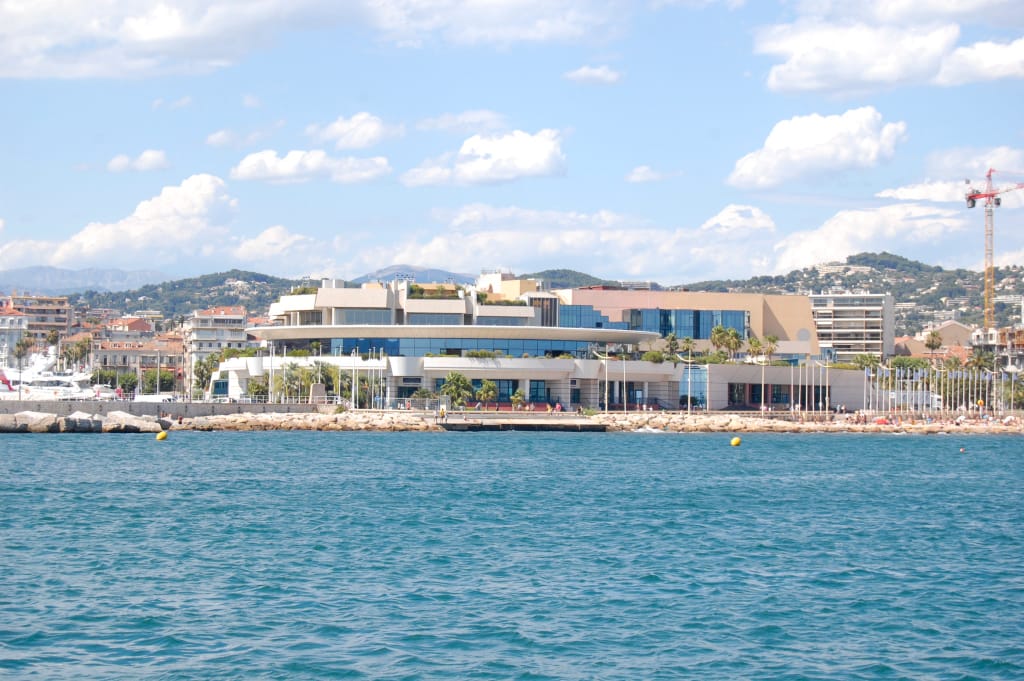
The 79th Cannes Film Festival, running May 12 to 23 with Park Chan-wook as jury president, looks from a distance exactly like the Cannes you remember: beachside photocalls, Demi Moore and Rami Malek on the carpet, honorary Palmes d'Or for Peter Jackson and John Travolta. Look closer at who paid for the party, and the festival is quietly becoming something else.
The sponsors are tech companies now
Meta arrived as a major festival sponsor, demonstrating its Ray-Ban smart glasses to industry guests inside the Majestic Hotel. YouTube partnered with the respected French distributor MK2 to host a Friday-night beach party stocked with creators rather than directors. These are not ad buys at the margins of the event. They are the kind of placements that, a decade ago, belonged to luxury houses and legacy studios.
The substitution matters because Cannes has always sold one thing above all: prestige. Prestige was the currency, and the assumption underneath it was that prestige produced audiences. A film earned its standing on the Croisette and the audience followed. Tech platforms operate on the inverted logic. They start with the audience — already measured, already addressable — and build the product outward from there.
The clearest signal came from a YouTuber
Markiplier, one of the most-followed creators on YouTube, used his Cannes appearance to announce that his film Iron Lung would skip the festival distribution system entirely and release exclusively on YouTube. No theatrical window negotiated through a sales agent, no platform bidding war. He already owns the relationship with the audience the festival exists to broker.
That is the whole shift in one decision. Cannes is, functionally, a marketplace where the right to reach an audience is bought and sold. A creator who brought 30 million subscribers with him does not need the marketplace. He can be polite to it — show up, take the photo — and route around it.
What the industry is testing in response
The financing conversations on the ground reflected the same drift. Republic Film founder Mark Iserlis, speaking about fan-based equity models, framed it plainly: "The more you can independently finance a film, hopefully you're enabling ultimate creative independence." "Audience equity" — letting fans buy into a film as stakeholders — is the festival circuit's attempt to borrow the platform playbook before the platforms finish absorbing the circuit.
None of this is the death of Cannes, and the prestige still has real value — a Palme d'Or is not a YouTube thumbnail. But the festival is no longer the only room where a film's fate is decided, and the 2026 edition stopped pretending otherwise. It is the same shift reshaping every corner of the screen business, the one that recently pushed the Academy to rule on AI-generated performances and screenplays: the institutions that once defined the culture are now reacting to forces they did not invite and cannot fully control.
YouTube has since renewed its exclusive Coachella livestream deal with Goldenvoice through 2030.

Comments