
Key Points
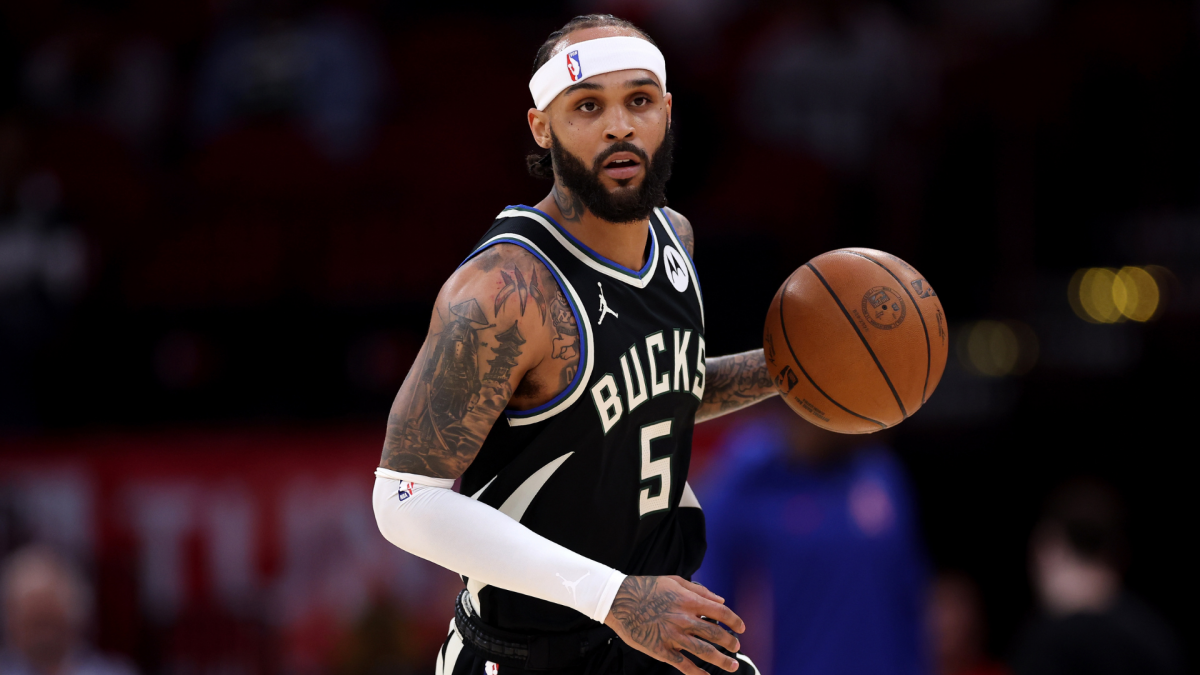
- The NBA said Thursday it will review Gary Trent Jr.'s new Bucks contract.
- The deal is four years and $64 million, fully guaranteed.
- Trent averaged 8.1 points in 21.2 minutes last season.
- Minnesota forfeited five first-round picks over a secret Joe Smith deal.
The NBA said Thursday it will look into the four-year, $64 million contract Gary Trent Jr. signed with the Milwaukee Bucks, CBS Sports reported. The deal is fully guaranteed and pays Trent roughly $16 million a year, starting at $15.2 million in 2026-27.
Trent averaged 8.1 points in 21.2 minutes last season and fell out of Milwaukee's rotation at points. Klutch Sports CEO Rich Paul and agent Lucas Newton told ESPN's Shams Charania about the agreement on July 11.
What the league is actually looking at
The question is not whether $64 million is too much for a reserve guard. Teams are allowed to overpay. The question is when the Bucks decided to.
Trent's three Milwaukee contracts form a pattern. He signed for the league minimum in 2024. He re-signed in 2025 on a modest raise. Those two seasons gave Milwaukee Early Bird rights — the exception that lets a team exceed the salary cap to re-sign its own player after two years, paying a starting salary of up to 175 percent of his previous salary or 105 percent of the league-average salary, whichever is greater. In 2026, the Bucks used that exception for $64 million, landing about $4 million under what the exception would have allowed.
Run forward, that is a player betting on himself and getting paid. Run backward, it looks like something else: if Milwaukee promised in 2024 or 2025 that a large deal was coming, then those cheap early contracts were not cheap at all. They were installments, and the cap relief the Bucks enjoyed in the meantime was borrowed against a handshake. That is what the league calls circumvention, and it is the only version of this story that carries a penalty.
The read
The precedent everyone in the league reaches for is Joe Smith. Minnesota signed a secret side agreement with Smith in January 1999; when the NBA found it, commissioner David Stern stripped the Timberwolves of five first-round picks, two of which were later returned. That case had paper. This one, so far, has a pattern — and a pattern is not a document.
What makes it worth watching is the pileup. This is the second time in a year the league has trained an investigation on Milwaukee, after it examined the Bucks for benching a healthy Giannis Antetokounmpo — a saga that ended with Antetokounmpo traded to Miami on draft eve. It also lands in an offseason where the Kawhi Leonard trade to Toronto sits on hold pending a separate NBA investigation into the Clippers. Two franchises, three probes, one calendar year. The cap has grown intricate enough that the league can no longer tell a clever transaction from an illegal one by reading the contract — it has to reconstruct intent years after the fact. That is an enforcement model that runs on inference, and Milwaukee has no superstar left to protect, which makes it a cheap place to find out how far that model reaches.
What happens next
The league has announced a review, not a finding, and reviews of this kind rarely move fast. Milwaukee's exposure depends entirely on whether investigators turn up an agreement rather than an inference.
And Trent's $64 million is guaranteed against the Bucks, not against the league office. The CBA's circumvention article lets the commissioner fine the team, strip first-round picks, and — where both team and player are found culpable — void the contract outright. Stern voided all three of Smith's one-year Minnesota contracts, killing the Bird rights the scheme existed to build, and Smith left for Detroit. The multi-year payday he had been promised was never signed. Trent's difference is that his payday already exists. A finding here would not stop at the picks.
Source: CBS Sports, ESPN, and Sports Illustrated


Comments