
Key Points
- Neko Health raised a $700 million Series C led by Lightspeed Venture Partners.
- Co-founded in 2018 by Spotify's Daniel Ek and Hjalmar Nilsonne; it launched publicly in 2023.
- More than 100,000 people have completed a Neko scan; 350,000 have registered.
- Neko's first U.S. clinic is headed to New York; it currently operates in Sweden and the U.K.
Neko Health has raised a $700 million Series C led by Lightspeed Venture Partners and co-led by O.G. Venture Partners, TechCrunch reported. Existing investors Atomico, General Catalyst and Lakestar returned, joined by new backers Liberty City Ventures, Positive Sum, and BDT & MSD. Axios reported the round at a valuation of nearly $7 billion. It follows a $260 million Series B in January 2025. We covered the raise in Thursday's Daily Roundup; the numbers underneath it are worth a closer look.
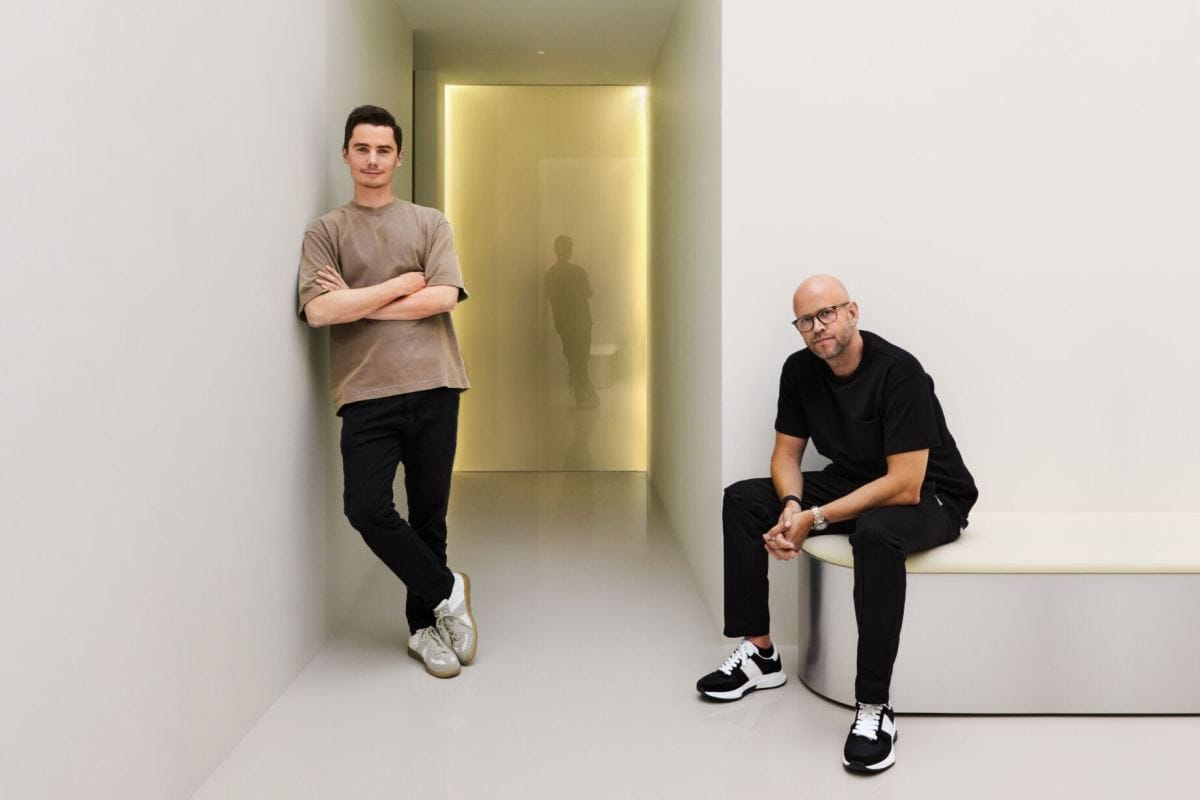
The company was co-founded in 2018 by Spotify co-founder Daniel Ek and CEO Hjalmar Nilsonne — after Ek reached out to Nilsonne over Twitter — and launched publicly in 2023. It sells a full-body scan paired with bloodwork, operates clinics in Stockholm, London, Manchester and Birmingham, and is taking the model to the U.S. for the first time. The first American location is headed to New York.
100,000 scans, 75% rebooking
Per Tech.eu, more than 100,000 people have completed a scan and over 350,000 have registered. A scan costs £299 (~$400) in the U.K. and 2,750 SEK (~$290) in Sweden.
One figure matters more than the rest: at the end of their first appointment, 75% of members book and prepay for their next scan.
Ek is selling a habit, not a scan
That number, and where it happens, is the company. Neko does not wait for you to remember your health a year from now. It closes the next sale at the one moment you are guaranteed to be thinking about it — while you are still in the building, still holding the results, still slightly rattled by whatever the scan turned up. That is not the Spotify trick of auto-renewal without a decision. It is closer to the gym signing you up at the door, executed on a customer who has just been given a reason.
What Ek has actually built twice is a business that converts an irregular, high-friction purchase into a scheduled one. People used to buy albums when the mood struck. The annual physical is the same shape of problem: valuable in theory, deferred in practice, remembered by nobody. Neko's product is the scan; its business is the calendar entry.
New York is the real test, and a harder one than London. In the U.K. and Sweden, Neko sells against a public system where the alternative to a £299 scan is a queue, and the pitch writes itself. In the U.S., the customer already has an insurer and a primary care physician they are nominally entitled to see, and is being asked to pay cash for a scan nobody is reimbursing. That is not a gap in coverage. It is a preference for a better experience, and Neko is betting there is a large enough class of American professionals who will pay retail to feel attended to. Concierge medicine and the boutique gym were both built on that bet.
The clinical case will take years to settle. The commercial one largely already has: at £299 a scan with three of four customers rebooking on the spot, Neko does not have to prove it prevents anything to keep the lights on.
A physical bet at software prices
The round fits a week in which capital kept concentrating on infrastructure rather than novelty. Taktile raised a $110 million Series C led by Goldman Sachs to automate how banks make decisions, SambaNova reached an $11 billion valuation in a $1 billion Series F as JPMorgan adopted its AI chips, and Prime Intellect raised $130 million at a $1 billion valuation for enterprise AI training. Each is a bet on becoming the layer a large, slow industry runs through. Neko's version is the most physical of them: it needs real estate, staff, and bodies walking through a door in Manhattan — the least software-like way to build a recurring-revenue business, funded at software prices.
Source: TechCrunch, Tech.eu, Axios, and Neko Health

Comments