
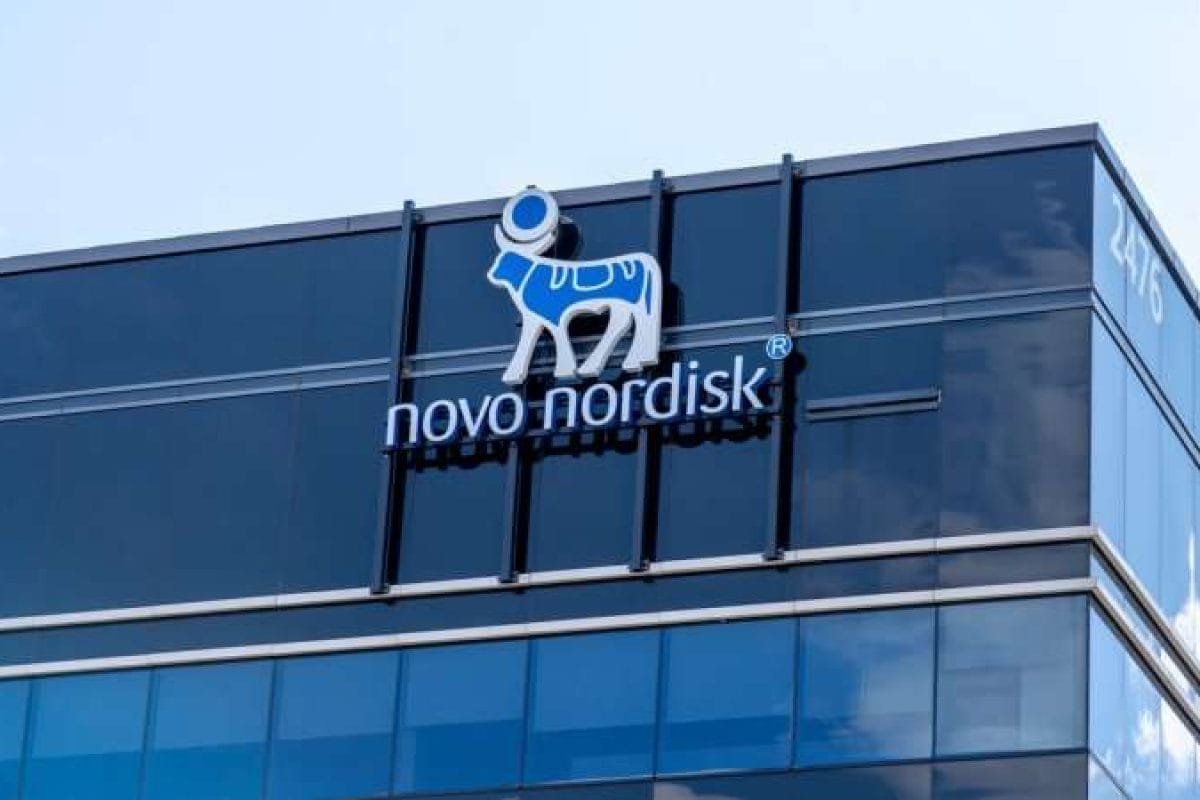
Novo Nordisk, the Danish drugmaker behind Ozempic and Wegovy, announced on April 14 a partnership with OpenAI to deploy artificial intelligence across its business. The collaboration covers drug discovery, manufacturing, supply chain, and commercial operations, with pilot programs launching now and full integration targeted by the end of 2026. OpenAI will also help build what the companies call "AI fluency" across Novo's global workforce.
The pitch and the pressure
The stated goal is speed: use AI to analyze complex datasets, identify promising drug candidates, and compress the years it takes a medicine to move from research to patients. That is the standard promise of AI in pharma, and it is genuinely hard to verify — drug timelines are measured in years, so the partnership's success will not be legible for a long time.
The context is less ambiguous. Novo Nordisk is moving from a position of weakness. The company has seen roughly a 40% stock decline, changed its CEO, and carried out wide-ranging layoffs as Eli Lilly has eaten into its lead in the diabetes and obesity market. The OpenAI deal is not a confident market leader extending its edge. It is a stumbling giant reaching for the tool everyone says will matter.
Why the scope is the tell
The most revealing detail is breadth. This is not a contained drug-discovery pilot — it spans R&D, manufacturing, supply chain, and commercial functions at once. A company under cost pressure is betting that AI can take out expense and slack across the entire operation, not just accelerate the lab.
That scope is also the risk. Deploying AI into manufacturing and supply chain at a regulated pharmaceutical company is a governance problem before it is a technology problem, which is why Novo emphasized "strict data protection, governance and human oversight." The partnership is structured to move fast and be seen moving carefully — a tension every regulated industry adopting AI now has to manage.
The bigger pattern
Novo Nordisk is the latest blue-chip incumbent to conclude that an AI partnership is no longer optional. The capital flowing into AI is increasingly circular and self-reinforcing — model labs, chipmakers, and now their enterprise customers all locking into each other, a dynamic visible in how Nvidia has invested billions to build the distribution channel for its own chips. A pharma giant routing its R&D through OpenAI is another node in that network.
The honest read: this is a defensive move dressed as an offensive one. If AI compresses Novo's drug pipeline, the partnership looks visionary in hindsight. If it does not, the company will have spent a turnaround window integrating a technology instead of fixing the product problem that let Eli Lilly catch up. The bet is real. So is the pressure that forced it.


Comments