
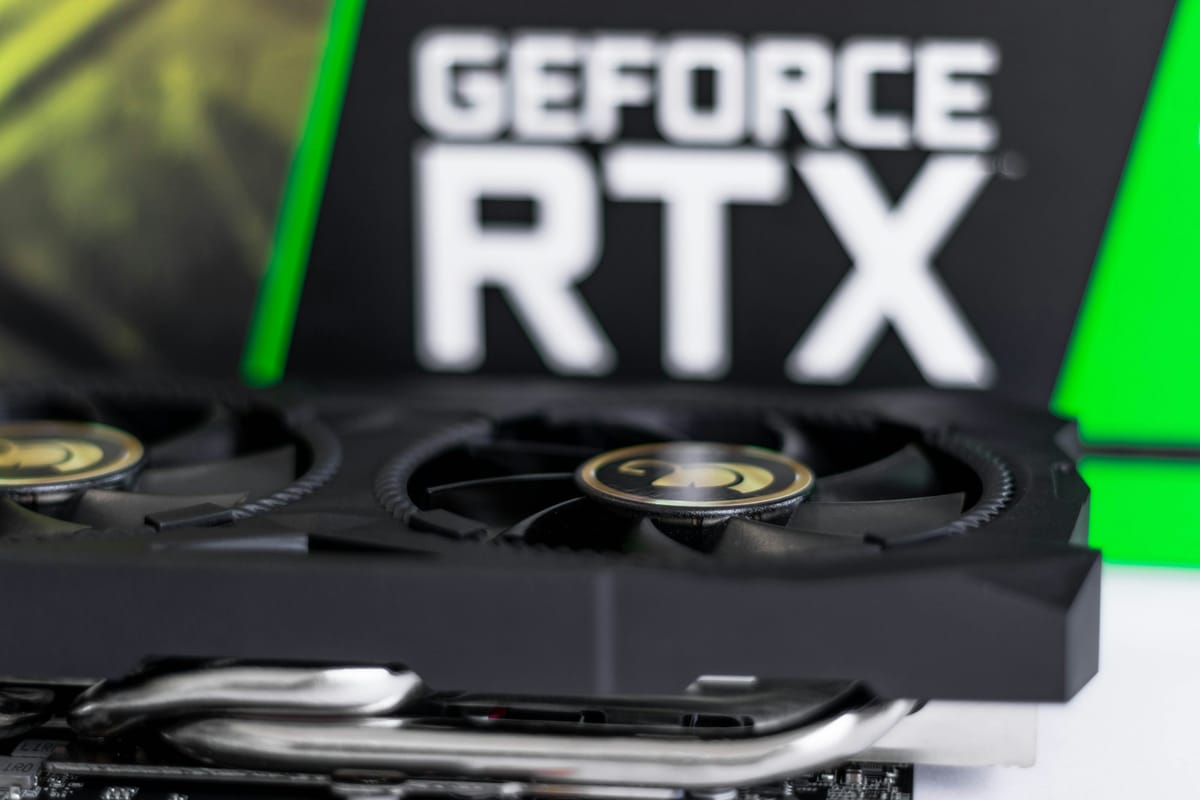
NVIDIA's GTC 2026 conference wraps today in San Jose after four days declared: the agentic AI era is no longer a roadmap item. It's here, and NVIDIA intends to be the operating infrastructure for everything that runs inside it.
The headline number from Jensen Huang's Monday keynote was $1 trillion — the projected total in purchase orders NVIDIA expects for its Blackwell and Vera Rubin systems through 2027. That figure, double what the company projected just a year ago for the same window, is the cleanest possible signal of what's happening in enterprise infrastructure. Companies are no longer experimenting with AI. They are building for it at scale, and the capex commitments are starting to reflect that.
Vera Rubin is the product at the center of that spending. The platform delivers 3.6 exaflops of compute and roughly 50 times more performance per watt than its predecessor, Hopper H200. Microsoft, which has deployed hundreds of thousands of NVIDIA GPUs in its liquid-cooled Azure data centers, was the first hyperscaler to bring Vera Rubin NVL72 systems online. The buildout is now global.
Beyond hardware, the more consequential announcement for people who actually build with AI may be NemoClaw — NVIDIA's enterprise-grade agent framework layered on top of OpenClaw, the open-source agentic AI platform that has become the fastest-growing project in the space. NemoClaw adds security guardrails, a privacy router, and network compliance tools, turning a developer tool into one that can actually be deployed in a regulated enterprise environment. Huang's framing was direct: this is what makes AI agents enterprise-ready.
Physical AI got its own chapter at GTC, and the autonomy story has accelerated. Seven major automakers — including BYD, Hyundai, Nissan, and Geely — are now building Level 4 autonomous vehicles on NVIDIA's Drive Hyperion platform. An Uber partnership announced this week will deploy self-driving vehicles across 28 cities in four continents by 2028, starting with Los Angeles and San Francisco in 2027. NVIDIA's Cosmos 3 model now unifies world generation, vision reasoning, and action simulation in a single architecture — the data bottleneck that has held robotics back for years is becoming addressable.
The overall picture from GTC is that NVIDIA has positioned itself not just as a chip company, but as the full-stack AI operating system. The hardware, the models, the agent framework, the physical AI platform — it's an integrated stack, and the trillion-dollar order book suggests the enterprise world is buying it all.
NVIDIA carried that momentum into becoming the first company ever to reach a $5 trillion market cap, in October 2025. Apple became the second, briefly touching $5.036 trillion on July 28, 2026, in a valuation race the two companies have traded back and forth ever since.



Comments