
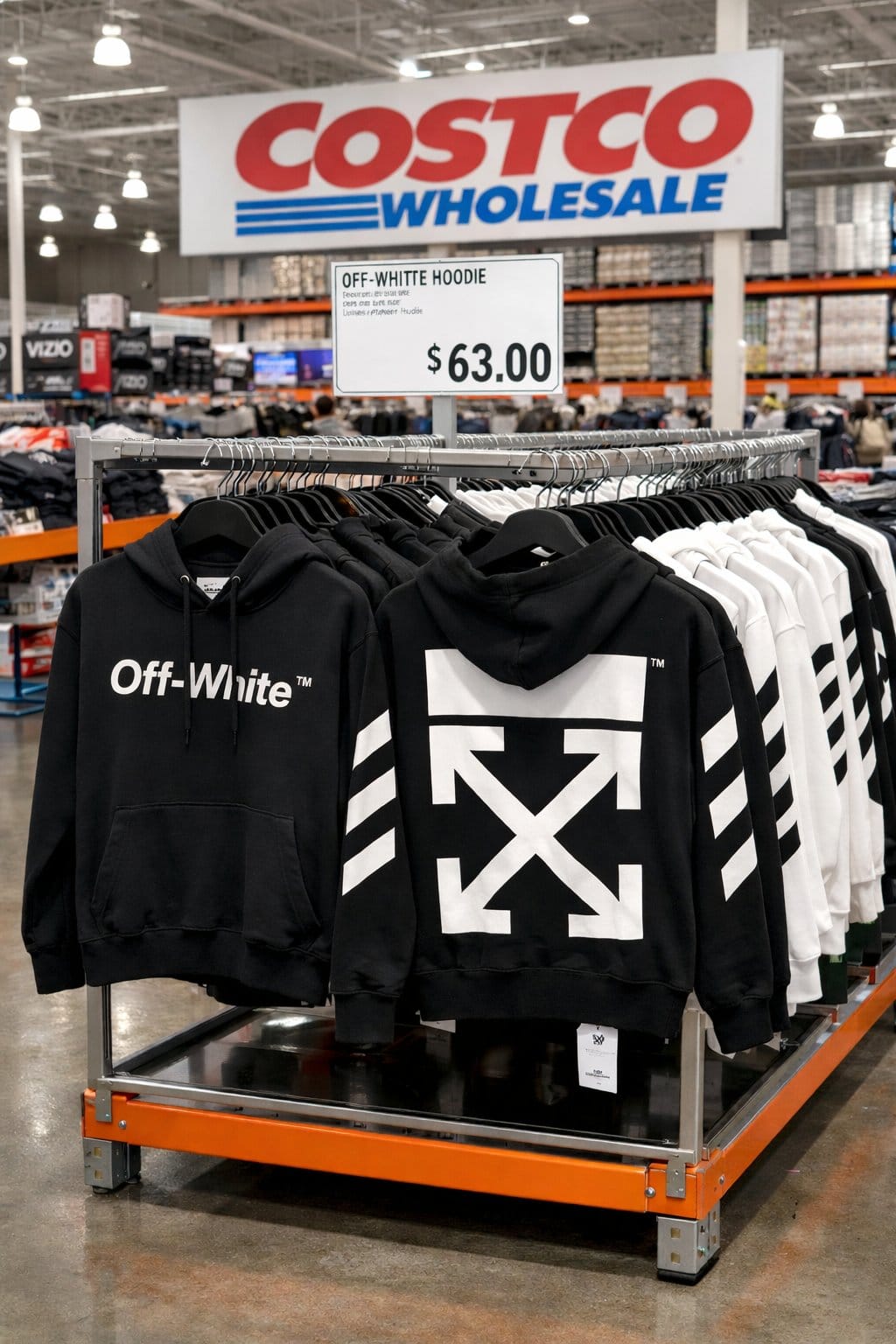
Off-White hoodies at Costco. Let that sentence breathe for a moment.
Reports surfaced this week that Off-White pieces are now appearing on Costco shelves at steep discounts — the kind of markdown that would've been unthinkable when Virgil Abloh was alive, and the brand was the hottest name in the luxury-streetwear crossover. The internet reacted immediately, and not kindly. The discourse split along a familiar fault line: some see it as the inevitable gravity of hype brands, others see it as something more specific — a desecration of a legacy.
The case for "this was always coming": Off-White was, by design, a brand built on access and attitude — the idea that streetwear could sit next to Gucci without apologizing. But Virgil's genius was curation and scarcity. The moment he passed in 2021, that curatorial hand was gone. No creative director can simply inherit someone else's vision and keep it burning at the same temperature. Brands without a living visionary often overproduce to stay relevant, and overproduction leads exactly here: pallets of hoodies in a warehouse store next to bulk olive oil.
The case for "this is different": Virgil Abloh wasn't just a designer. He was a cultural figure — one of the first Black creative directors at a major European luxury house, a bridge between the streets and the establishment, a man who wore his influences openly and made the underground feel seen. When his brand ends up at Costco, it doesn't just feel like bad brand management. It feels like a statement about how the industry values — or doesn't value — that kind of legacy.
The uncomfortable truth is that both things are true simultaneously. Brands outlive their founders, and the market is ruthless. But the speed at which Off-White went from the most coveted label in the world to a Costco rack is worth examining — not just as a business story, but as a cultural one.



Comments