
In October 2025, Aerie ran a campaign with Pamela Anderson. The copy was explicit: "No AI. 100% Real." The brand wasn't promoting a product so much as a position — a declaration that what you were looking at was made by humans, for humans, without algorithmic assistance. The campaign outperformed projections by double digits in engagement. Other brands took notes.
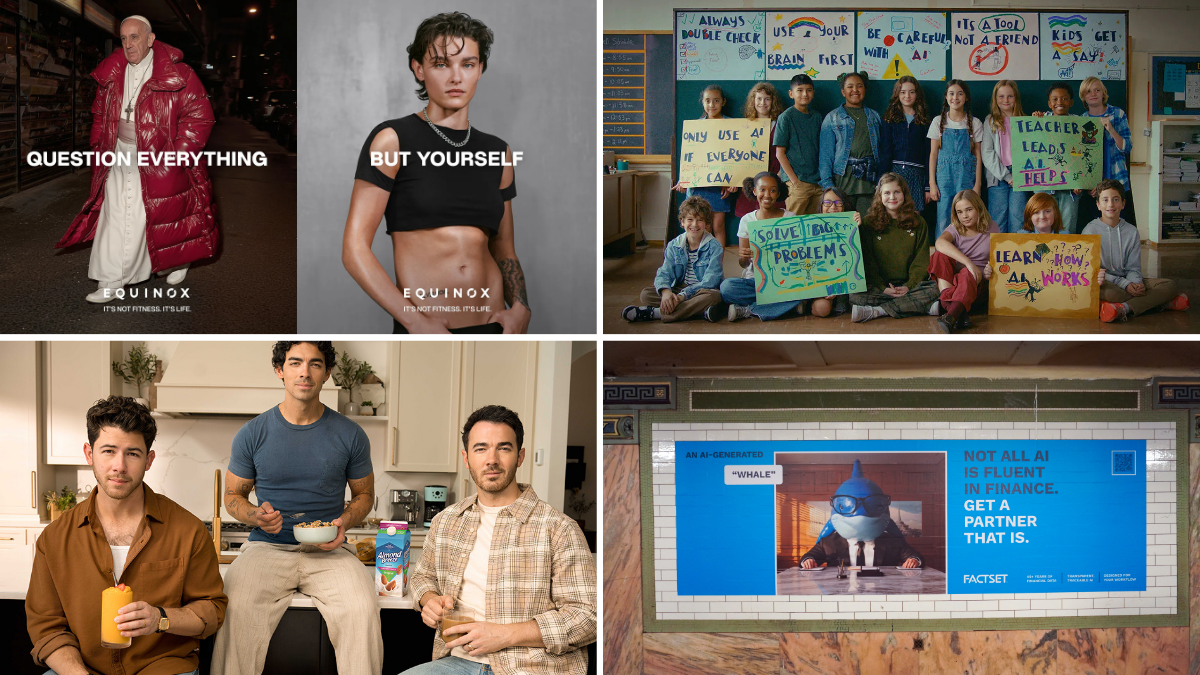
Equinox followed with portraits that "undercut AI slop with human imagery." Almond Breeze called out "AI slop and tech gimmicks" directly in ads. Dove had been doing versions of this since 2024. BMW leaned into it in 2025. By 2026, the move has a name inside agencies: AI virtue signaling. And whether or not you think "virtue signaling" is a pejorative, the data says it works.
What's Actually Happening
The past two years flooded visual culture with generative AI imagery — high-resolution, hyperpolished, stylistically indistinguishable from professional photography if you're not looking closely. Instagram, Pinterest, brand campaigns, editorial spreads: the beige-ification of the internet, as some creative directors have started calling it. Everything looks correct. Nothing feels real.
Forty-five percent of senior creative directors are now actively rejecting AI-generated assets for tier-one campaigns, citing the need for "soul" and "provenance." Consumers, when shown identical images labeled "human-made" versus "AI-generated," consistently rate the former as more beautiful, more meaningful, more worth their attention — even when they can't tell the difference visually. The label matters. The origin story matters.
This is what's being called the human-made premium: the extra value assigned to work when its human origin is clear and verifiable.
Fashion Week Went Physical
The cultural signal was visible on Fall 2026 runways. Prada presented designs with intentional abrasions. Emilia Wickstead embraced painterly florals with an unfinished effect. Ashlyn showcased raw-edge tailoring with visible topstitching. Henrik Vibskov reworked classic houndstooth with hand-drawn, sketchy updates.
None of these designers announced an anti-AI stance. They didn't need to. The aesthetic did the work — visible craft, imperfection as intention, evidence of the human hand baked into the garment. It's the opposite of the smooth, errorless surface that AI-generated imagery produces. And the timing is not a coincidence.
Meanwhile, Gucci drew backlash at Milan Fashion Week 2026 after releasing AI-generated imagery for its PRIMAVERA show campaign. The response was swift: a luxury fashion house using AI instead of human models and photographers read, to a significant segment of consumers, as a violation of the implicit contract between maker and buyer. The craft is the point. If you outsource the craft, you undermine the premise.
The More Interesting Question
The anti-AI branding movement is not anti-technology. Nobody is smashing servers. Most of the brands running "100% Real" campaigns are using AI extensively for internal processes: research, scheduling, versioning, light copy editing. The distinction they're drawing is specific — human vision, human craft, human face in front of the camera — and that's the distinction consumers are rewarding.
What's emerging is a two-tier visual economy. AI-generated content handles volume and efficiency at the bottom of the funnel. Human-made work handles meaning and differentiation at the top. "NOT AI" is not a permanent aesthetic category — it's a transitional one, a way of marking value during a period when the difference between synthetic and authentic still registers as significant.
How long that window stays open is the real question. For now, brands that can credibly claim human origin — and prove it — are finding that the claim itself is worth something. In a world flooded with generated content, real is a feature.
Comments