
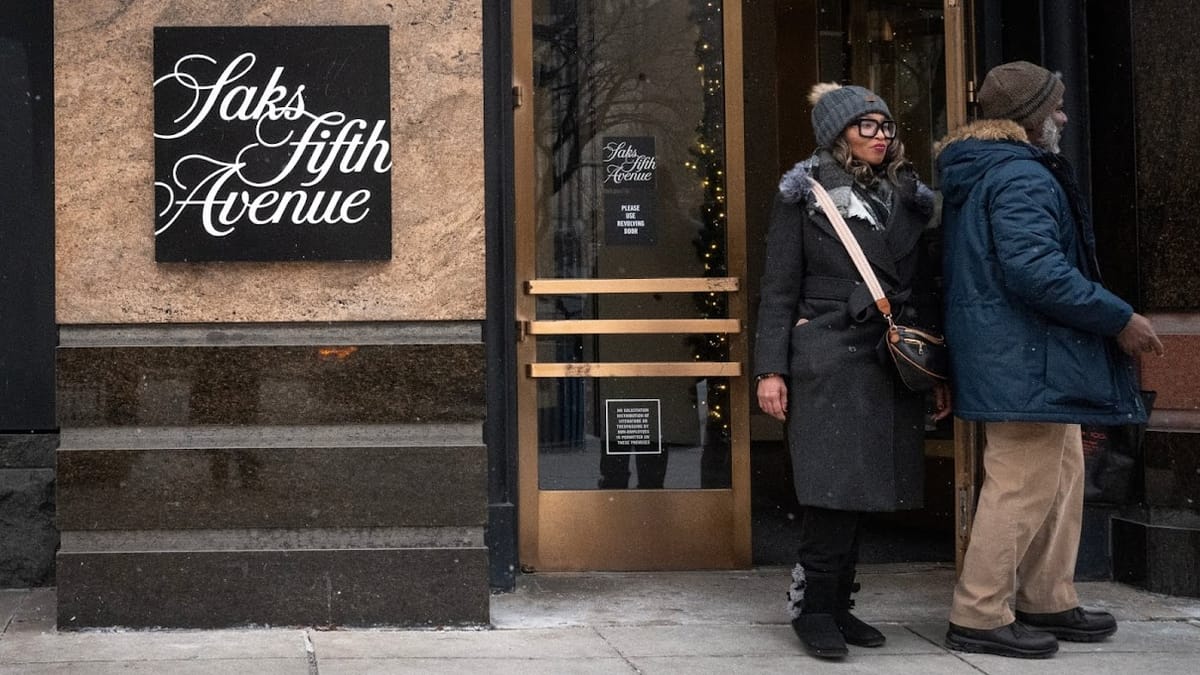
Saks Global, parent company of Saks Fifth Avenue, Neiman Marcus, and Bergdorf Goodman, filed for Chapter 11 bankruptcy protection late Tuesday after debt from its Neiman Marcus acquisition crushed operations.
The 159-year-old luxury retailer listed $1 billion to $10 billion in assets and liabilities in filings submitted to U.S. Bankruptcy Court in Houston. The company secured $1.75 billion in financing to continue operations while restructuring, with stores remaining open. Saks Global missed a $100 million interest payment connected to its $2.7 billion acquisition of Neiman Marcus in December 2024. The deal was intended to create a luxury retail powerhouse but instead saddled the company with unsustainable debt as luxury spending slowed and brands increasingly sold directly to consumers. Former Neiman Marcus CEO Geoffroy van Raemdonck immediately replaced Richard Baker as chief executive. Baker had only held the position for two weeks after previous CEO Marc Metrick stepped down when the company missed the debt payment. The bankruptcy filing reveals Saks owes approximately $136 million to Chanel and $60 million to Kering, Gucci's parent company. Between 10,001 and 25,000 creditors are listed, with numerous luxury brands among unsecured creditors.
Saks struggled throughout 2025 to pay vendors, who began withholding inventory in response. The supply chain disruption left shelves understocked at key locations, driving customers to competitors like Bloomingdale's. Some suppliers are owed between $50,000 and $10 million, according to legal representatives. The company's debt-to-payment terms averaged 30-41 days late in 2025—more than three times the industry average of nine days. Financial pressure forced Saks to sell the Neiman Marcus Beverly Hills flagship real estate in December and explore selling a minority stake in Bergdorf Goodman. Saks Global operates 38 Saks Fifth Avenue stores, 36 Neiman Marcus locations, and two Bergdorf Goodman stores. The company confirmed it will evaluate its "operational footprint" during restructuring, suggesting store closures.
Industry sources identified potential closures in Las Vegas, San Antonio, and Orlando, while stronger locations in Houston, Beverly Hills, and Boston may survive. Retail analyst Neil Saunders noted "the only real surprise has been the speed of the collapse" roughly one year after the Neiman Marcus deal closed. He attributed the bankruptcy to a "classic vicious spiral" where cash shortages led to unpaid suppliers, inventory gaps, declining revenue, and reduced cash generation. The filing represents one of the largest retail collapses since the COVID-19 pandemic and the first major retail bankruptcy of 2026. Saks expects to emerge from bankruptcy later this year with restructured operations focused on sustainable growth areas.

Comments