
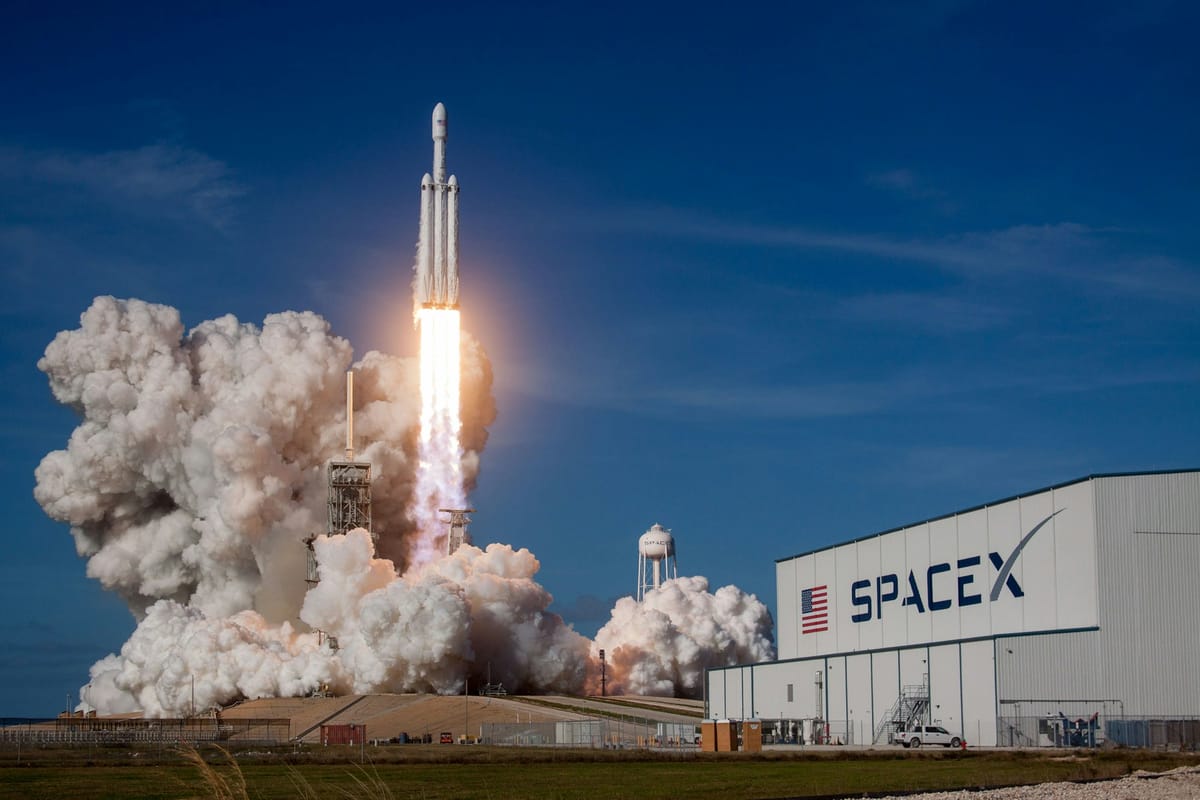
SpaceX has filed confidentially with the SEC for an initial public offering that could value the company at $1.75 trillion, making it the largest IPO in U.S. history by a wide margin if it prices at that level.
The filing, confirmed by multiple reports on April 1, 2026, is internally codenamed "Project Apex." The company is targeting a June 2026 listing and is looking to raise approximately $75 billion, roughly three times the previous record for a U.S. IPO.
The Scale
To put it in perspective: the largest U.S. IPO ever was Saudi Aramco's 2019 listing, raising about $25.6 billion. SpaceX is targeting three times that. The $1.75 trillion valuation would make it one of the most valuable companies in the world at the time of listing, sitting alongside Apple and Microsoft.
SpaceX has lined up 21 banks to manage the offering, an unusually large syndicate, even for a deal this size. Morgan Stanley, Goldman Sachs, and JPMorgan are reportedly leading the effort. The company is planning to allocate roughly 30% of shares to retail investors, a move designed to generate broad public ownership and visibility.
What SpaceX Actually Is Now
The company's projected 2026 revenue is approximately $20 billion, driven primarily by Starlink, its satellite internet division. Starlink has crossed 10 million subscribers and is now the dominant provider of satellite broadband globally. The launch business — Falcon 9, Falcon Heavy, and Starship — remains the world's most active and most cost-efficient.
SpaceX also holds long-term NASA contracts, including the Artemis lunar lander (HLS) and crew transport via Dragon. The government contract pipeline adds a layer of revenue visibility that most consumer tech IPOs can't claim.
The xAI Complication
One of the more complex elements of the IPO structure involves xAI, Elon Musk's artificial intelligence company. xAI had been carrying approximately $17.5 billion in debt, and reports indicate it was merged into SpaceX's corporate structure — with that debt repaid prior to the IPO filing — to clean up the balance sheet before going public.
The move consolidates Musk's AI ambitions under the SpaceX umbrella and simplifies the capital structure for potential investors, but it also raises questions about how SpaceX's valuation accounts for AI assets that are still in their early stages. The consolidation also turned xAI backers into SpaceX shareholders: Nvidia's second-quarter 13F disclosed roughly 122.8 million SpaceX Class A shares worth about $21 billion, stemming from its $10 billion January investment in xAI.
Dual-Class Shares, Musk Stays in Control
The offering will use a dual-class share structure, meaning Elon Musk retains voting control even after public shareholders come in. This is standard practice for founder-led tech companies — Meta, Google, and Snap all went public with similar structures — but it means public investors are buying economic exposure, not governance influence.
Why Now
SpaceX has been private for over two decades, funded by venture capital, government contracts, and strategic raises. The company has had no need to go public from a liquidity standpoint. But at $1.75 trillion, the IPO creates an exit path for early investors, liquidity for employees, and a public currency for future acquisitions.
A June 2026 listing would also coincide with a strong market window — one shaped significantly by AI enthusiasm and defense-tech tailwinds, both of which benefit SpaceX.



Comments