
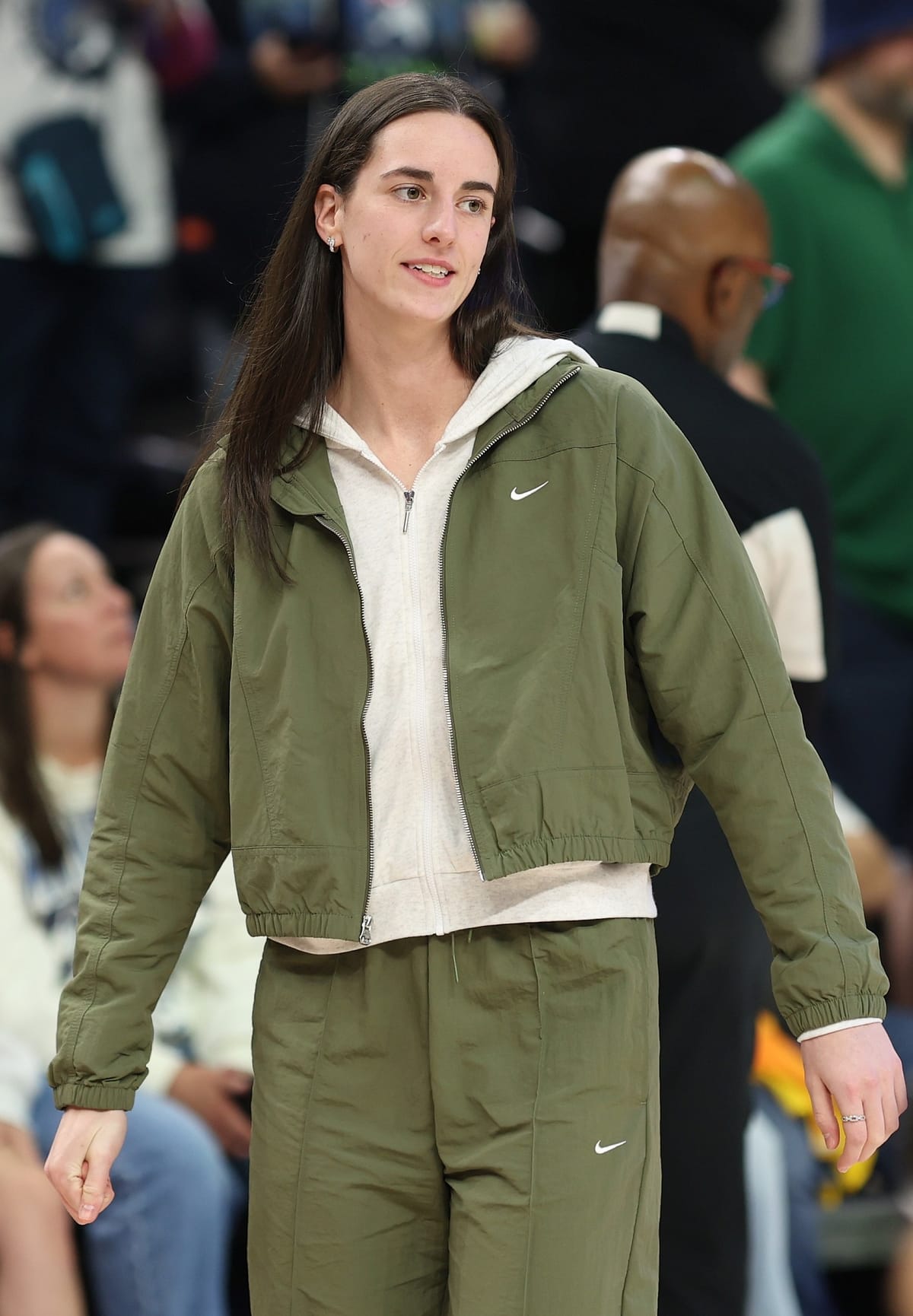
Caitlin Clark is the second-best-selling basketball jersey in the United States, trailing only Stephen Curry. The ranking, drawn from Fanatics retail data, was first reported by Hypebeast on May 21 and counts cumulative jersey sales across every basketball league sold through the platform — NBA, WNBA, college, retros, the lot. Clark is ahead of LeBron James, Luka Dončić, and Michael Jordan.
What the ranking actually measures
Fanatics is the dominant licensed-merchandise distributor for both leagues, so the figure is a reasonable proxy for total U.S. jersey commerce, not just league-specific sales. Two filters matter: it is cumulative since the 2024 WNBA Draft (so it captures Clark's pro career plus her rookie year), and it is U.S.-only — Dončić, Wembanyama, and Giannis Antetokounmpo all generate large international jersey volume that this ranking does not see.
Inside those filters, the rank is the rank. A third-year WNBA guard outsells every basketball player in the country except one. That is not a marketing-stunt number. It is a quarterly procurement number.
How fast this got here
Clark's Iowa #22 was one of the best-selling college jerseys ever in the year before she turned pro. Her Fever #22 sold out in under an hour after the 2024 WNBA Draft. WNBA merchandise sales were up roughly 1,000% year-over-year in her rookie season, the league reported. Indiana Fever tickets on StubHub this year are running roughly 90 times higher than they were in 2023. The compounding ladder — college star → draft → rookie year → second contract halo → third year — has been almost mechanically perfect.
The harder number to read is how durable the demand is. The closest historical comparison is LeBron James in 2003-2005, where the first three years of jersey demand became permanent demand. Steph Curry's own breakthrough — the 2014-15 MVP season — produced jersey sales that have never come back down. Clark has now logged three pro seasons of top-tier merch demand, which is the window where these things either compound or normalize. The 2026 number suggests they are compounding.
What it means for the WNBA's bargaining position
The CBA expires after the 2025 season and the WNBA Players Association has been bargaining for a structural pay raise tied to media-rights and merchandise revenue growth, not just league-revenue percentages. Clark sitting at #2 in U.S. basketball jersey sales — over multiple NBA superstars — is the cleanest single data point the union has. It does not just say "the WNBA is bigger." It says the most commercially valuable basketball athletes in the country are now distributed across both leagues, and the compensation structure has not caught up.
The Hypebeast number lands the same month the league has been navigating a 36% All-Star Game ratings drop when Clark sat out — another data point in the same argument. One player carrying that much commercial gravity is unusual in any league. The current pay scale was designed for a league where she did not exist. The next one will not be.
What to watch for
Two follow-on questions. First, how Curry's lead holds up as he moves through what is likely his final two competitive seasons — if Clark closes that gap, the #1 basketball jersey in the country will be a WNBA guard for the first time in the league's history. Second, whether Nike's signature-shoe pipeline (Clark is in the second year of an eight-year, $28M deal with a signature line coming) starts to read in the data the way LeBron's Nike line did within his first five years. The jersey number is the leading indicator. The shoe number is the trailing one.
Comments