
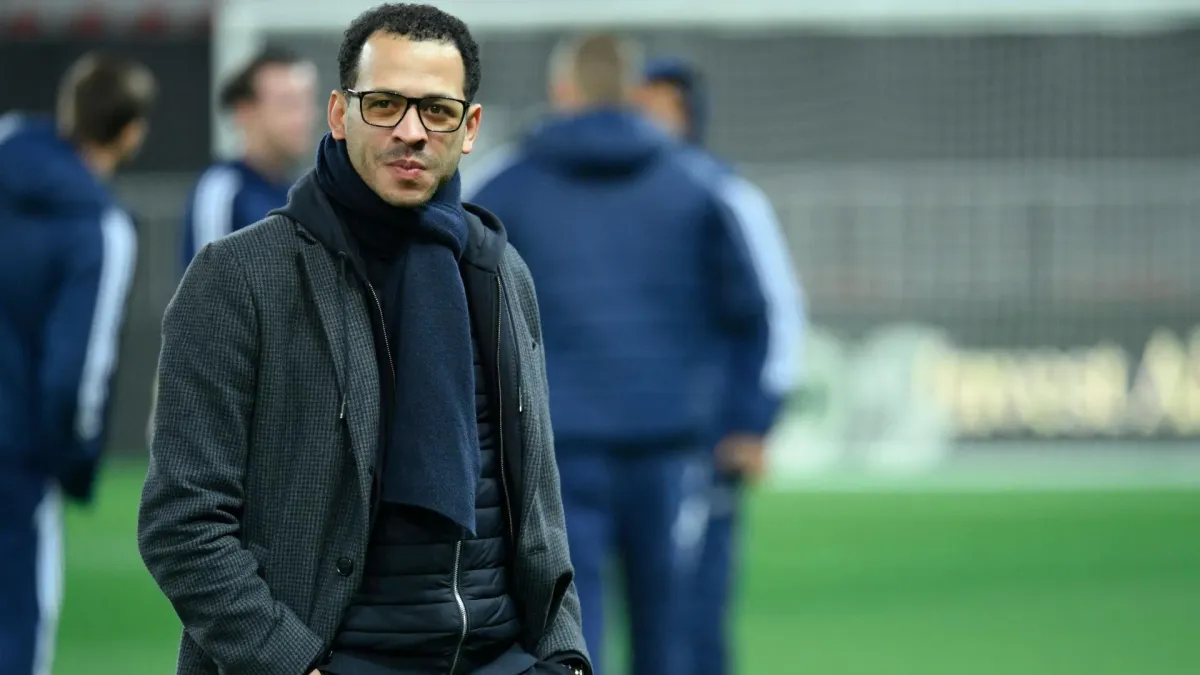
Chelsea's expected appointment of Liam Rosenior exposes how BlueCo's multi-club ownership structure functions as an institutional development pathway rather than just a player pipeline. The 41-year-old Strasbourg manager arrived in London on Sunday for interviews following Enzo Maresca's New Year's Day departure, representing the clearest example yet of how Chelsea uses its French sister club as a testing ground for managerial talent before promoting internally.
The consortium purchased Strasbourg in 2023, one year after acquiring Chelsea, creating a structural framework where both clubs share ownership, recruitment philosophy, and increasingly, personnel. Rosenior joined Strasbourg in June 2024—just weeks before Maresca took the Chelsea job—and led them to seventh in Ligue 1 while implementing a possession-based approach aligned with Chelsea's preferred playing style. His first match produced Ligue 1's first all-under-23 starting lineup, signaling a commitment to youth development that mirrors Chelsea's squad construction.
The convenience factor separates this appointment from traditional managerial searches. Strasbourg president Marc Keller and sporting director David Weir flew to London alongside Rosenior specifically to interview his replacement, treating the move as an internal transfer rather than an external hire. Chelsea face no compensation negotiations, no contractual barriers, no philosophical misalignment—Rosenior already operates within BlueCo's institutional framework and understands the multi-director structure that contributed to Maresca's exit.
Maresca's departure revealed fundamental tensions between Chelsea's operational model and managerial expectations. The Italian reportedly grew frustrated with five sporting directors limiting his input on recruitment and medical staff maintaining autonomous control over player workload decisions. His public complaints about experiencing "the worst 48 hours" at the club—later revealed as disputes with the medical department—and reported talks with Manchester City indicated a deteriorating relationship with Chelsea's institutional structure.
The breakdown occurred despite winning the Conference League, Club World Cup, and securing a fourth-place Premier League finish. Chelsea's fifth managerial change since BlueCo's 2022 takeover reflects a systematic approach prioritizing institutional control over individual authority. Graham Potter, Frank Lampard, Mauricio Pochettino, and now Maresca all departed after conflicts with the multi-director structure that diffuses traditional managerial power. Rosenior's hire suggests Chelsea views this framework as non-negotiable—better to promote managers already acclimated to limited autonomy than adapt institutional structure to accommodate external candidates. The Strasbourg pathway allows Chelsea to identify coaches comfortable operating within constraints that eliminated more established predecessors.



Comments