
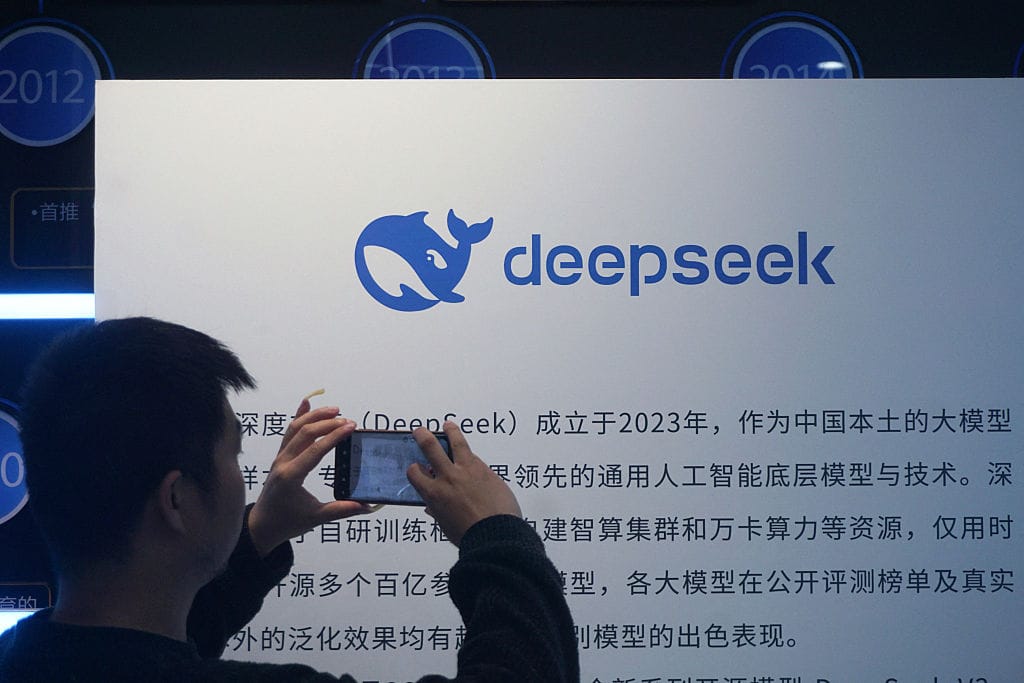
DeepSeek dropped a preview of its V4 model on April 24 — two SKUs, both open-source, both with one million token context windows. DeepSeek-V4-Pro runs 1.6 trillion parameters (49 billion activated). DeepSeek-V4-Flash runs 284 billion parameters (13 billion activated). Both are MIT licensed with full weights on Hugging Face, meaning free commercial use, no restrictions.
The benchmarks are the headline. V4-Pro leads every current open-source model on math, coding, and world knowledge, and rivals the top closed models from Anthropic, OpenAI, and Google. On LiveCodeBench it scores 93.5% against Claude's 88.8%. On SWE-bench — real-world software engineering tasks — it hits 80.6%. It outperforms Claude on coding. From a Chinese lab. Open source. Free.
The efficiency architecture is almost as significant as the raw capability. At 1 million token context, V4-Pro requires only 27% of the inference compute needed by DeepSeek-V3.2. A model pushing frontier-level performance while running faster and cheaper than its predecessor is a direct challenge to every pricing model the American AI labs have built their businesses around.
DeepSeek made this argument once before, in January 2025 with V3. That release sent a shockwave through the industry — the stock market moved, boardrooms scrambled. V4 Pro makes the same argument again, with stronger evidence and a bigger model. The competitive implication is direct: Anthropic, OpenAI, and Google can no longer use capability as a moat when an open-source lab in Hangzhou is matching them on code benchmarks and giving the weights away for free.
Related on Uristocrat: Anthropic's $30B round at a $900B valuation.
The open-weights strategy has since been followed by a financing: DeepSeek is raising about .4 billion at a billion valuation.
Comments