
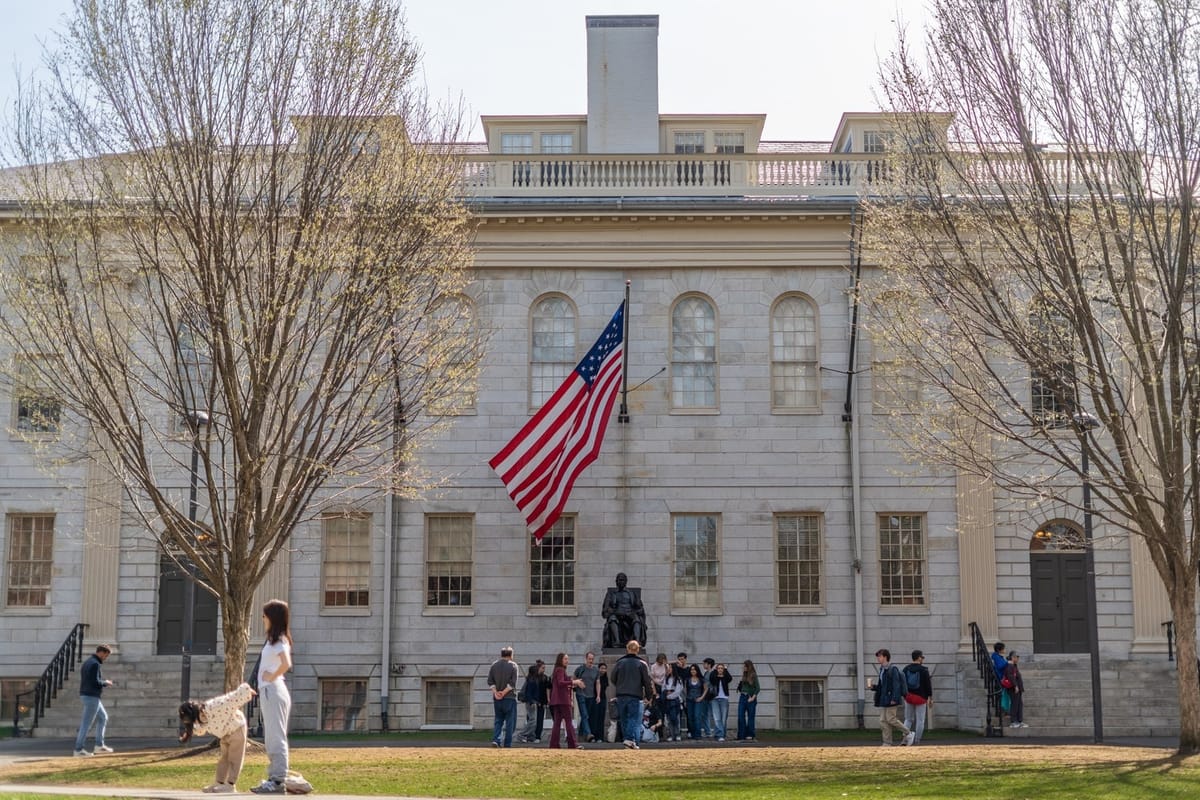
Harvard's Faculty of Arts and Sciences voted 458-201 on Tuesday to cap A grades at 20 percent of any undergraduate course's enrollment, plus up to four additional students. The policy passed with 69.5 percent support, takes effect in the fall of 2027, and is the most structural response to grade inflation at any elite American university in decades.
The Numbers Behind the Vote
The vote followed an internal report showing that more than 60 percent of undergraduate grades awarded during the 2024-25 academic year at Harvard were A's — up from 40 percent in 2015 and 24 percent in 2005. Roughly one in five members of the 2025 graduating class earned a 4.0 GPA. A first-pass adjustment after a fall 2025 nudge from administration brought the share down to 53 percent, but the faculty concluded the soft pressure was not enough.
Dean of Undergraduate Education Amanda Claybaugh framed the case in her October memo, warning that grade inflation was "damaging the academic culture" of the College. After the vote she called it "a consequential vote" that will "strengthen the academic culture" and restore meaning to Harvard transcripts. The faculty subcommittee that drafted the policy put it more bluntly: an A "will once again be what Harvard's guidelines have long said it is: a mark of extraordinary distinction."
Students Pushed Back, Hard
A February survey of 800 students by the Harvard Undergraduate Association found nearly 85 percent opposed the cap. The objections cluster around two arguments: that a forced ceiling will distort collaboration into competition inside classrooms — particularly in pre-professional sequences where every fractional GPA point feeds law-school and medical-school applications — and that capping A's at Harvard while peer institutions keep inflating will functionally lower Harvard graduates' GPAs relative to the very schools they compete with for residencies, clerkships, and consulting offers.
The faculty heard the argument and voted anyway.
What This Signals
The bigger story for the people Uristocrat writes for — readers who hire out of these schools, hold degrees from them, or have kids about to apply — is what a 20 percent A cap implies about the credential itself. The argument for the cap is that a transcript that no longer distinguishes between students has stopped functioning as a credential at all. Employers already know this; law-school and medical-school admissions offices already know this; the proliferation of standardized signals like the LSAT, the MCAT, and structured behavioral interviews is partly downstream of GPA inflation gutting the transcript's information value.
Harvard moving first matters because Harvard moving first gives every dean at every peer institution political cover to follow. Yale, Princeton, and Brown have each studied versions of this policy in the last five years and shelved them every time, citing concern about putting their own students at a relative disadvantage. If the most-resourced, most-watched college in the country sets a cap, the prisoner's dilemma flips: holding inflation now means saying, on the record, that your students need easier grades than Harvard's.
The Other Pressure on the Transcript
Tuesday's vote also lands in a year where the meaning of a college credential is being re-examined across the board — from federal funding politics to changing employer screens. The Department of Education's $435 million reallocation to HBCUs last fall moved billions in federal dollars on a shorter timeline than anyone expected, and the broader argument across higher-ed policy this year has shifted from access (who gets in) to signaling (what the degree actually means once you do).
Faculty implementation begins in the fall of 2027. The 2026-27 academic year will be the last graded under the current regime — a transcript window the Class of 2027 will hold for the rest of their careers.


Comments