
Key Points
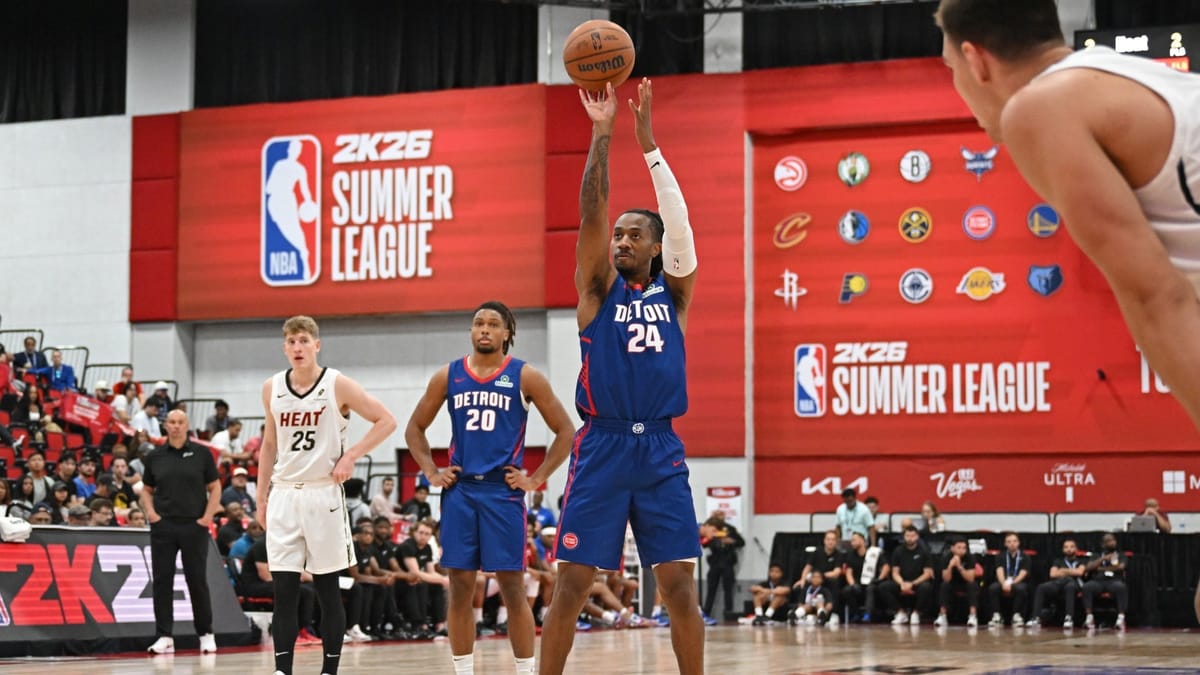
- The NBA will test a "one free throw" rule at 2026 Summer League to speed up play.
- A single free throw will be worth 1, 2, or 3 points, matching the foul.
- Standard rules apply in the last two minutes of the fourth quarter and all overtime.
- A sensor-embedded "connected basketball" will collect data for future officiating.
The NBA is using its 2026 Summer League to test two changes to the game: a streamlined free-throw rule and a basketball with a sensor inside it. Any foul that would normally send a player to the line for one, two, or three shots will instead become a single free throw worth that many points.
Get fouled on a two-point attempt and you shoot one free throw worth two points if it goes in; get fouled behind the arc and the single make is worth three. The goal is pace — cutting the dead time of trips to the line. The rule does not run the whole game: standard free-throw rules return for the last two minutes of the fourth quarter and all of overtime. It is not a wild experiment, either; the G League has used it since the 2019-20 season.
The second test is quieter. The ball used this summer has an embedded sensor that detects contact with it — imperceptible to players, with a negligible weight change — and the point is data. The NBA wants to feed future officiating tools, starting with the perennial guesswork of last-touch out-of-bounds calls.
The read: Summer League is the league's sandbox, and both tests aim at its least-loved friction points. The one-free-throw rule attacks the pace problem the NBA has been chewing on since scoring took its biggest nosedive of the modern era, and a chip in the ball is the kind of officiating tech that tends to arrive quietly and then become permanent. Neither is guaranteed to reach real games — but a rule with six seasons of G League proof, tested by a league that keeps reshaping itself, is worth watching this July.
Comments