
Key Points
- Opens to the public June 19 (Juneteenth) in Jackson Park, Chicago
- A dedication ceremony precedes the opening on June 18
- The roughly $850M campus pairs a museum with a Chicago Public Library branch
- Amenities include The Forum, public plazas, and an NBA-regulation court
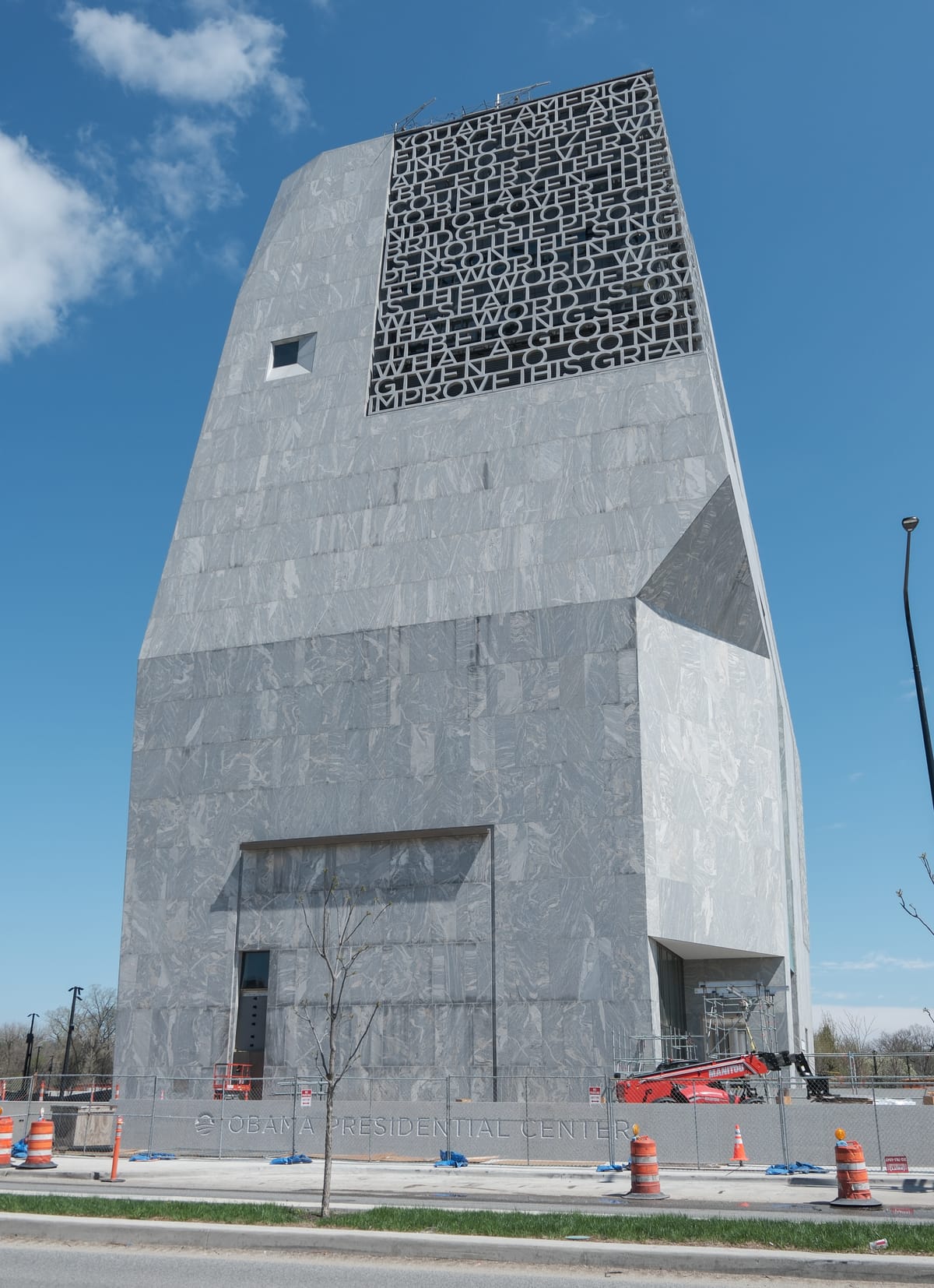
Nearly a decade after it was announced, the Obama Presidential Center opens to the public on June 19 — Juneteenth — in Chicago's Jackson Park, with a dedication ceremony the day before. The roughly $850 million campus is the most expensive presidential center ever built, and it is deliberately not a presidential library in the old sense.
What it is
The centerpiece is a museum tower on the South Side, surrounded by a campus that includes a branch of the Chicago Public Library, a civic gathering space called The Forum, a 60,000-square-foot athletic building with an NBA-regulation court, the John Lewis Plaza, the Eleanor Roosevelt Garden, and more than two dozen public art installations. It is less a vault than a town square — built to draw foot traffic into a historically disinvested stretch of Chicago rather than to archive paper.
Why it breaks the model
Traditional presidential libraries are run by the National Archives and store a president's physical records. The Obama Center deliberately broke from that template: the presidential records are digitized and still administered through the National Archives, while the Obama Foundation — not the federal government — runs the campus itself. That choice drew years of criticism over public-land use in Jackson Park and the lack of a binding community benefits agreement, and it also gave the Obamas full control over what the institution becomes. The result is a privately governed civic monument, funded by donors rather than appropriations.
The read
This is legacy-building as real estate. A presidential library is usually a place you visit once; the Obamas are betting on a campus you return to — for a pickup game, a library card, a programmed event — that keeps the brand active long after the presidency. It mirrors the post-office playbook the family has run through Higher Ground, the production company behind their film and television slate: own the institution, control the narrative, and treat influence as something to be built and operated, not retired into.
Source: CBS News Chicago, CNBC


Comments