
The Week That Was
Ten years after one of the most iconic final games in NBA history, Nike turned a sneaker into a eulogy. The NBA Playoffs tipped off today with the league's most compelling first-round bracket in years — including a father-son duo making history. Coachella's second weekend wrapped with fashion emerging as the real headliner. And Stanford confirmed what the industry suspected: China has all but closed the AI gap, leaving the U.S. holding a lead measured in arithmetic, not magnitude.
Sneakers: The Shrine Drop
Nike Kobe 11 "Mamba Day" — Ten Years, One Sneaker
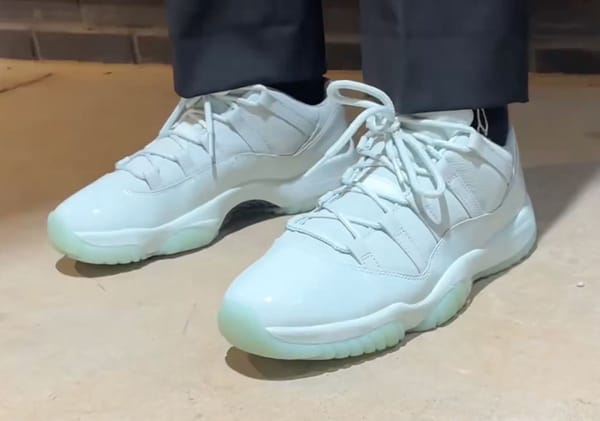
On April 13, 2026 — exactly a decade after Kobe Bryant dropped 60 points in his final NBA game — Nike released the Kobe 11 EM Protro "Mamba Day" and "Fade to Black" at $200 a pair. The "Mamba Day" colorway is less a sneaker and more an archive: etched across the upper in gold are the dates of Bryant's first and last games, his five championships, four All-Star MVP awards, 18 All-Star selections, the infamous 81-point performance, and jersey number 24. The year "2026" appears on the tongue tag to distinguish it from the 2016 original, which was only available as a Nike iD custom.
Nike also dropped the Kobe 9 EM Protro "Steam" on the same date, effectively turning April 13 into Kobe Day for a generation of collectors who were in elementary school when he played his last game. The sell-through rate has been consistent with prior Kobe retros — which is to say: fast.
Why It Matters: The Kobe line occupies a unique space in sneaker culture — it sits at the intersection of performance heritage, personal mythology, and grief. Each retro wave tests whether that emotional resonance holds across generations who didn't watch him play. This drop suggests it does.
Also Dropping This Week: The Virgil Abloh x Air Jordan 1 "Alaska" continued its multi-week rollout into mid-April. The Ja Morant x Jurassic Park collab dropped April 10 to significant social buzz. Pharrell's razor-thin adidas response to his own chunky Jellyfish dropped in several colorways — the anti-maximalist statement of the season.
Sports: Playoffs, History, and the Giannis Cloud
The 2026 NBA Playoffs Begin — and the James Era Has a New Chapter
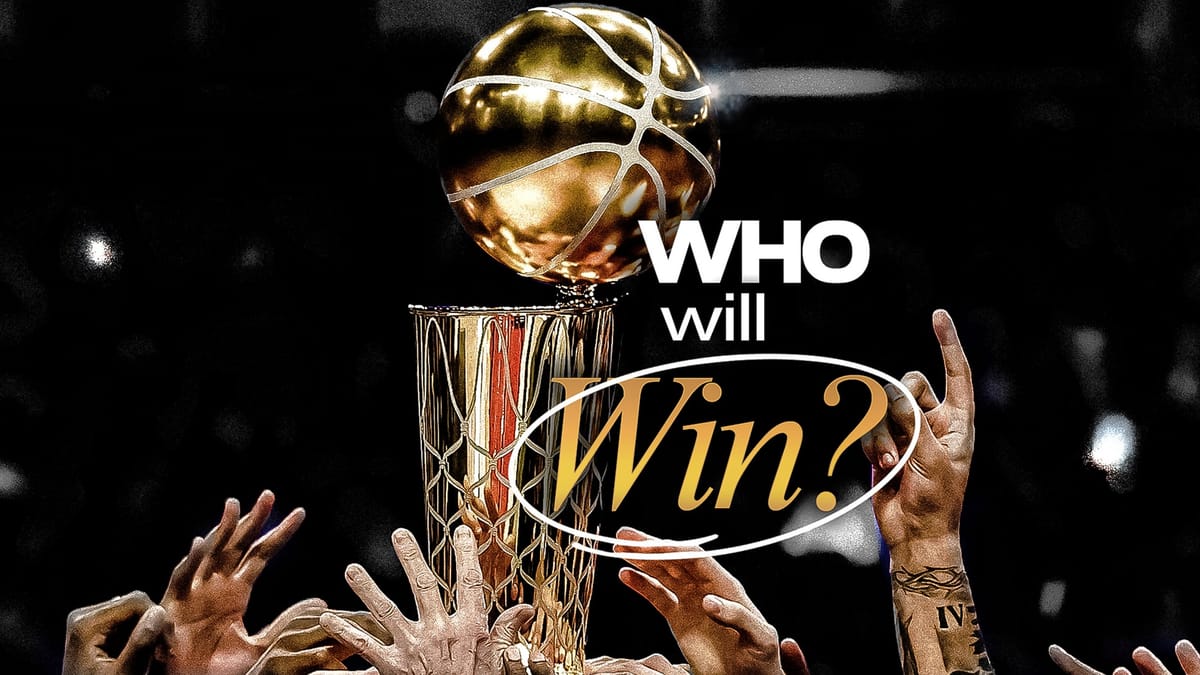
The 2026 NBA Playoffs officially tipped off today, April 18, with the most anticipated first round in years. The regular season ended April 12 with all 30 teams playing on the same night — a league tradition that's become its own kind of ritual — and the play-in tournament ran April 14–17 to set the final bracket.
Eastern Conference First Round:
- (1) Detroit Pistons vs. (8) Orlando Magic
- (2) Boston Celtics vs. (7) Philadelphia 76ers
- (3) New York Knicks vs. (6) Atlanta Hawks
- (4) Cleveland Cavaliers vs. (5) Toronto Raptors
Western Conference First Round:
- Denver Nuggets vs. Minnesota Timberwolves
- Houston Rockets vs. Los Angeles Lakers
- San Antonio Spurs vs. Portland Trail Blazers
The narrative story of the bracket: LeBron James and Bronny James are both on the Lakers playoff roster, making them the first father-son duo to share a playoff roster in league history. That alone would be the story of the first round — except Giannis Antetokounmpo's availability with the Bucks (or lack thereof) is generating parallel trade speculation that threatens to overshadow the games themselves, per The Ringer.
The play-in produced two notable upsets: the Portland Trail Blazers knocked out the Phoenix Suns to claim the West's (8) seed, and the Charlotte Hornets beat the Miami Heat in overtime — 127–126 — to claim the East's (9) seed, with rookie Kon Knueppel turning in a performance that has already reframed what Charlotte's rebuild looks like.
NFL: The offseason continues with the 2026 NFL Draft dominating coverage. No in-season news, but draft analysts have been active across all platforms.
Culture: The Desert and the Biopic
Coachella 2026 — Fashion as the Main Stage
Coachella's Weekend 2 ran April 17–19, headlined by Justin Bieber, Sabrina Carpenter, and Karol G. Carpenter's "Sabrinawood" set — an expanded, cinematic production staged in collaboration with Dior — ran ten minutes longer than Weekend 1, suggesting the festival is leaning into fashion-as-spectacle as a competitive differentiator.
The fashion week-in-review from both weekends tells a consistent story: desert boho has upgraded. The dominant looks across the festival grounds featured miniskirts and micro shorts in stretch fabrics and crisp denim, suede jackets with tasseled details, fringe-trimmed bags, low-slung oversize belts layered over dresses, and cowboy hats that have drifted from ironic to sincere. The REVOLVE Festival on April 11 — held alongside Coachella as a celebrity satellite event — provided the fashion-editorial counterpoint: curated looks for cameras rather than comfort.
The meta-story of Coachella 2026 fashion is a generational one: American Bazaar noted the shift from cultural appropriation conversations around Indian fashion elements (which dominated Coachella discourse in prior years) toward what Gen Z is framing as genuine cross-cultural appreciation. Whether that framing holds up to scrutiny is another question — but the conversation itself has evolved.
The Michael Jackson Biopic Is Already a Cultural Event
The Michael Jackson biopic Michael, starring Jaafar Jackson, hits screens April 24. The film is generating unusual pre-release cultural weight: it arrives amid renewed debates about legacy, creative estate control, and what it means to dramatize a contested life. The casting of Jackson's own nephew as the lead is either inspired or protective, depending on who you ask. The week ahead will tell us which side of that debate has more cultural mass behind it.
Technology: The AI Gap That Wasn't
Stanford's 2026 AI Index: China Has Almost Caught Up
Stanford HAI released its 2026 AI Index Report this week, and the headline number deserves to land with appropriate weight: the performance gap between the top U.S. AI model (Anthropic's Claude Opus 4.6) and China's best model (Dola-Seed 2.0) has narrowed to just 39 Arena points — a 2.7% lead. In May 2023, that same gap was more than 300 Arena points, with GPT-4 leading China's top model by a wide margin. The two countries have traded the lead multiple times since early 2025.
The report's broader context complicates the simple narrative:
- The U.S. still dominates private AI investment: $285.9 billion in 2025, versus China's $12.4 billion — more than 23x.
- The U.S. funded 1,953 new AI companies last year, more than 10 times any other country.
- But the number of AI scholars moving to the U.S. has dropped 89% since 2017 — and that decline accelerated 80% in the past year alone.
- China leads in publication volume, patent output, and industrial robot installations.
The talent pipeline is the real story. Investment can be deployed quickly; a generation of researchers cannot. Stanford's finding that AI safety benchmarks are also not keeping pace with capability acceleration adds a governance dimension that the investment numbers don't capture.
The separate PwC AI Performance Study, released this week, found that three-quarters of AI's economic gains are being captured by just 20% of companies — and those leading companies are focused on growth, not just productivity. Generative AI has now reached 53% population adoption in three years — faster than the personal computer, faster than the internet.
Why It Matters for Uristocrat's Audience: The AI gap story isn't abstract geopolitics. It's a direct signal about where the tools urban professionals use every day — from creative platforms to financial services — are heading, who controls the underlying infrastructure, and how quickly the competitive landscape can shift.
Recent From Uristocrat
- Ten Years Later: Nike's Kobe 11 "Mamba Day" Is a Shrine, Not a Sneaker
- The James Era, Chapter Two: LeBron and Bronny Are About to Make NBA Playoff History
- The Stanford AI Index 2026: Generative AI Outpaced the Internet. Now Comes the Reckoning.
- One Week Out: Why the 'Michael' Biopic Is Already a Cultural Event
- Daily Roundup — April 16, 2026
The Uristocrat Intelligence Brief publishes every Saturday. It covers the week's most significant developments across Sneakers, Sports, Culture, and Technology — with analysis for urban professionals who move at the intersection of all four.
Comments