
July 5–11, 2026 · The week the smart money moved one layer beneath the product.
This Week
Look past the headlines and the same trade repeats across every vertical: the value moved down a layer. SK Hynix raised $28 billion on the Nasdaq not to sell a product but to own the memory every AI model runs on. Apple sued OpenAI to protect the intellectual property beneath a device that doesn't exist yet. Victor Wembanyama left $50 million on the table to keep control of his team's flexibility. The winners this week weren't buying the surface. They were buying the substrate.
Sneakers — What Dropped, What It Means
The most important sneaker story of the week wasn't a shoe — it was a lease. Joe Freshgoods opened his "Every Now and Then" flagship, anchored by a new New Balance 992, and in doing so moved from collaborator to landlord. A collab rents you a brand's audience for one drop; a storefront lets you own the customer relationship permanently. That is the same layer-beneath logic playing out in retail.
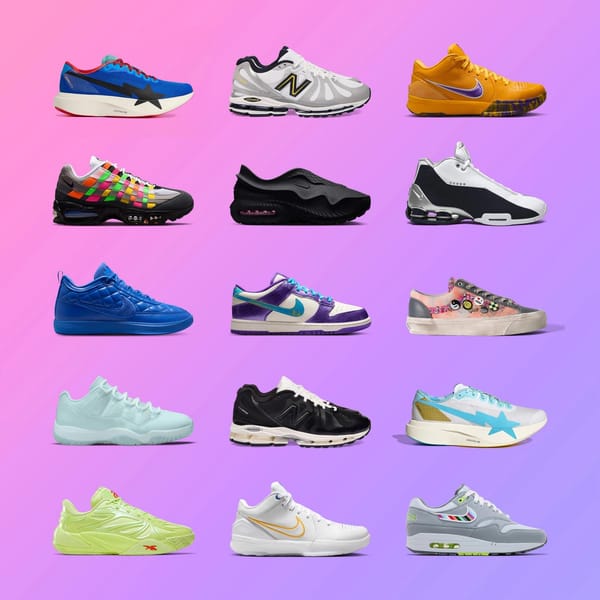
The drops themselves stayed strong. The SOULGOODS x Nike Homescape Woven released July 11 at $180, and the BAPE x Vans Knu Skool Pack arrives July 15 at $150 — two collabs that still trade on borrowed brand equity. Meanwhile the on-court signal kept building: Caitlin Clark debuted a yellow Nike Caitlin 1 in Fever colors, and AJ Dybantsa surfaced an unreleased Nike GT model at Summer League — Nike quietly seeding its next signature roster before the athletes are stars.
For strategists: the collab is now the marketing layer and the owned store is the balance-sheet layer. Freshgoods opening a flagship is a creator deciding he wants the second one, not just the first.
Sports — The Business Behind the Game
Wembanyama's extension is the cleanest expression of the week's thread. He signed a five-year, $252 million deal and declined the 30% supermax escalators that would have pushed it toward $303 million — pricing his own optionality above the headline number and handing San Antonio roughly $50 million of roster flexibility. In an era of guaranteed supermax deals, a franchise player choosing to buy his team room is a genuinely new move worth studying.
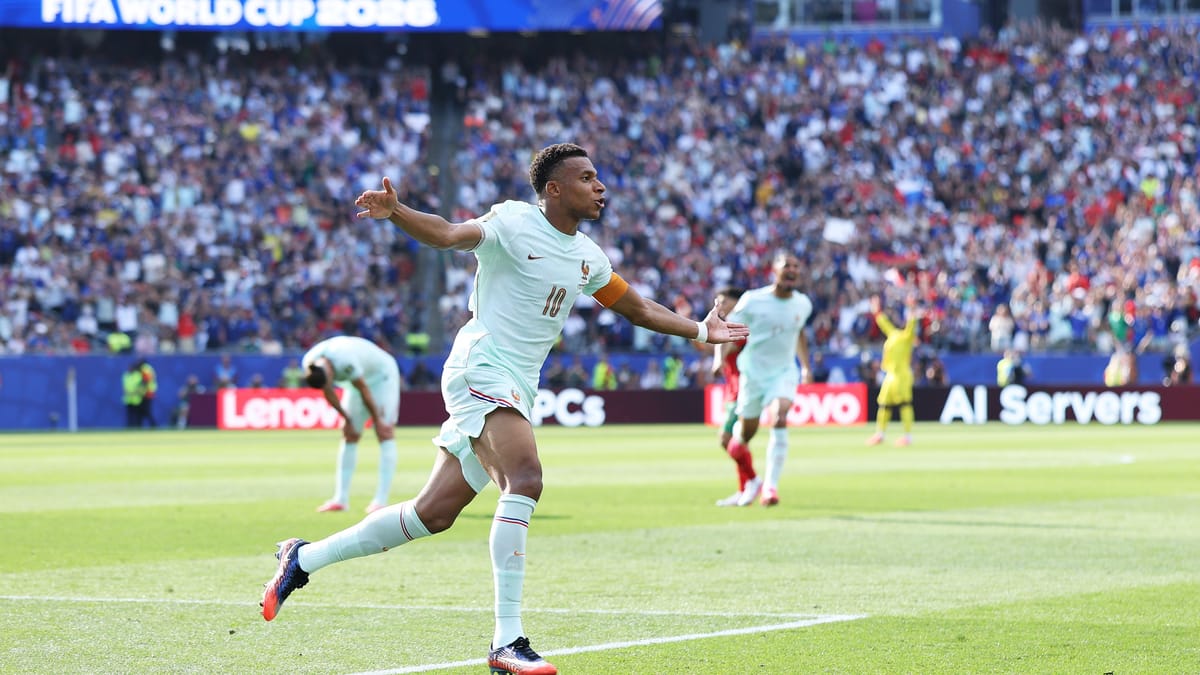
The bigger commercial event arrives Tuesday: France meet Spain in a World Cup semifinal at AT&T Stadium on July 14, after Spain edged Belgium 2–1 on a late Merino goal. This is the third straight major tournament these two have met in the semis — but the location is the story. A marquee knockout on US soil is the sponsorship infrastructure the American soccer market has been building toward for a decade, and it is being priced right now. At Wimbledon, Jannik Sinner dismantled Djokovic in straight sets to reach the final against Zverev, while Karolína Muchová beat Coco Gauff to set an all-Czech women's final.
For the people building around sports: the World Cup semifinal isn't an impressions buy, it's a real-estate buy — the brands that win it are the ones treating July 14 as owned inventory, not a spot to advertise against.
Culture — What's Moving and Why
Future released "The Real Me", his first solo album in four years — 22 tracks with zero guest features. In a streaming economy engineered around feature swaps and playlist cross-pollination, releasing a feature-free project is an ownership statement: no borrowed audiences, no split equity, the entire bet placed on his own catalog. It landed to mixed reviews (Billboard), but the strategic posture matters more than the Metacritic score — it's the musical version of Freshgoods opening his own store.
In the art market, George Condo returned to Hauser & Wirth less than a year after leaving, a reminder that in the gallery system the represented artist is the infrastructure — the asset every mega-gallery is actually competing to control. For a brand strategist, the throughline across music and art this week is the same: distribution is cheap and commoditized; the scarce, defensible layer is the owned catalog and the direct relationship.
Technology — The Layer Beneath the Model
The AI story stopped being about models this week and became about the stack underneath them. SK Hynix's $28 billion Nasdaq listing — the second-largest share sale in history behind only SpaceX's ~$85.7 billion — is a bet that the memory-chip bottleneck, not the model, is where AI's durable margins sit. Then Apple sued OpenAI for alleged trade-secret theft "at every level," accusing it of harvesting Apple hardware IP to build its own devices — the final rupture of a partnership that began with ChatGPT in iOS and broke when OpenAI bought Jony Ive's IO Products for $6.4 billion. Both fights are about the same thing: who controls the physical and legal substrate of AI hardware. And in a week when the field is racing to build faster, Anthropic topped the Future of Life Institute's AI Safety Index — with a C+, a grade that says the leader is the least behind, not that anyone is passing.
On Your Radar — Apply This to Your Week
For brand strategists: Treat the France–Spain semifinal at AT&T Stadium as owned inventory, not an impressions buy. The clients who win July 14 are the ones building content around the event, not renting a logo placement next to it. Restructure the deck around what you own coming out of the match.
For operators and investors: SK Hynix's listing is the tell that the AI trade has moved from models to memory. When "SKHY" begins regular trading July 13, watch how the market prices the bottleneck layer — it's a cleaner read on durable AI demand than any model launch.
For creators: Joe Freshgoods' flagship and Future's zero-feature album are the same play. Own the customer relationship (a store) or the asset (a catalog) instead of renting reach through a partner. Ask which of your collaborations should have been a storefront.
For anyone negotiating: Wembanyama traded $50 million for optionality. Before you optimize for the biggest headline number in your next deal, price what control and flexibility are actually worth to you — sometimes the discount is the smarter buy.
The Uristocrat Take
Every big move this week was a decision to own the layer beneath the visible product. Chips beneath the model, IP beneath the device, flexibility beneath the max contract, a storefront beneath the collab, a catalog beneath the single. The surface — the shoe, the song, the highlight, the chatbot — is increasingly cheap to produce and impossible to defend. The margin, the leverage, and the durability all now live one level down. The signal worth watching: as AI collapses the cost of making the surface layer to near zero, expect the smartest operators in every field to stop competing on output and start buying the substrate. The product is becoming the loss leader for the infrastructure underneath it.
Recent From Uristocrat
- The Daily Roundup — July 10, 2026
- The Daily Roundup — July 9, 2026
- The Daily Roundup — July 8, 2026
- The Daily Roundup — July 7, 2026
- The Daily Roundup — July 6, 2026
The Intelligence Brief publishes every Saturday. All stories in full at uristocrat.com. If this was useful, send it to someone who'd say the same.


Comments