
June 21–27, 2026 · The week the scoreboard and the business stopped agreeing
This Week
A pattern ran through every vertical this week: the thing that topped the leaderboard was not the thing that won. Google's Gemini 2.5 Pro swept the science benchmarks, yet Claude held the metric that actually prints money — the highest paid-conversion rate in AI. The New York Knicks did not field the most talented roster on paper; they assembled one and won their first title in 53 years. Nike did not sell the Kobe 4 on its specs; it sold a 1996 draft grievance as a 14-shoe story. Reach, rank, and raw talent are vanity metrics. What compounds is conversion, ownership, and narrative — and this week made the gap between the two impossible to miss.
Sneakers — What Dropped, What It Means
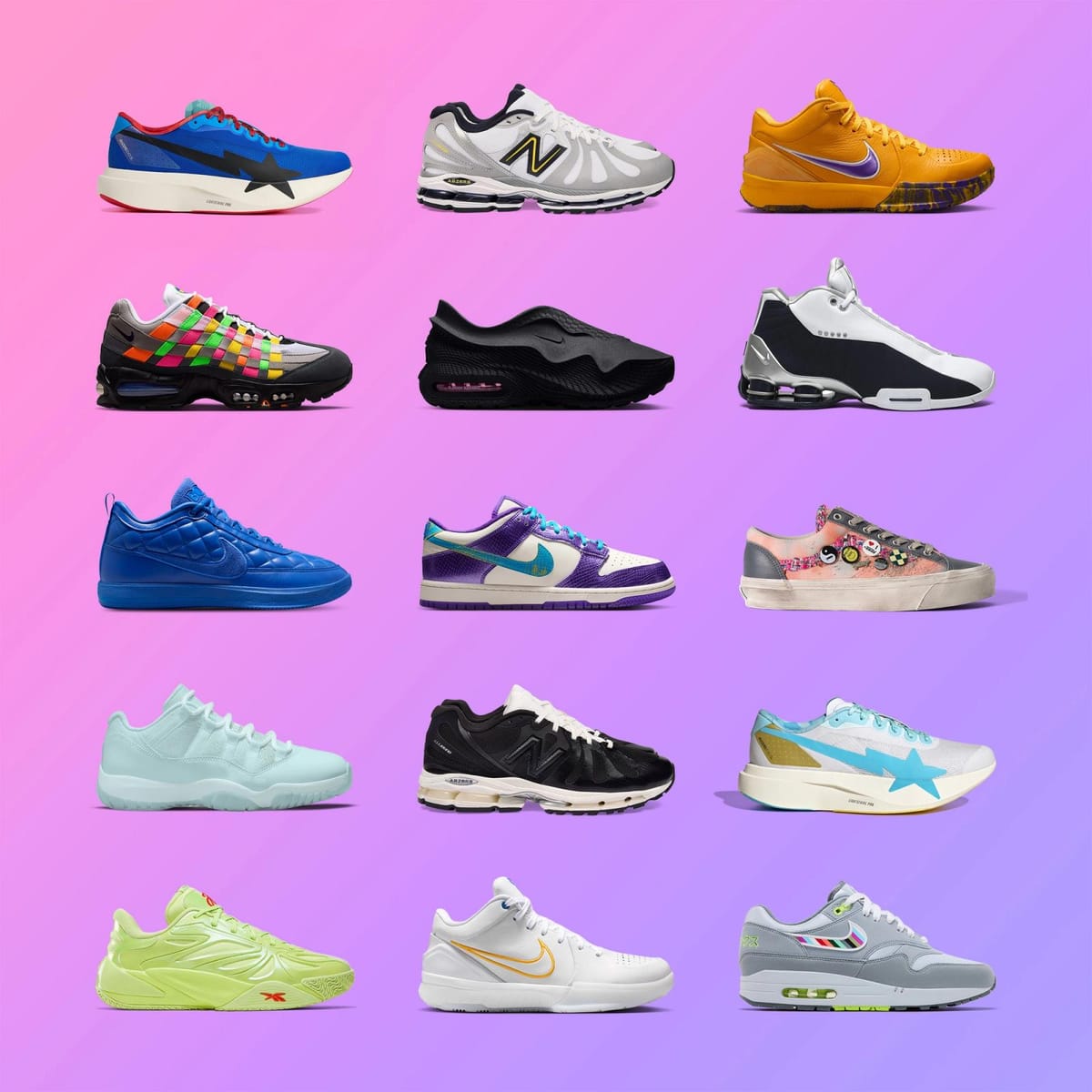
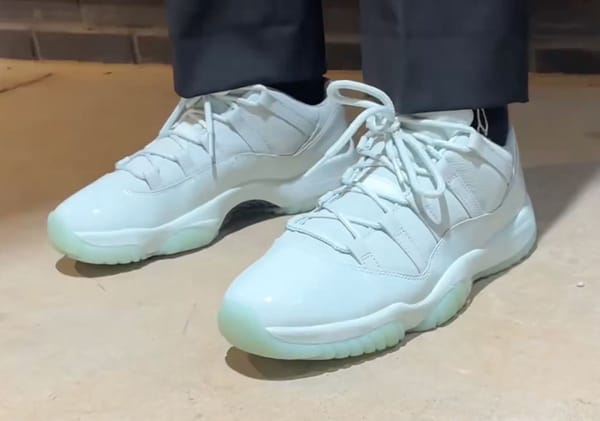
June 26 was the heaviest release day of the month, and Nike built it entirely around storytelling. The Nike Kobe 4 Protro "Draft Day" Mystery Pack ($93.70) is a 14-pair set honoring every team that passed on Bryant in the 1996 draft — a grievance turned into a collectible architecture, paired with a Kobe Dunk Low Protro "Draft Day" ($85.30) nodding to his brief Charlotte connection. The day before close, the JAIDE x Air Jordan 11 Low "Fiberglass" ($91) arrived as the first collaboration in the Air Jordan 11's history — a silhouette Jordan Brand has guarded for three decades, opened for the first time to an outside creative. BAPE x adidas closed the week with a mismatched Adizero EVO SL ($81).
Read together, these are not drops; they are franchises. The Kobe pack monetizes a narrative arc, not a colorway, and the first-ever AJ11 collab signals that even the most protected archives are now collaboration inventory. The same instinct shows up at the luxury end of the category — Willy Chavarria's adidas Stan Smith debut at Paris Fashion Week sold a designer's worldview, not a tooling update. For a brand strategist, the lesson is structural: scarcity is now manufactured through story scaffolding — packs, "firsts," and provenance — because the spec sheet stopped being a moat years ago.
Sports — The Business Behind the Game
The Knicks' first championship since 1973, with Jalen Brunson named Finals MVP, was a roster-construction story before it was a basketball one: New York won a clinching game with five starters who debuted for other franchises — a title assembled through trade rather than drafted and developed. That blueprint now collides with the calendar. NBA teams can begin negotiating with free agents June 30 and signing July 6, and the market has already moved — Giannis Antetokounmpo was traded to Miami the day before the draft, and Isaiah Hartenstein signed three years and $75 million in Oklahoma City. The off-court reshuffles are just as telling: the Angels fired GM Perry Minasian and installed John Mozeliak on an interim basis, a reminder that front-office tenure is now as volatile as a player's.
The week's most efficient performances came from the margins of the talent pool, not the center of it. Kamilla Cardoso set a WNBA record going 13-for-13 in a Sky win, and at the men's World Cup, Cape Verde became the smallest nation ever to advance alongside Egypt reaching the knockout stage for the first time. For anyone building brands in and around sports, the signal is the same one driving the Knicks' build and the WNBA's surging viewership: outcomes are being engineered at the edges, where the marketing upside — underdog narrative, record-setting nights — is largest and the acquisition cost is lowest.
Culture — What's Moving and Why
The clearest culture-business story of the week was a reinvention. Saks Global — parent of Saks Fifth Avenue, Neiman Marcus and Bergdorf Goodman — exited Chapter 11 and rebranded as Exemplar Luxury Group, shedding nearly 75% of its debt, taking on $500 million in new financing, and trimming to 49 core stores after the $2.7 billion Neiman Marcus acquisition nearly sank it. The name change is the strategy: management is selling a clean-slate narrative to vendors and investors because the old balance sheet had become the brand. Whether "Exemplar" earns the affluent shopper back is a conversion question, not a real-estate one.
The week's other cultural signal was native to the internet. A fan project reimagining 2026 World Cup matches as AI-generated anime crossed 50,000 followers — unofficial, unlicensed, and growing faster than most sanctioned tournament content. For a strategist, that is the appetite reading that matters more than any album chart this month (June's release slate skewed toward reissues): audiences will follow the most compelling telling of an event, regardless of who owns the rights. Distribution is no longer a function of license; it is a function of narrative quality.
On Your Radar — Apply This to Your Week
For anyone choosing an AI stack: Google launched Gemini 2.5 Pro with Deep Think and reset the science leaderboard (82.4% GPQA Diamond), but Claude posted the field's highest paid-conversion rate — 13% of users pay — and the U.S. just cleared Anthropic's Mythos 5 for trusted partners. Pick your model on the metric your business actually runs on — sustained, paid, trusted usage — not the top benchmark line in a launch post.
For brand strategists: The Kobe "Draft Day" pack and the first-ever AJ11 collab are the same play — monetize provenance and "firsts," not features. If you are building a product launch this quarter, audit what story scaffolding you own before you discuss the spec.
For operators managing risk: A new attack class, "Agentjacking," hit an 85% exploitation rate across 2,388 organizations by feeding AI coding agents poisoned error reports — the same week Claude Mythos surfaced 10,000+ vulnerabilities in one project. If your team runs autonomous agents, treat every external input the agent reads as untrusted by default. The agent is now part of your attack surface.
The Uristocrat Take
The through-line of the week is a divergence: the leaderboard and the ledger are no longer the same document. Gemini won the benchmark; Claude won the willingness to pay. The most talented rosters did not win the title; the best-assembled one did. The shoe with the best tooling did not sell out; the one with the best story did. In every vertical, the value is migrating from the input metric everyone can measure — speed, rank, talent, spec — to the outcome metric that actually compounds: conversion, ownership, narrative. The signal worth watching as Q3 opens is which players keep optimizing for the scoreboard, and which ones quietly start optimizing for the business the scoreboard was supposed to predict.
Recent From Uristocrat
- U.S. Clears Anthropic's Mythos 5 for Use by Trusted Partners
- Saks Emerges From Bankruptcy and Rebrands as Exemplar Luxury Group
- Cape Verde Reaches World Cup Round of 32 as Smallest Nation to Advance
- Kamilla Cardoso Sets WNBA Record With 13-for-13 Night in Sky Win
- Willy Chavarria Debuts adidas Stan Smith Collabs at Paris Fashion Week
The Intelligence Brief publishes every Saturday. All stories in full at uristocrat.com. If this was useful, send it to someone who'd say the same.

Comments