
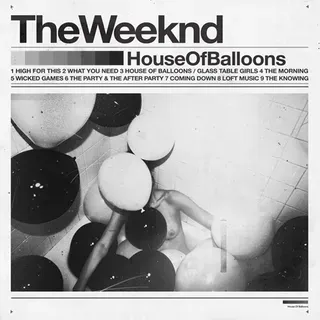
Fifteen years ago this week, a 20-year-old Abel Tesfaye uploaded three untitled songs to a Tumblr blog under the name The Weeknd. There was no press release, no label infrastructure, no promotional tour. There was just a SoundCloud link, a blacked-out profile photo, and House of Balloons — one of the most quietly seismic debuts in the history of R&B.
What Tesfaye did on that mixtape was not incremental. He took the hedonism, the vulnerability, and the self-destruction that R&B had always circled around and refused to flinch from any of it. The production — largely handled by Doc McKinney and Illangelo — borrowed from post-punk and shoegaze in ways that no one had seriously attempted in a Black pop context. Beach House interpolations sat alongside samples that felt like they were excavating something in the listener rather than entertaining them. The result was an album that sounded like a night you wouldn't tell anyone about.
The cultural legacy of House of Balloons is difficult to overstate without sounding hyperbolic, but the numbers make the case quietly: the dark R&B lane Tesfaye opened has been the most influential sonic direction in popular music over the following decade and a half. You can draw a straight line from that Tumblr upload to the aesthetic DNA of artists across genre, gender, and geography. The anonymous, brooding persona he built became a template that hundreds of acts have tried to reverse-engineer with varying results.
What most of them missed is that the anonymity wasn't a brand strategy. It was a function of the music itself. House of Balloons worked because it felt like something found rather than sold. Fifteen years later, that quality is the thing that remains irreducible — you can borrow the palette, but you can't manufacture the feeling that it came from somewhere real. The mixtape still sounds like it was never meant to reach you, and that's exactly why it did.
Comments