

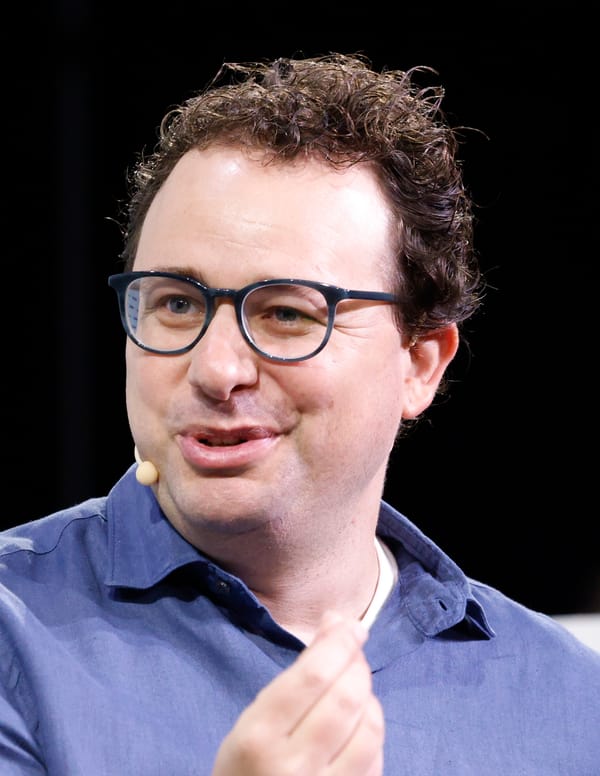
Henry Ellenbogen, founder and managing partner of Durable Capital Partners, appeared on the "Invest Like the Best" podcast with Patrick O'Shaughnessy to discuss his investment approach centered on understanding people and transformational change. The December 16, 2025 episode examines how Ellenbogen built one of the most successful growth portfolios and his views on AI's coming disruption of knowledge work[^1].
Track Record and Background
Ellenbogen built his reputation at T. Rowe Price leading the New Horizons Fund, compounding returns at 19% annually and consistently beating benchmarks for nearly a decade. He left in 2019 to establish Durable Capital Partners, which he calls his "Act 2"—applying lessons from his first major success to a new venture[^1][^2].
His unconventional background includes studying organic chemistry and history before entering finance. This scientific training shaped his approach to viewing markets as ecosystems requiring balance between stakeholders—customers, employees, shareholders, and communities[^3].
The 1% Philosophy
Ellenbogen's investment framework focuses on identifying the rare 1% of companies that drive nearly all long-term returns. His research at New Horizons revealed that approximately 80% of major compounders started their journey as small-cap companies, highlighting the importance of early identification[^4].
The challenge, he notes, is distinguishing between companies that are failing and those undergoing transformation. Durable's edge comes from spending time with founders and executives to make this distinction during moments of uncertainty that often look identical to failure[^1].
Act 2 Teams
A central concept in Ellenbogen's approach is "Act 2 teams"—founders who apply lessons from their first successful company to new ventures. He cites Workday as an example, founded by Dave Duffield at age 64 after building PeopleSoft. These experienced founders start with sharper first principles, cleaner incentives, and operational knowledge that accelerates execution[^4].
Durable itself represents Ellenbogen's Act 2, taking his experience managing institutional capital and applying it to building his own firm with permanent capital structure[^1].
AI's Transformation of White-Collar Work
Ellenbogen draws a parallel between AI's potential impact on white-collar work and China's effect on manufacturing. He argues AI will affect not just technology companies but broadly across the IP-dependent economy, creating a fundamental shift in how knowledge work gets done[^5].
Companies like Duolingo, Toast, and Affirm are cited as examples of businesses successfully navigating this transition. Duolingo founder Luis von Ahn can deploy features with smaller teams than previously required, demonstrating how AI enables operational efficiency gains that compound over time[^5].
The framework suggests AI adoption represents the beginning of a new S-curve—not in users, but in operational efficiency—determining which companies pull away from competitors[^4].
Public Markets as Feedback Mechanism
Ellenbogen makes a case for companies going public, viewing public markets as valuable feedback mechanisms that enforce discipline, expand scenario planning, and enable sharper capital allocation. The public market structure forces management teams to consider a wider range of outcomes and align decision-making during transformation periods[^4].
He acknowledges staying private works for certain companies, noting SpaceX as an example, but emphasizes the strategic benefits of public market feedback for most growth companies[^4].
Dollar Cost Averaging Up
Durable employs a strategy of "dollar cost averaging up"—buying more shares as successful companies perform well and stock prices rise, but before they peak. This approach reflects confidence in identifying rare compounders early and maintaining conviction as the thesis plays out[^6].
Investment Philosophy Evolution
The conversation traces Ellenbogen's development as an investor, influenced by studying shareholder letters tracking New Horizons' 50-year history and learning from founders including Jeff Bezos and John Malone early in his career. The Walmart case study particularly shaped his thinking—the retailer went public with only 50 stores, and selling too early wiped out gains from dozens of other correct decisions[^2][^4].
This mathematical reality—that one bad decision on an outlier can erase multiple good decisions—reinforces the importance of identifying and holding the rare companies capable of sustained compounding[^4].
Read More
[^1]: Colossus - "Man Versus Machine" (December 16, 2025) https://joincolossus.com/episode/man-versus-machine/
[^2]: Apple Podcasts - "Henry Ellenbogen - Man Versus Machine" (December 16, 2025) https://podcasts.apple.com/us/podcast/henry-ellenbogen-man-versus-machine/id1154105909?i=1000741500776
[^3]: PodPulse.ai - "Henry Ellenbogen - Man Versus Machine notes and takeaways" (December 2025) https://podpulse.ai/podcast-notes-and-takeaways/invest-like-the-best-with-patrick-oshaughnessy-henry-ellenbogen-man-versus-machine-invest-like-the-best-ep452
[^4]: René Sellmann - "Learning from Henry Ellenbogen" (December 2025) https://www.compoundwithrene.com/p/learning-from-henry-ellenbogen
[^5]: PodPulse.ai - "Interview mechanics of investing in AI" (December 2025) https://podpulse.ai/podcast-notes-and-takeaways/invest-like-the-best-with-patrick-oshaughnessy-henry-ellenbogen-man-versus-machine-invest-like-the-best-ep452
[^6]: Frederik Journals - "Henry Ellenbogen's Playbook for Durable Growth" (December 23, 2021) https://www.frederikjournals.com/p/henry-ellenbogens-playbook-for-durable

Comments