
Key Points
- The 2026 World Cup is the most-attended in history, passing the all-time record on June 25.
- Cumulative attendance hit 3,605,357, topping the 1994 mark of 3,587,538 at MetLife Stadium.
- Bank of America data shows spending across the 16 U.S. host cities up 6.3% year over year.
- Non-local visitor spending rose 16.7%, driving most of the increase.
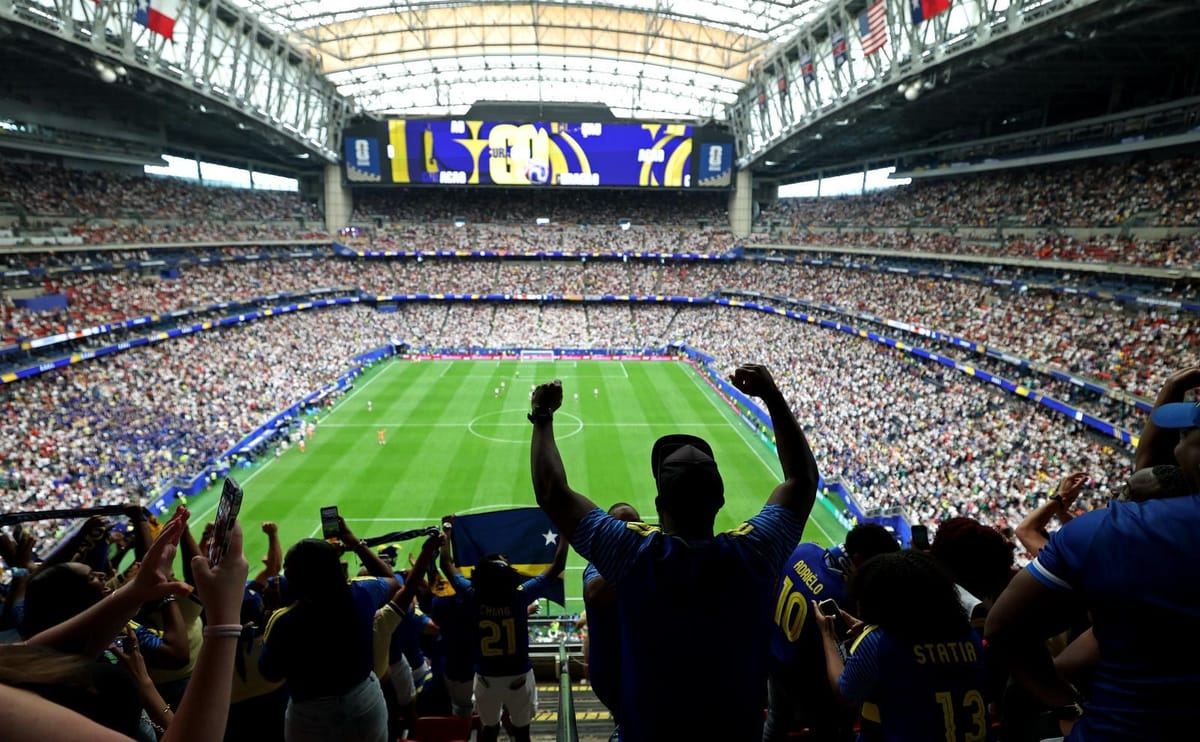
The 2026 World Cup has already become the most-attended edition in the tournament's history. Cumulative attendance passed 3,605,357 on June 25, surpassing the 3,587,538 mark set at the 1994 World Cup — a 32-year-old record — during Germany's match against Ecuador at MetLife Stadium. The 48-team, 104-match format spread across the United States, Canada and Mexico was built to move exactly this many people, and it is delivering the crowds.
The Money Behind the Crowds
The spending is following the turnstiles. According to Bank of America, an official tournament sponsor, consumer spending across the 16 U.S. host cities rose 6.3 percent year over year during the group stage, driven by a 16.7 percent jump from non-local visitors — the out-of-town fans who book hotels, eat out and fill stadiums. Seattle reported record transit activity and business impact heading into the knockout round, and Mexico City's Estadio Azteca, the tournament's largest venue at a World Cup capacity of about 80,824, has drawn full houses.
Gross Spend vs. Net Benefit
A 6.3 percent bump in gross host-city spending is real money moving through restaurants, hotels and rideshare, but it is not the same as net local benefit — much of it flows to airlines, international hospitality chains and FIFA itself rather than staying in the local economy. The cautionary comp is 1994, the last U.S. World Cup, which was widely called an economic success and yet, by researchers' later estimates, fell $5.5 billion to $9.3 billion short of its pre-tournament projections. Record attendance is a genuine milestone; record local prosperity is a much harder claim to bank. The tournament's first 32-team knockout bracket in history only widens the gap between the spectacle and the spreadsheet.
None of that dims the on-field story that is pulling the crowds: a record nine African nations reaching the round of 32, deep runs from co-hosts, and a live USMNT path through the bracket keeping the American audience invested well past the group stage. The final is set for July 19 at MetLife Stadium.
The all-time attendance record was reported by KTLA, citing FIFA, with Seattle's host-city metrics via the Seattle FWC26 committee and the economic data drawn from Forbes.
Source: Forbes



Comments