
Key Points
- 7-Eleven sued Nike on July 1 in the Northern District of Texas over an Air Max 95.
- It alleges the shoe copies its orange-green-red "Tri-Color Mark," in use since 1987.
- The Air Max 95 is set to release July 11 — 7-Eleven's "7-Eleven Day."
- 7-Eleven seeks to halt the release, destroy the product, and recover Nike's profits.
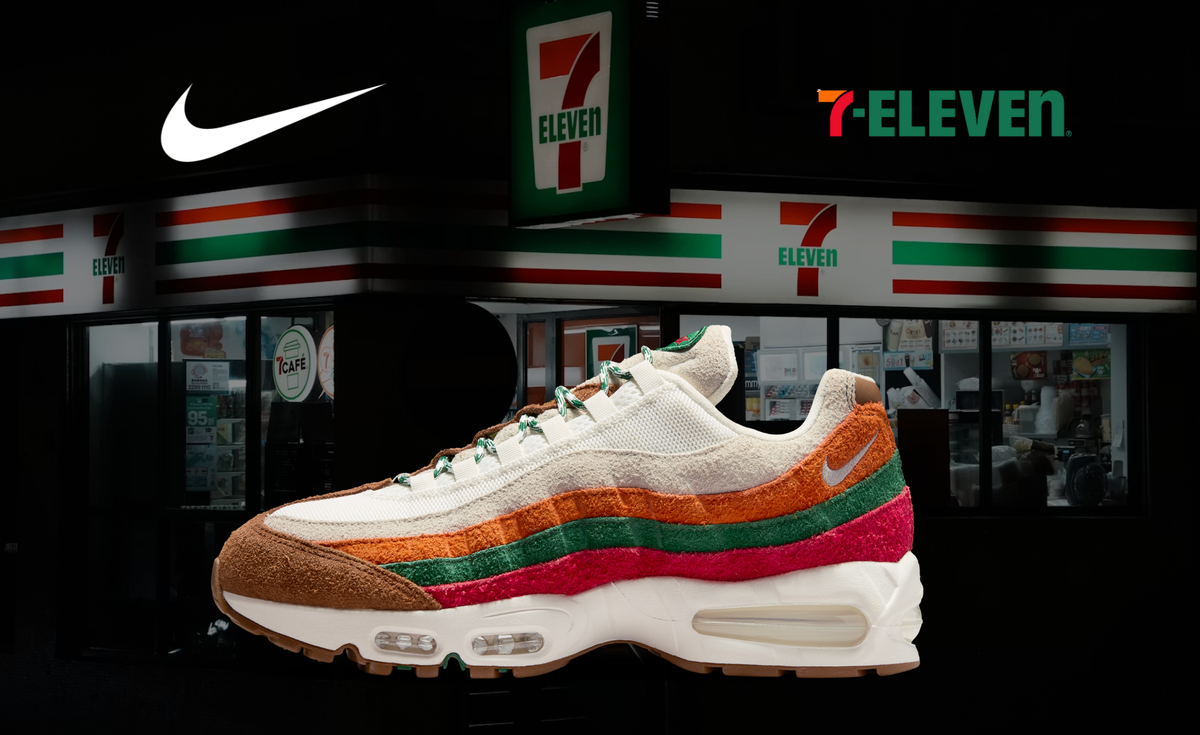
7-Eleven has sued Nike, asking a federal court to block an Air Max 95 the convenience chain says copies its trademark stripes. The suit, filed July 1 in the U.S. District Court for the Northern District of Texas, targets a shoe scheduled to drop July 11 — a date 7-Eleven markets as "7-Eleven Day."
At the center of the case is what 7-Eleven calls its "Tri-Color Mark": the orange, green, and red stripe combination it says it has used continuously since 1987 and holds multiple federal trademark registrations for, some covering footwear specifically — a detail that sharpens its trade-dress claim. The upcoming shoe, an Air Max 95 Big Bubble, co-opts that exact palette, 7-Eleven argues.
The chain is not asking for a licensing deal. It wants the court to stop Nike from promoting, marketing, or selling the shoe, order the existing product destroyed, and hand over all profits, plus unspecified and exemplary damages and attorney fees. Nike had not responded to the suit as of filing.
The read: the Air Max 95's layered, paneled build is practically made for gradient stripe stories, and Nike has spent 2026 mining the silhouette hard, from the Big Bubble "Woven" to the "Slate" Big Bubble reissue. But pairing an orange-green-red 95 with a July 11 launch reads less like coincidence than a wink at 7-Eleven — and the chain is treating that wink as infringement rather than homage. The legal question is whether a three-color stripe is protectable trade dress; the business question is why Nike handed a convenience-store chain that argument on 7/11. For Nike, the calculation may be that the buzz around a 7/11 "hit" outruns the legal exposure; 7-Eleven filing before the shoe even dropped signals it intends to test that.
Source: The Fashion Law, The Globe and Mail

Comments