
Key Points
- Agility Robotics will merge with Churchill Capital Corp XI at a ~$2.5 billion valuation.
- The SPAC deal raises over $620 million and lists on Nasdaq under ticker AGLT.
- It makes Agility the first pure-play humanoid robotics company to trade publicly in the US.
- CEO Peggy Johnson says a home humanoid is still "10-plus years" away.
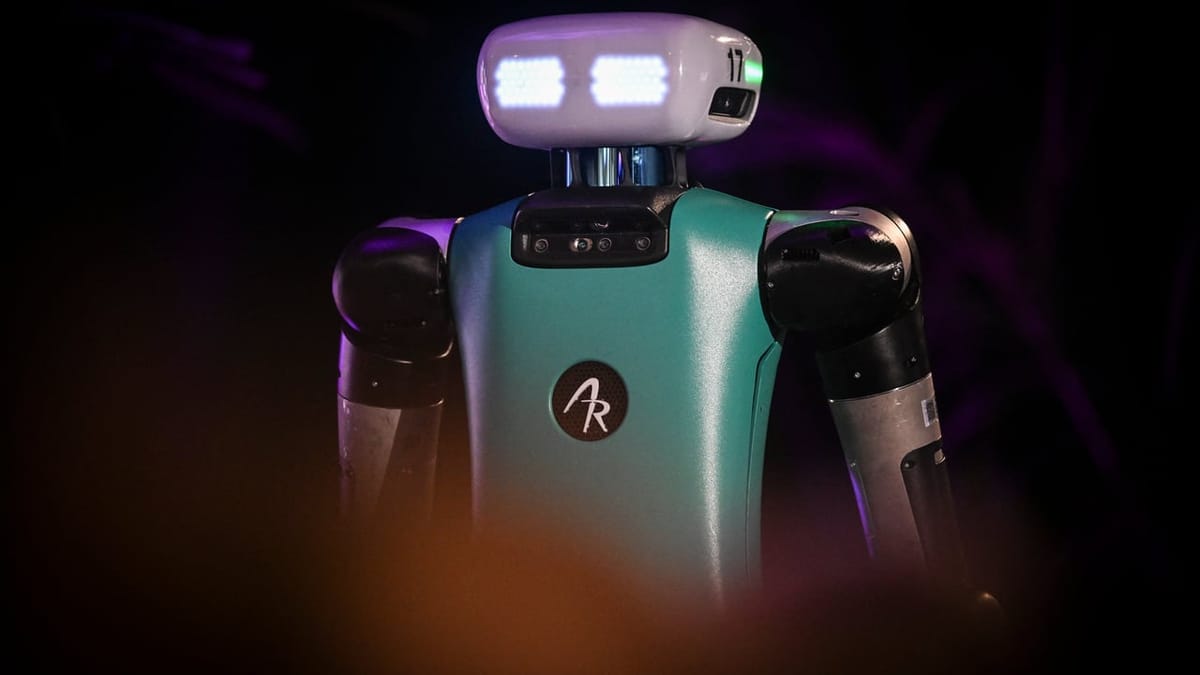
The humanoid-robot hype cycle is about to get its first pure-play public stock. Agility Robotics, the Oregon company behind the bipedal warehouse robot Digit, has agreed to go public through a merger with Churchill Capital Corp XI, the blank-check vehicle run by veteran SPAC dealmaker Michael Klein. The deal values Agility at roughly $2.5 billion and is expected to raise more than $620 million, with the combined company trading on Nasdaq under the ticker AGLT, Yahoo Finance reported.
The financing stacks about $420 million from Churchill's trust with a $200 million private investment led by Foxconn, the Taiwanese manufacturing giant. Existing backers Amazon, NVIDIA and SoftBank Vision Fund 2 get a public exit path. Investors have already bid up the story: Churchill's shares have jumped roughly 86% since the June 24 announcement, from about $10.42 to $19.10.
What separates Agility from the flood of humanoid demos is that Digit is actually working for money. Founded in 2015 as an Oregon State University spinoff, the company says it has more than $300 million in booked, multi-year revenue representing roughly 1,000 robots deployed under a robots-as-a-service model, with customers including Amazon, GXO Logistics, Toyota Motor Manufacturing Canada, Schaeffler and Mercado Libre. CEO Peggy Johnson — a former Microsoft business-development chief who helped engineer the $26 billion LinkedIn acquisition, then ran Magic Leap — was blunt with TechCrunch about tempering the sci-fi expectations: a humanoid in your house is "10-plus years" out, she said, because a warehouse has predictable workflows and a home has pets, kids and chaos.
That candor is the tell. Choosing a SPAC over a traditional IPO, and watching the shell stock nearly double before Agility ships a single robot as a public company, is a bet on narrative as much as revenue. But Agility enters the public market with the one thing most humanoid rivals lack: paying customers and an Oregon factory built to make up to 10,000 Digits a year. The listing also hands retail investors their first direct stake in a sector that has, until now, been the preserve of deep-pocketed private money like SoftBank's $100 billion robotics bet and NVIDIA's push toward level-4 autonomy. That private money has kept coming since: Walden Robotics launched from stealth on July 15 with a $300 million seed at a $1.1 billion valuation, co-led by Toyota and Deviation Capital, on the strength of robots that have worked eight-hour shifts at a Toyota plant in North America since February. Whether that stake is worth $2.5 billion depends on Digit graduating from warehouse novelty into infrastructure — the same leap Waymo is still negotiating in autonomous driving.
Another Uber-linked robotics bet moved the same summer: Atoms raised $1.7 billion and named former Uber finance chief Gautam Gupta as CFO.
Source: TechCrunch, Yahoo Finance.

Comments