
Key Points
- Walden Robotics launched from stealth with a $300 million seed round.
- The round values the six-month-old company at $1.1 billion.
- Toyota and Deviation Capital co-led; Nvidia, Boeing and Samsung Ventures joined.
- Its robots have worked eight-hour shifts at a Toyota plant since February.
Walden Robotics came out of stealth on July 15 with $300 million in seed funding at a $1.1 billion post-money valuation — a unicorn roughly six months after the Cambridge, Massachusetts company was founded in January 2026. The round was co-led by Toyota, investing through Toyota Motor Corporation, Toyota Invention Partners and Toyota Ventures, and by Deviation Capital.
The investor list is unusually strategic for a seed round: Nvidia, Boeing, Samsung Ventures, Prologis Ventures, CoreWeave Ventures, AE Ventures, Menlo Ventures, Calibrate Ventures, Shine Capital, NextView Ventures, Colle Capital, Squarepoint Capital, One Madison Group and KAS Venture Partners also participated. Chipmaker, aerospace manufacturer, warehouse landlord and cloud provider are all represented — the parties who would buy, deploy or power the product.
Already on the factory floor
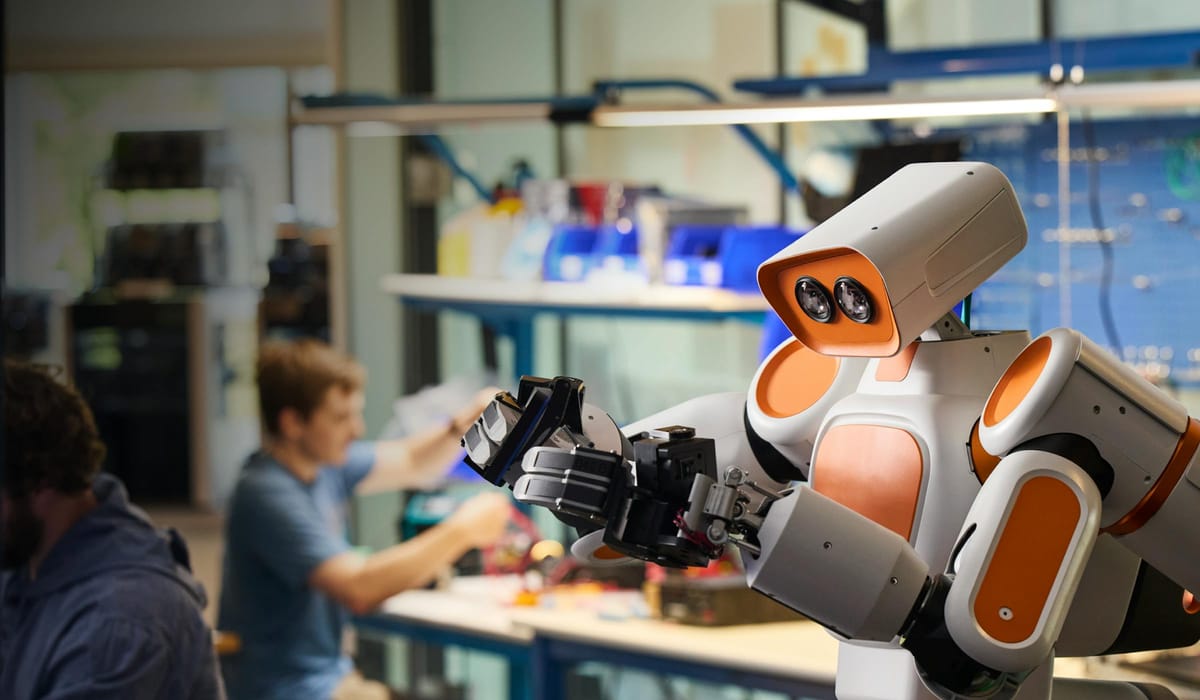
The detail separating Walden from most humanoid-robot launches is that its machines are already working. The company's robots began productive work at a Toyota plant in North America in February 2026, moving from initial pilot to operational deployment in under two months. A robot works eight-hour shifts alongside human teams, handling dexterous repetitive tasks: loading and unloading car parts, cleaning machinery, and kitting components for assembly. Walden says it is already selling to customers across several sectors, with manufacturing and logistics as the focus.
The robots have a humanoid torso, two arms and a wheeled base — no legs — a deliberate break from the form factor that dominates the category's marketing, and a choice that trades bipedal spectacle for machines that survive a shift schedule.
Who is building it
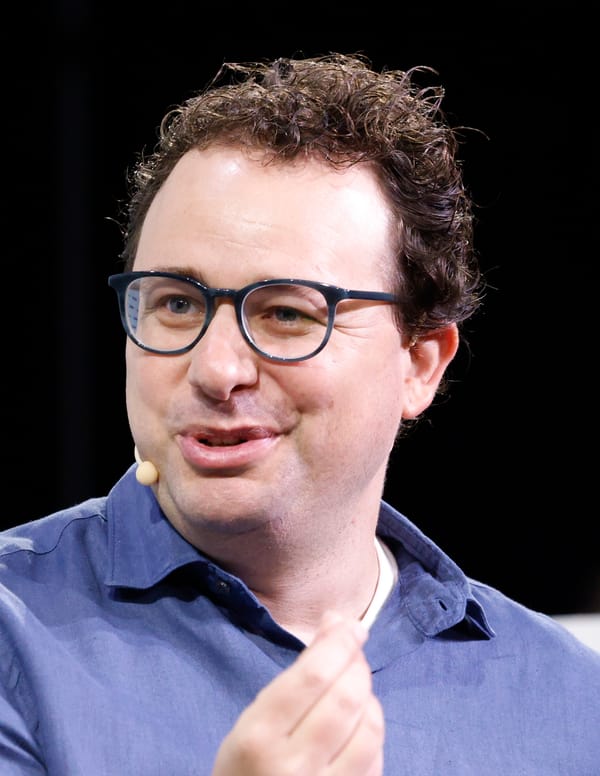
Co-founder and CEO Russ Tedrake is an MIT professor and the former senior vice president of Large Behavior Models at Toyota Research Institute, and the company is effectively a TRI spin-out. Its team is drawn from TRI, MIT, Stanford and Amazon. Walden is full-stack — building its own hardware, software and AI models — with technology based on Diffusion Policy and Large Behavior Models, the approach that lets a robot learn new tasks and improve through real-world practice rather than task-specific reprogramming.
"Core advances in Physical AI have made disruptive change possible," Tedrake said in the company's launch announcement. "But providing real value to customers and building a robust and scalable business requires a deep understanding and respect for how manufacturing is done today."
Toyota's Hiroki Nakajima framed the investment around deployment rather than research: "Walden's uniqueness is its ability to deliver robots that provide value from day one in real-world work environments." Colin Beirne of Deviation Capital called the founding team "generational, bringing together a rare, interdisciplinary group of experts spanning foundational robotics research, large-scale production hardware, and operational and business leadership."
A category raising at scale
The raise lands in a robotics market absorbing capital at valuations once reserved for software. Agility Robotics agreed to go public in a $2.5 billion SPAC deal with Churchill Capital, taking the public-markets route, while SoftBank has aimed a $100 billion bet at a robotics company building data centers. Walden's $300 million seed is small against those figures but large for a company that did not exist 12 months ago, and it echoes the frontier-AI funding pattern that produced Fireworks AI's $1.5 billion Series D at a $17.5 billion valuation earlier this month.
Others covering this
The Robot Report — "Walden Robotics launches at $1.1B valuation for general-purpose robots"
"Leading technology companies have invested in Walden Robotics, which emerged from stealth as it develops full-stack physical AI."
Tech Startups — "Walden Robotics emerges from Stealth with $300M in funding at $1.1B valuation, deploys general-purpose AI robots at Toyota factory"
"Most robotics startups promise what factories might look like years from now. Walden Robotics says its robots are already on the job." The AI funding run continued as Meshy raised nearly $400 million at a $1.5 billion valuation.
The industrial robotics funding run continued in August, when Travis Kalanick's Atoms named former Uber finance chief Gautam Gupta as CFO after a $1.7 billion round.
The physical-AI funding run scaled up sharply in August, when Hadrian raised a $1.37 billion Series D at a $7.87 billion valuation.
Source: Walden Robotics, The Robot Report.

Comments