
Key Points
- Pophouse acquired 50% of the band members' stake in their publishing, masters and NIL rights.
- The deal includes a stake in the rights to Eddie, the band's mascot since 1980.
- Pophouse was founded by ABBA's Björn Ulvaeus and EQT founder Conni Jonsson.
- Iron Maiden has sold 100 million records across 17 studio albums.
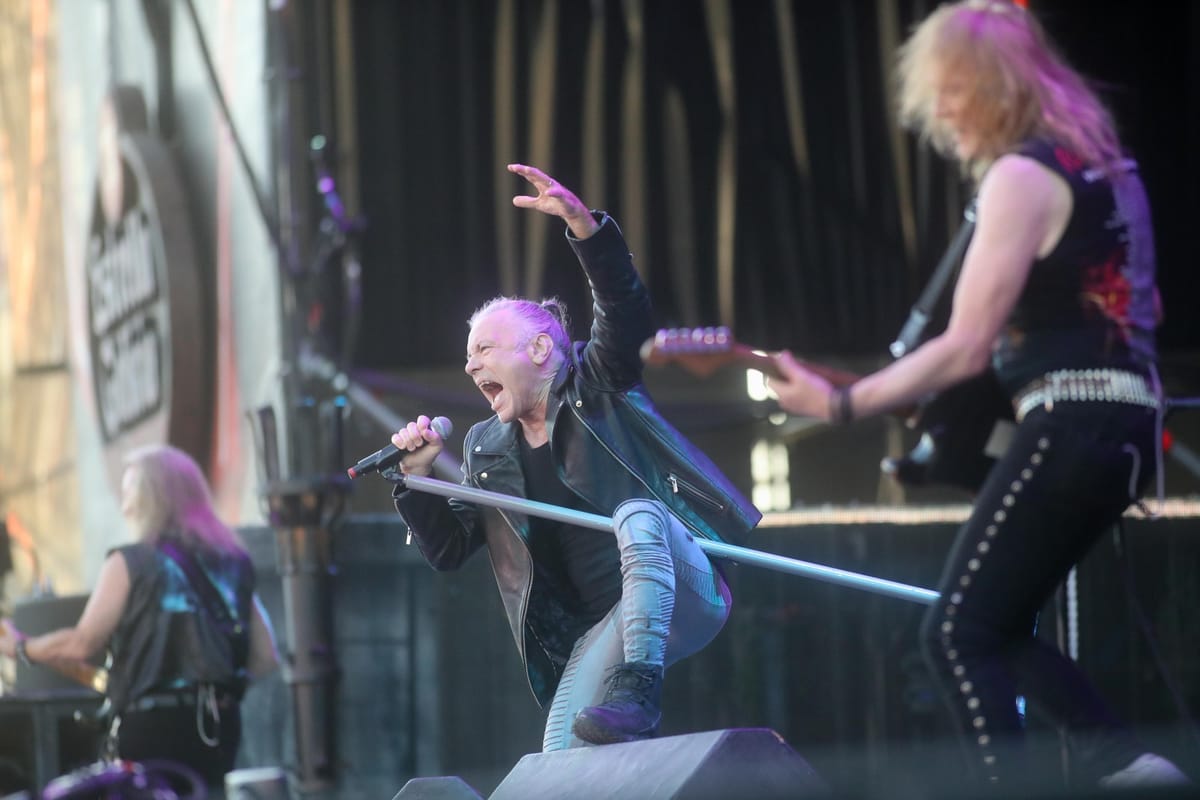
Iron Maiden's members have sold half of their share of the band. Pophouse Entertainment announced on July 14 that it acquired 50% of the band members' stake in their publishing and master recording rights — and, separately, their name, image and likeness rights. Terms were not disclosed. BMG, which has worked with Iron Maiden in the U.S. since acquiring Sanctuary Records in 2013, retains its own ownership stake in the catalog.
The NIL half is the part worth reading twice. Billboard reports the deal covers "a stake in the rights relating to Eddie, alongside trademarks, personas and other associated IP covered by the NIL rights." Eddie is the rotting, wide-eyed ghoul who has fronted Iron Maiden's artwork since 1980 — first in silhouette on the "Running Free" single, then face-out on the band's self-titled debut two months later. He is not a person. He does not age, tour, or need a passport.
Who bought it
Pophouse is a Swedish firm founded by ABBA's Björn Ulvaeus and Conni Jonsson, who founded the private equity group EQT. Music Business Worldwide reports it closed its debut fund in March 2025 at more than €1.2 billion (~$1.3 billion) to acquire music catalogs and IP, and has deployed roughly 30% of it across KISS, Cyndi Lauper, Avicii and Swedish House Mafia. It also holds rights to Tina Turner. The Iron Maiden transaction was built over roughly a year with the band's co-manager Andy Taylor. Pophouse has since run the same model on another solo act: Sia sold the firm a 50% stake in her publishing and masters for $180 million in October 2026, paired with plans for an immersive digital avatar production built around her catalog.
Iron Maiden brings 17 studio albums and 100 million records sold. Four have reached the Billboard 200's top 10; Senjutsu peaked highest at No. 3 in 2021. Manager Rod Smallwood framed the deal in the band's own register: "I am very excited about our relationship with Pophouse... The fans can be assured there is a great deal more to come for Maiden, and Eddie will rule, OK!!"
The read
Pophouse does not buy catalogs the way a catalog fund does, and reading this as a catalog sale misses what changed hands. A catalog fund buys songs because songs are annuities — a stream of licensing income that pays out whether or not anyone thinks about the artist. Pophouse buys personas. Ulvaeus proved the thesis with ABBA Voyage, where the band performs seven times a week in London without any member being present, and the firm ran the same play on KISS: a deal reported at more than $300 million covering the catalog, the name, image and likeness rights, and the artists' share of masters and publishing. It underpins a KISS avatar show slated for 2027. What Pophouse acquires is not a royalty; it is permission to operate a band as a franchise after the humans stop.
Which makes Eddie the rare asset with no human attached. Every prior avatar play required converting a human performer into a digital one — an expensive process that invites the obvious objection about whether the fans want it, and that has not yet been proven at scale, since the KISS show is still a year out. Eddie was always the avatar. He has no biology to simulate, no farewell tour to schedule, no likeness that anyone can claim was taken from them. He has fronted the operation for 46 years, and he is the only member of it who can work indefinitely without renegotiating.
Fifty percent is the other tell. The members did not cash out; they took a partner and kept half. That is the structure of a group that intends to keep making the asset more valuable, and the announced plans read accordingly: a film of the ongoing Run For Your Lives world tour, interactive fan experiences, and a "digital universe" built around Eddie. Pophouse and the band have already run a trial — the Infinite Dreams Museum Experience, launched around the band's EddFest show at Knebworth House, marking 50 years of Iron Maiden.
The wider market
The deal lands in a market that has come back to life on more disciplined terms. Catalog buying rebounded in 2026 with valuation multiples at 12–18x, down from the 18–25x peak of 2021 — buyers are still paying, but they are underwriting rather than bidding. Most of the volume has been songs alone: Sony Music Publishing's purchase of Recognition Music Group's 45,000-song catalog, and Garth Brooks exploring a sale valued at up to $2 billion because he kept his masters and publishing both. Two days after the Pophouse announcement, Reservoir Media made the same kind of songs-only move, acquiring the recorded catalog of Latin indie label Nacional Records and the publishing catalog of Canciones Nacionales on undisclosed terms, paired with a joint venture to sign new Latin artists and songwriters.
Iron Maiden sold something those deals did not include. A publishing catalog earns when a song gets used. A persona earns when someone builds a show, a museum, a game, or a hologram around it — and that ceiling is set by imagination and capital rather than by sync placements. Whether that is worth more than the songs is the bet Pophouse just made twice in one contract. The consolidation continued when Primary Wave closed its acquisition of Kobalt to form a $7 billion music company.
Source: Variety, Billboard, and Music Business Worldwide



Comments