
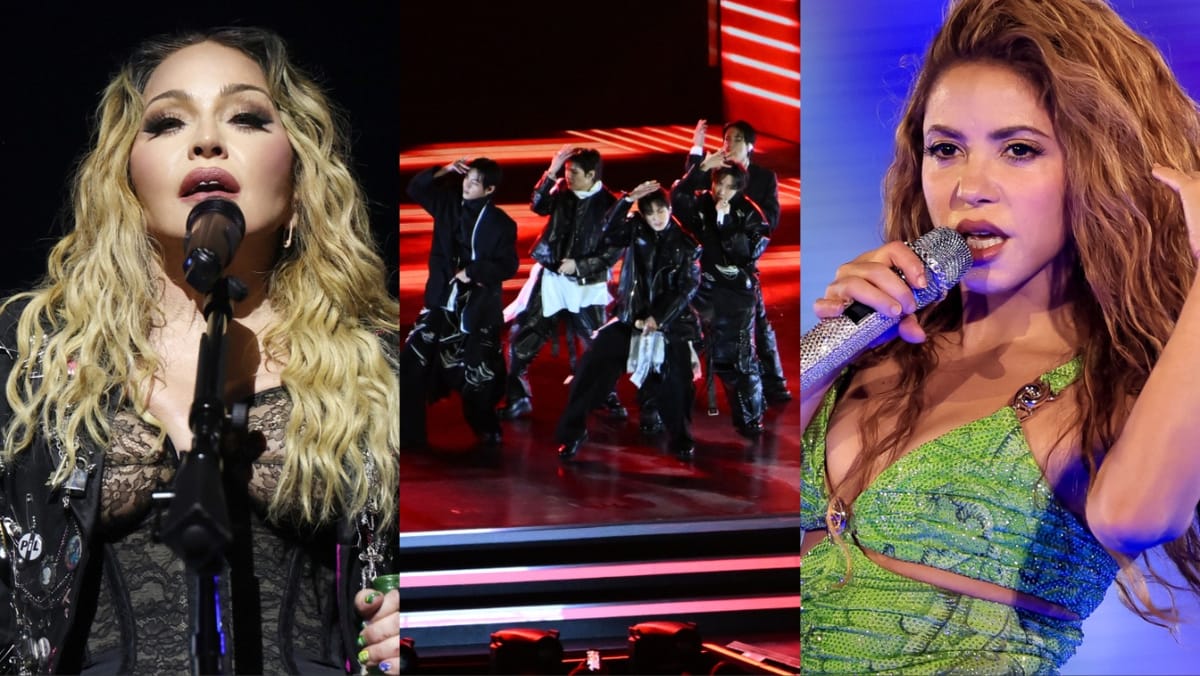
FIFA announced on May 14 that Madonna, Shakira and BTS will headline the halftime show of the 2026 World Cup final — the first time the tournament's title match has ever had one. The roughly 11-minute performance takes place July 19 at MetLife Stadium in East Rutherford, New Jersey, curated by Coldplay's Chris Martin and produced with the non-profit Global Citizen.
FIFA is importing the Super Bowl playbook
For decades, the World Cup final and the Super Bowl have been the two largest single-event broadcasts on earth, and they handled their intermissions in opposite ways. The Super Bowl turned halftime into a cultural event of its own — a career-defining stage that now rivals the game for attention. The World Cup final simply… paused. Players walked off, players walked back on.
That asymmetry is what this announcement closes. Two of the three headliners — Madonna in 2012, Shakira in 2020 — have already played the Super Bowl, which makes the borrowing explicit. FIFA is not inventing a format; it is adopting the most commercially successful idea in American sports broadcasting and bolting it onto the one stage bigger than the one that created it.
The casting is a map of the audience
The three-act lineup reads less like a concert bill than a demographic strategy. Madonna anchors the legacy pop audience and the American market. Shakira carries Latin America and the host-region viewership — and connects to the tournament's official song, "Dai Dai" with Burna Boy. BTS delivers the global youth and Asian markets that represent soccer's fastest-growing fanbase. It is a halftime show engineered to leave no major region uncovered.
The charitable framing matters too. The show benefits the FIFA Global Citizen Education Fund, a campaign aiming to raise $100 million for children's education and access to football, seeded by $1 from every World Cup ticket. It lets FIFA stage a commercial spectacle while attaching it to a cause — the same move that lets brands turn a marketing moment into a philanthropy story.
The 2026 World Cup is already the biggest in history by format, expanded to 48 teams across three host nations. The halftime show confirms the ambition behind it: FIFA is no longer running a soccer tournament. It is running an entertainment property, and July 19 is the proof.
Update (July 9, 2026): Justin Bieber has since been added to the halftime lineup.
Comments