
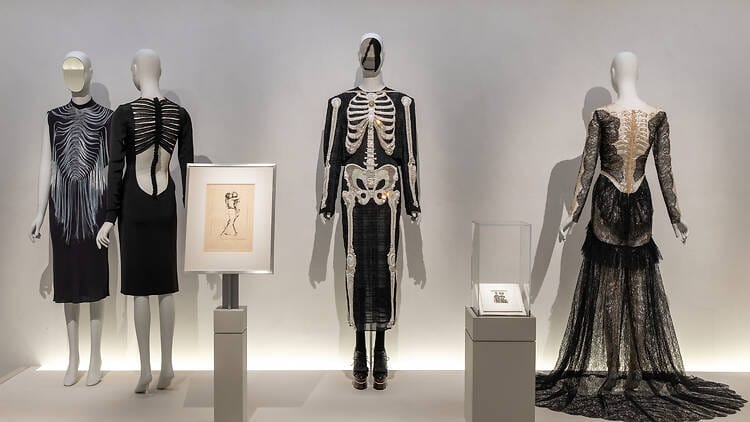
The Metropolitan Museum of Art's "Costume Art" exhibition opens to the public on Sunday, May 10 — Mother's Day — running through January 10, 2027 in the Met's new 12,000-square-foot Condé Nast Galleries off the Great Hall. The show features nearly 400 objects pairing garments from the Costume Institute's collection with paintings, sculptures, and decorative works pulled from across the wider Met. Members get an hour-early viewing window from 9 to 10 a.m. before doors open to general visitors.
What's Different About This One
Curator-in-Charge Andrew Bolton organized the show by body, not by designer or era. The seven sections — "Naked & Nude Body," "Classical Body," "Abstract Body," "Reclaimed Body," "Pregnant Body," "Disabled Body," and "Corpulent Body" — replace the chronological survey logic that has structured most major fashion exhibitions since Diana Vreeland's run at the Costume Institute in the 1970s. The mannequins themselves carry a small but loaded design choice: their heads are reflective steel, so visitors see their own faces wherever a mannequin's would be.
That decision is the curatorial argument in a single object. "Costume Art" is not a show about clothes. It is a show about whose body fashion has been built to cover, decorate, distort, exclude, or render visible. The "Pregnant Body" section foregrounds a kind of body fashion has historically refused to see. The "Disabled Body" and "Corpulent Body" sections do the same, with garments that work with bodies the industry has spent decades dressing around.
The Big Read
Bolton has been running the Costume Institute since 2006 and has now staged enough blockbuster shows — "Camp," "China: Through the Looking Glass," "Heavenly Bodies," "Karl Lagerfeld" — to be allowed to slow down and make a thesis show. "Costume Art" is the thesis. Fashion is not adjacent to art history; it is one of the longest-running records of how humans have imagined, contested, and dressed the body. Five thousand years of art, paired against the garments that share a room with them, makes the case visually before a wall text can.
That argument lands at a specific moment. The 2026 Met Gala on May 5 raised a record $42 million, made Beyoncé's first Met Gala return in a decade the central red-carpet image, and confirmed the Costume Institute as the most reliably profitable cultural fundraiser in New York. None of that pays for serious curatorial work by itself; what it buys is the institutional weight to mount a show like this one in a 12,000-square-foot gallery without flinching at the budget. The Gala underwrites the thesis.
The thesis itself rhymes with the case designer Jay Songzio made with BTS's ARIRANG comeback costumes: clothing as argument, not decoration. Songzio's "Lyrical Armor" treated Korean tradition as a foundation, not a reference. Bolton's "Costume Art" treats the body as the foundation, not the surface. Fashion is having a moment of taking itself seriously, and the institutions are catching up.
Practical Notes
"Costume Art" is included with general Met admission. Sunday hours run 10 a.m. to 5 p.m. The galleries are accessed off the Great Hall, immediately to the south. Crowds will be heaviest the first weekend; the show is up for eight months, so the slower pace of late May or June will reward patient viewing. The "Pregnant Body" and "Disabled Body" sections, in particular, deserve more time than first-weekend foot traffic will allow.




Comments