
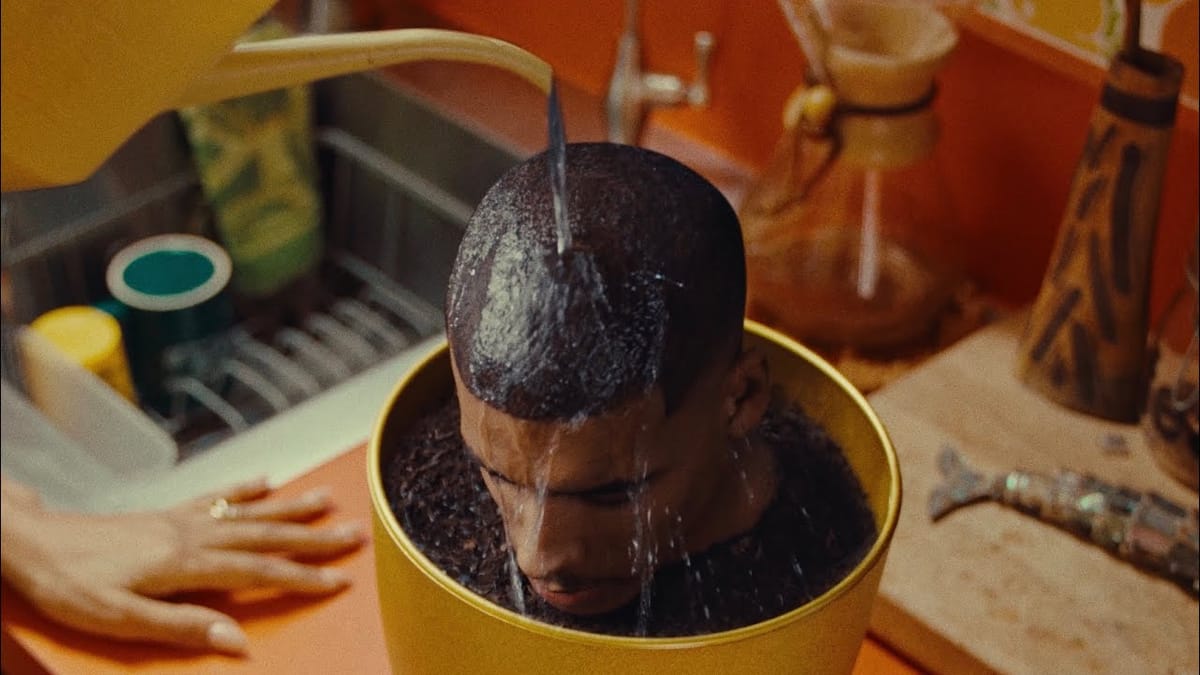
Vallejo's Red Lotus released "Hello Darlin' Pt. 2" on May 8, 2026, this time with Oakland soul institution Goapele on the second verse. The music video, directed by BenMarc, was added to BET Jams, BET Soul, and REVOLT independent rotations this week. The single sits under Chameleon Ent Asso Group / Enigma / gamma. and lands as the highest-profile feature on a Red Lotus release to date.
Stream on Spotify here.
Who Red Lotus is
Red Lotus is a Vallejo, California artist who started recording at 12 and named himself after his father and the lotus flower — "it grows in dark murky waters then blossoms to reveal something great." His current arc is The Color Project, a four-album series with each record tied to a color and to a different genre lane (pop, R&B, rap, alternative). "Hello Darlin'" was the original lead single from the R&B chapter, released in 2025 and quietly turning into the connector record across his catalog. The Pt. 2 is the version with a co-sign attached.
What Goapele brings
Goapele is one of the foundational voices of Bay Area neo-soul. Her 2002 debut Closer turned into a slow-burn classic on the strength of "Closer," the title track that has since soundtracked twenty years of Oakland weddings and Quiet Storm sets. She has been touring her 25th-anniversary "Closer to My Dreams" residency at Yoshi's this year, and her most recent album, Colours, was the most introspective and collaborative record of her career — built with Chris Dave, Keyon Harrold, Nate Mercereau, and a deep Bay Area session bench.
The choice to feature on a Vallejo rapper's R&B record is consistent with how she has moved for the last decade — not chasing top-of-the-chart features, but building horizontal connective tissue across the Bay Area scene. Her verse on Pt. 2 is the kind of presence that confers legitimacy on younger artists without overshadowing them. It says: this one matters to the elders.
Why Pt. 2 is the move
"Hello Darlin' Pt. 2" is not a remix in the modern playlist sense. It's a sequel record — same hook, same emotional core, a second verse from a different vantage point. The pattern is the kind of thing R&B used to do regularly and pop has mostly abandoned: invite a more established voice to answer your song, rather than to rescue it. The point of the feature is response, not feature-count.
That tradition reaches back to the duets era and forward through the way artists from The Weeknd onward have used the genre's emotional architecture as raw material. The Bay Area version of that move is specific. The Town has always run on intergenerational handoffs — E-40 putting on the kids, Goapele recording with new producers, Mac Dre's catalog getting flipped by every cycle of Vallejo MCs. Pt. 2 is squarely in that tradition. Red Lotus, who grew up listening to E-40 and Mac Dre, brought in the singer who has been an Oakland institution for the entire window of his career. The record is the documentation of that meet.
Red Lotus is positioned to break out of regional status and into a national R&B conversation — the gamma. distribution, the BET/REVOLT rotations, and the Goapele feature are infrastructure-level signals, not just music-blog signals. Second, the Color Project is more cohesive than it looked on first pass. The R&B chapter has a flagship single, a sequel, and a co-sign from the genre's Bay Area canon. That is what a real album rollout looks like when the artist builds horizontally rather than chasing a viral moment.
The next move is whichever Color Project record drops next. The pop, rap, or alternative chapter will tell you which lane Red Lotus actually thinks is most defensible. The R&B chapter, on the evidence of Pt. 2, is the one that has already found its anchor.



Comments