
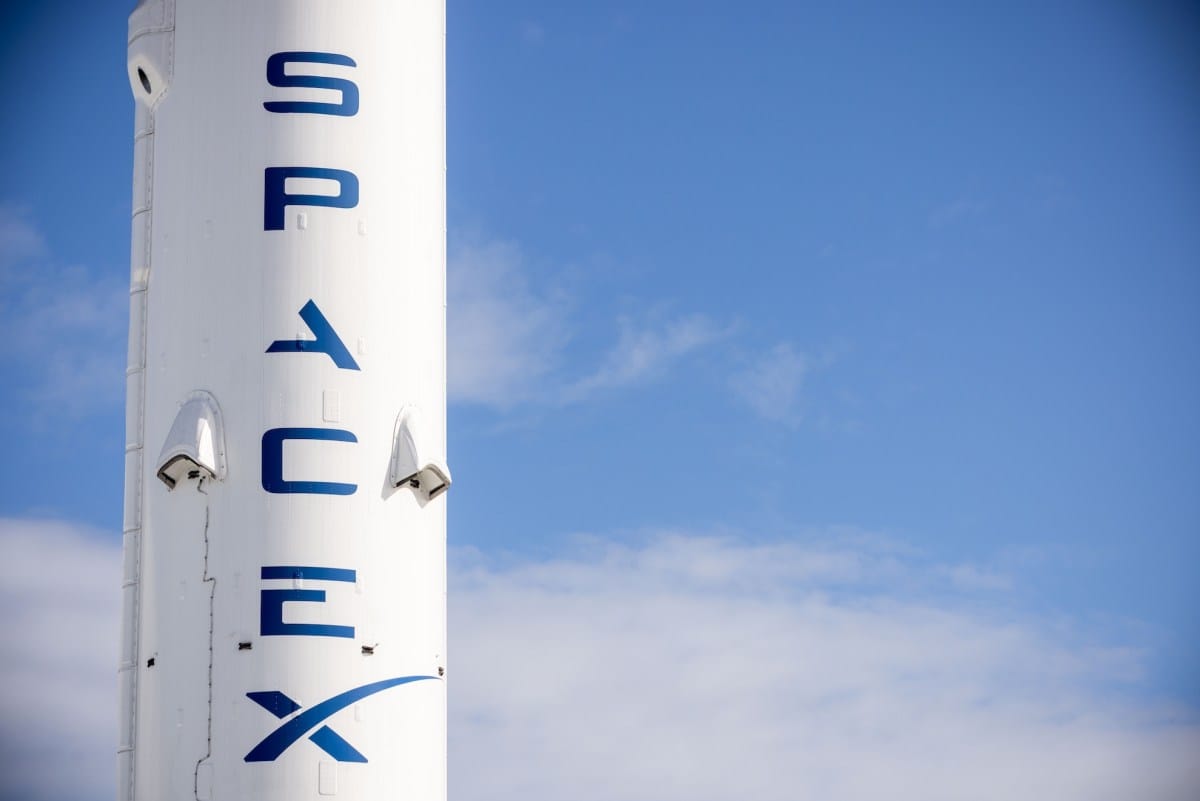
SpaceX dropped its public S-1 registration statement with the SEC on Wednesday, following the confidential filing we covered at the start of April. The Nasdaq debut is now scheduled for June 12 under the ticker SPCX, targeting a $1.75 trillion valuation and a capital raise of approximately $75 billion. If the offering prices as planned, it would dwarf the previous IPO record of $30 billion set by Saudi Aramco in 2019.
What the prospectus actually shows
SpaceX recorded combined 2025 revenue of $18.67 billion, up from $9.7 billion in 2023 — a near-doubling in two years. Starlink is now the engine: more than 10 million subscribers globally, and roughly 9,600 active broadband and mobile satellites in low Earth orbit, which the filing notes represents about 65% of all active satellites in orbit anywhere as of late April. Starlink is also where the bulk of the revenue lives, which is why the document spends so much time on subscription unit economics rather than launch contracts.
The Starship section is where the prospectus turns into a balance-of-risks document. SpaceX is explicit that Starlink's long-term margin structure depends on Starship achieving full reusability and rapid turnaround — the constellation has to be built out faster than satellites burn down, and the only economic way to do that at this scale is a fully reusable next-generation rocket. R&D spend on Starship hit $3 billion in 2025 and $930 million in Q1 2026 alone. That is the leverage point public investors will be modeling.
The Anthropic detail
The filing also discloses an existing commercial relationship with Anthropic — the same one Uristocrat covered when Anthropic rented the entire 300MW Colossus 1 data center from SpaceX earlier this year. The fact that SpaceX is now a meaningful infrastructure landlord for an AI lab will be one of the more talked-about lines in the S-1: it positions the company not just as a launch and broadband operator, but as an AI-infrastructure provider whose physical assets (data centers, orbital bandwidth, ground stations) sit at the convergence of two of the biggest capex stories in the public markets.
Why the timing
Musk has been a public-markets skeptic for years. The pivot to filing is structural, not philosophical. At a $1.75 trillion valuation, SpaceX is too large for private secondaries to absorb additional employee liquidity efficiently, and the Starship-Starlink capital plan needs a multi-decade financing structure that public markets can underwrite at lower cost than perpetual private rounds. June 12 is also a deliberate window — ahead of FOMC, ahead of summer market doldrums, and inside the demand pocket created by index funds needing to absorb a name this size on day one.
The next three weeks of investor education calls will set the actual book. Everything in the prospectus is now visible. The question is what the public market discount on Musk-as-CEO ends up being, and whether a $1.75 trillion target holds through pricing.
For scale: SpaceX's $1.75 trillion IPO target sits well below where Apple's own valuation briefly touched $5.036 trillion in late July, becoming only the second publicly traded company ever to cross that mark, after Nvidia.
Source: TechCrunch, Fortune, SpaceX Form S-1.




Comments