
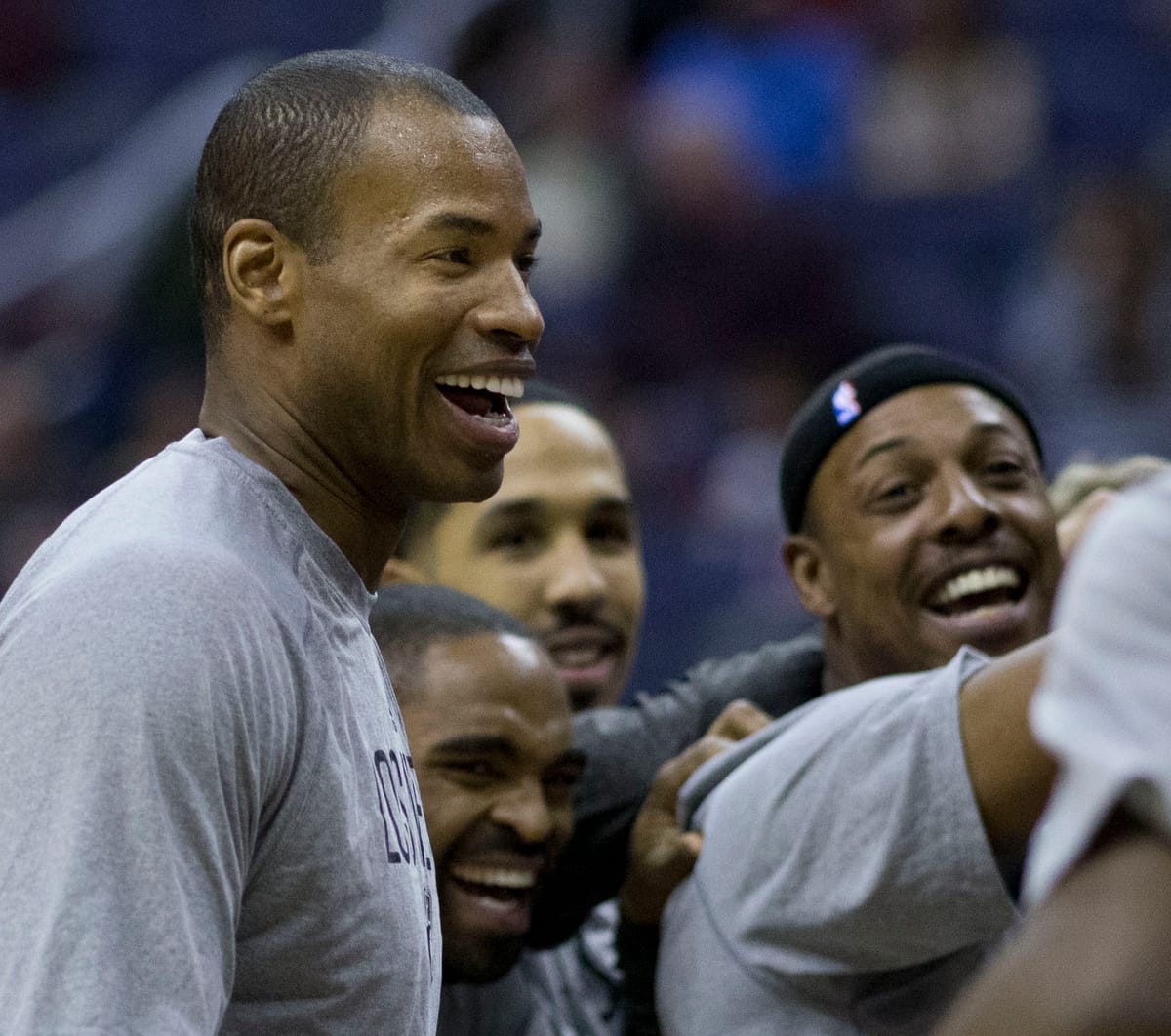
Jason Collins, the first openly gay active player in the four major North American men's professional sports leagues, has died at age 47. The NBA announced Collins' death on Tuesday in a statement released on behalf of his family. Collins had been undergoing treatment for Stage 4 glioblastoma — one of the most aggressive forms of brain cancer — since his diagnosis last summer. He died at his home in Los Angeles, surrounded by his family.
The 2013 cover
On April 29, 2013, Collins came out in a first-person essay published by Sports Illustrated. The headline on the May 6 print cover read "The Gay Athlete." He was a 34-year-old veteran center who had just finished a season split between the Boston Celtics and the Washington Wizards. He was a free agent. He did not know if any team would sign him.
That essay was the line. Before April 29, 2013, no active player in the NBA, NFL, MLB, or NHL had ever publicly come out as gay. After, the math of what was possible for a queer professional athlete in American team sports was different. President Barack Obama called Collins to express his support. Steve Nash posted publicly. Kobe Bryant did. The reaction wasn't unanimous, and it wasn't simple. But the door he opened did not close again.
He signed with the Brooklyn Nets in February 2014 on a 10-day contract, then a second one, then a deal for the rest of the season — and in his first game back, against the Lakers in Los Angeles, he became the first openly gay athlete to play in a regular-season game in any of the four major American leagues. He wore No. 98, in honor of Matthew Shepard, the gay college student murdered in Wyoming in 1998.
The career, before and after
Collins played 13 NBA seasons as a journeyman center — New Jersey Nets (twice, including after the move to Brooklyn), Grizzlies, Timberwolves, Hawks, Celtics, and Wizards. He was drafted 18th overall in 2001 by the Houston Rockets out of Stanford, then traded to New Jersey, where he started for two consecutive NBA Finals teams in 2002 and 2003. His best statistical season came in 2004-05: 6.4 points and 6.1 rebounds. His value was always the unglamorous kind — defense, screens, fouls to spare, the kind of veteran center coaches keep around because winning playoff games sometimes requires somebody to give Shaquille O'Neal six hard fouls.
He retired in November 2014, a year after coming out. He spent the subsequent decade as an NBA Cares Ambassador and as one of the league's most consistent public voices on LGBTQ inclusion in sports.
The Silver statement
NBA Commissioner Adam Silver, in a statement released through the league: "Jason's impact and influence extended far beyond basketball as he helped make the NBA, WNBA and larger sports community more inclusive and welcoming for future generations. He exemplified outstanding leadership and professionalism throughout his 13-year NBA career and in his dedicated work as an NBA Cares Ambassador."
The personal
Collins married Brunson Greene in Austin, Texas, in May 2025 — roughly three months before he began experiencing the symptoms that led to the glioblastoma diagnosis. He spoke publicly in December 2025 about being in treatment and was characteristically direct: he wanted other people facing the same diagnosis to know what the experience was like. He spent the months after with his husband, his twin brother (former NBA player Jarron Collins), and his extended family.
The cultural significance of 2013's "Why NBA center Jason Collins is coming out now" is hard to overstate now, thirteen years on. The American sports calendar has its open conversations about identity, inclusion, and visibility because somebody had to go first. Collins did. He played one season in the league afterward. He lived eleven more years. He was 47.



Comments