
June 7–13, 2026 · The week capital moved to own what can't be reproduced.
This Week
One trade ran through every vertical this week: the bet on scarcity. Anthropic and OpenAI filed to take frontier AI public while SpaceX priced the largest IPO in history — three companies asking the market to capitalize the value of capability no one else can build. On the same days, Barry Diller moved to take MGM Resorts private, the Knicks ended a 53-year championship drought, and a Nike collaborator capped a sneaker at 300 pairs. Different markets, one logic: in 2026, value accrues to the irreproducible — and capital, public and private, is racing to lock it up before someone else does.
Sneakers — What Dropped, What It Means
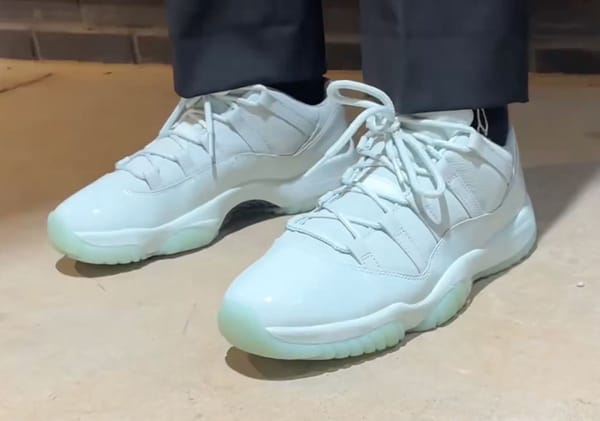
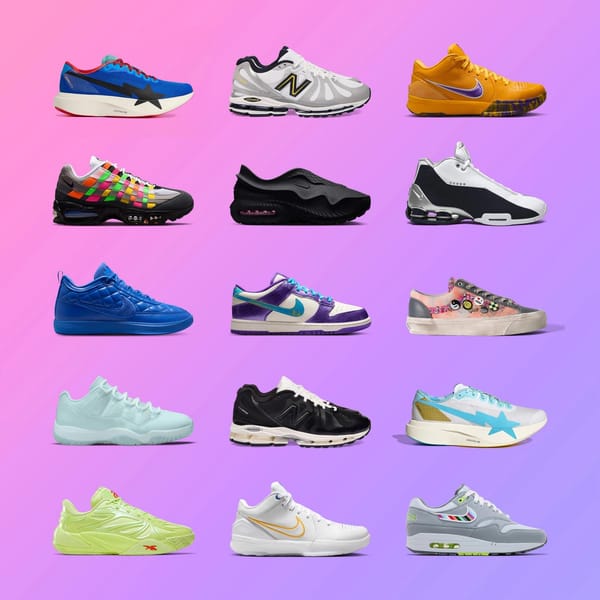
The week's most instructive sneaker story wasn't a flagship retro — it was a math problem. The Ducks of a Feather x Nike Air Max 1 "Tokyo" arrives June 28 limited to 300 pairs, scarcity engineered at the point of design rather than discovered after the fact. Contrast that with the volume plays: Bad Bunny's adidas BadBo 1.0 "Night Navy" ($160, September 15) and the Nike Air Max 1 City Connect "Kansas City Royals" ($150) are built to sell through, not sell out.
The real movement was in signature equity. Kelsey Plum left Under Armour for adidas Basketball after four years, the latest defection in a quiet land grab for athletes whose names carry their own audience. And The Broken Arm's Salomon Savát (June 16) confirms the fashion-house pipeline into technical footwear is now a permanent channel, not a novelty.
For a brand strategist, the lesson isn't which shoe to buy — it's that the industry has split its scarcity into two instruments: capped production runs that manufacture resale tension, and athlete signatures that buy a pre-built fan base. The brands aren't selling shoes. They're selling the two things that can't be copied: a number and a name.
Sports — The Business Behind the Game
The Knicks won their first NBA title since 1973, and the business story is the drought itself. Mike Brown delivered it in his first season after replacing Tom Thibodeau — a coaching swap that just minted franchise value no free agent could. The proof is in the ratings: Game 4 drew 20.9 million viewers, the most-watched Game 4 since 1998. A title that fans waited 53 years for is, by definition, a scarce asset — and the market for attention paid accordingly.
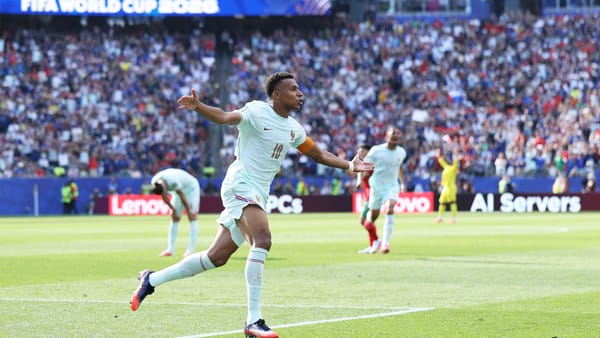
The summer's commercial engine is now running. The 2026 World Cup kicked off June 11, host Mexico opening the tournament against South Africa at Estadio Azteca. A day later the USMNT opened its home campaign with a 4–1 win over Paraguay at SoFi Stadium under Mauricio Pochettino — a statement result that turns the next month of group play into appointment viewing for American advertisers. And the WNBA's draw machine kept humming — Caitlin Clark posted her third 30-point, 10-assist game in a 114–106 Fever win over the Sky.
One to file for next week: the Wizards hold the No. 1 pick entering the June 23 draft. The scarcest asset in a rebuild isn't a star — it's the optionality to choose one first.
Tonight is the payoff: the Knicks can clinch in Game 5 at San Antonio (8:30 PM ET, ABC). See our full Games to Watch for Saturday, June 13, with the live slate and status at watch.uristocrat.com.
Culture — What's Moving and Why
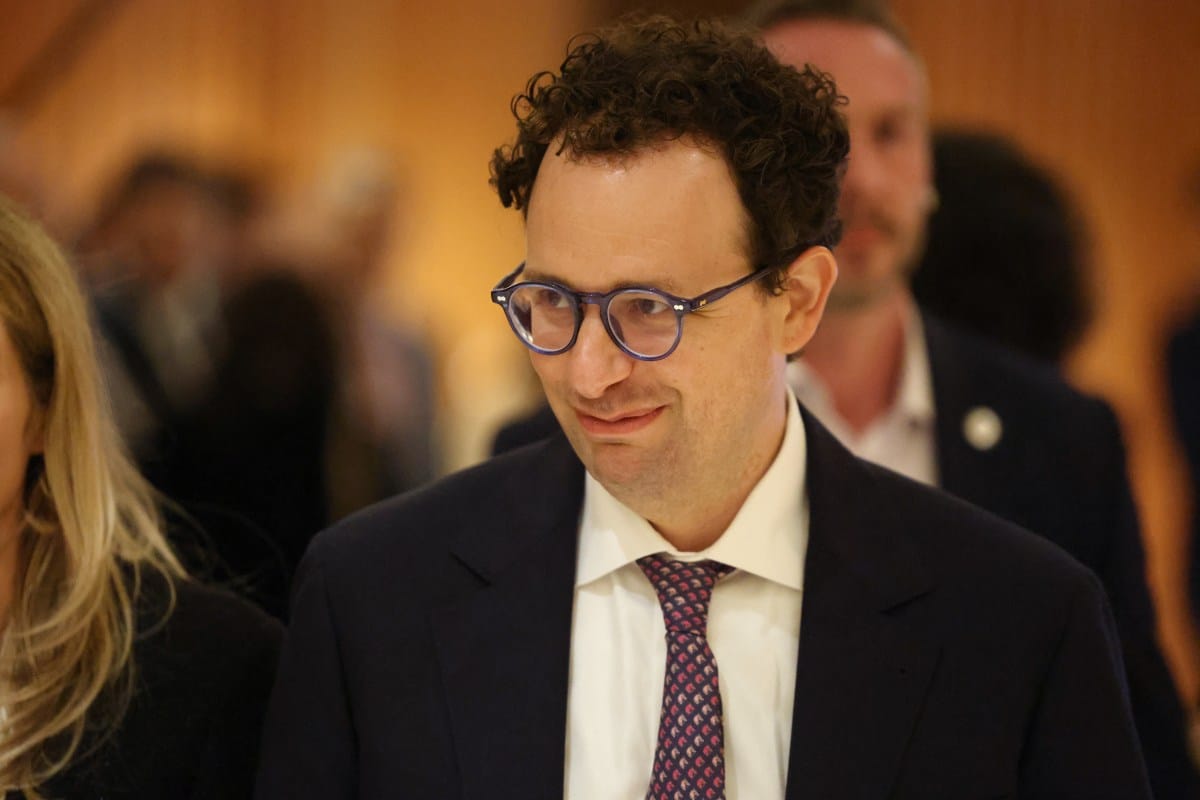
The most revealing culture story is a financial one. Barry Diller's People Inc. offered to buy the rest of MGM Resorts at an $18 billion valuation — $48.30 a share for the 24.9% it doesn't already own, taking controlling ownership of an irreplaceable Las Vegas footprint. Read it against the AI IPOs and the symmetry is the point: while new-economy founders rush to sell scarcity into public markets, an old-media operator is paying a premium to pull an irreproducible asset out of them. Same trade, opposite direction.
Scarcity showed up in soft power, too. NYC and Mayor Zohran Mamdani unveiled $50 World Cup jerseys handmade in Brooklyn — a deliberate bet that "made here, in limited supply" beats mass-produced licensing for a global audience. And HBO dropped the trailer for Larry David and Barack Obama's "Life, Larry, and the Pursuit of Unhappiness," a casting coup that exists because the pairing is, quite literally, unrepeatable. And yesterday's New Music roundup — Blxst, Rhye, and Joey B — covers everything else worth hearing this week.
On Your Radar — Apply This to Your Week
For investors watching the IPO window: SpaceX priced at $135 and listed as SPCX — the first of the trillion-dollar cohort to actually trade. Whether it holds above its offer price over the next two weeks is the real tell for how the market will price Anthropic's $965B and OpenAI's $1T+ filings. Watch the aftermarket, not the headline valuation.
For anyone modeling AI risk: The U.S. ordered Anthropic to disable Claude Fable 5 and Mythos 5 three days after launch, barring access for any foreign national — employees included. The single scarcest asset in the stack was switched off overnight by the state. If you're underwriting an AI bet, sovereign risk now sits inside the model layer, not just the supply chain.
For brand strategists: The Plum-to-adidas move is a template, not a transaction. When you pitch endorsement spend this quarter, price the athlete's portable audience as the asset — the name travels; the logo it sits next to is interchangeable.
For sneaker investors: The Ducks of a Feather Air Max 1 "Tokyo" at 300 pairs (June 28) is a clean scarcity experiment. Track its resale premium in the first 30 days to calibrate what an engineered-scarce collab actually clears in this market.
The Uristocrat Take
This was a scarcity-trade week in both directions. Anthropic, OpenAI, and SpaceX are capitalizing the value of what only they can build; Diller is paying $18 billion to take an irreplaceable asset off the public market entirely; the Knicks converted a 53-year drought into the most-watched Game 4 in a generation; and sneaker brands are manufacturing scarcity by the pair. The throughline is that in 2026, the premium isn't on growth — it's on the un-copyable. But this week added the asterisk that makes the whole trade interesting: when Washington disabled Fable 5 and Mythos 5 overnight, it proved that the scarcest asset is also the most exposed one. Scarcity is a moat until it becomes a target. Watch which way that cuts as the IPO cohort prices.
Recent From Uristocrat
- The Daily Roundup — June 12, 2026: Knicks take 3–1 Finals lead, Nike Air Diamond Turf 2 "Royals," Olivia Rodrigo's third album, and Anthropic's $965B IPO filing.
- The Daily Roundup — June 11, 2026: World Cup opens at Estadio Azteca, Stanley Cup Final Game 5, Converse SHAI 001 "Steel," and SpaceX's record IPO.
- The Daily Roundup — June 10, 2026: Willy Chavarria's adidas Mexico drop, Knicks-Spurs Finals Game 4, Shakira and Burna Boy's World Cup opener, and the AI IPO supercycle.
- The Daily Roundup — June 9, 2026: Nike SB's "Flax" Air Force 1, Knicks-Spurs Game 4, Michael Jackson's "Michael" goes digital, and OpenAI's IPO filing.
- The Daily Roundup — June 8, 2026: Apple rebuilds Siri on Gemini, the Knicks eye a Finals sweep, Nike's Cryoshot collab drop, and Scary Movie's $55M record.
The Intelligence Brief publishes every Saturday. All stories in full at uristocrat.com. If this was useful, send it to someone who'd say the same.
Comments