
May 3 – May 9, 2026 · The week the maturity premium became a category.
This Week
Anthropic crossed OpenAI on annualized revenue for the first time. JPMorgan reclassified AI as core infrastructure. The Met Gala raised a record $42M on the back of a Beyoncé return ten years in the making. Across every vertical, the operators winning this week stopped chasing reach and started compounding trust.
Sneakers — What Dropped, What It Means
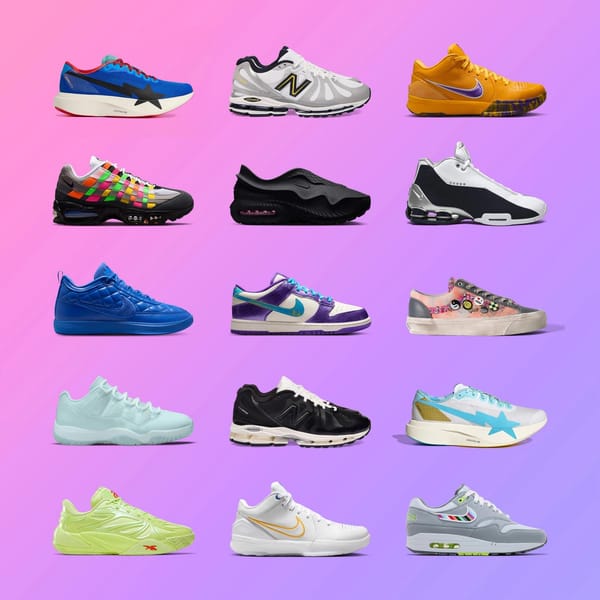
The most important drop of the week was the Nike Air Max 95 OG "Slate" Big Bubble ($190, May 7) — the first time the original 1995 colorway has been retroed in its proper Big Bubble tooling. The Slate has only retroed twice before (2005, 2015), and both prior runs used the modern smaller Air unit. The cultural read isn't nostalgia. It's that Nike's archive program has quietly become a pricing tier: the same model, with original tooling, is now positioned as a different product. Every prior Slate retro is now an inferior version of itself.
Two other releases ran on the same logic. Nigo and Jun Takahashi's "Last Orgy 2" Air Force 1 dropped May 2 — a 22-year sequel to a 2003 Bape/Undercover collaboration, sold quietly, no scaled hype. Beams Plus pulled original 1940s US Navy lasts out of Sperry's archive for the MIL-CVO. In both cases the value isn't novelty — it's fidelity to a founding-era artifact, executed by parties who can credibly claim lineage.
The thing a brand strategist couldn't get from a release blog: every meaningful drop this week was archive-led, and the premium being collected is for tooling fidelity, not silhouette innovation. If your client's footwear strategy still treats the calendar as "new model vs. retro," the category has moved past you. The retro itself is now segmented.
Sports — The Business Behind the Game
Victor Wembanyama posted 12 blocks in Game 1 against Minnesota — the most in any playoff game since the NBA began tracking the stat in 1973-74 — and the Spurs lost 104-102. Two days later San Antonio erased Minnesota by 38 points in Game 2, the largest playoff loss in Wolves franchise history. The structural read: a generational defender's signature game is now embedded inside a team-recalibration story. Wemby's brand assets get more interesting, not less, when his teammates stop being optional context.
Anthony Edwards came off Minnesota's bench in Game 1 with 18 points after a knee injury, the same window the adidas AE1 "Believe That" debuted on-court. Whether the timing was coordinated or coincidental, it's now the bar for signature-line retail rollouts: the on-court moment is the launch event, and brands without that calendar discipline are paying for media that lands too early or too late.
The 2026 playoffs have produced the biggest scoring nosedive of the modern era. The decade-long pace-and-space narrative — and every product built on top of it (sportsbook prop velocity, fantasy formats, broadcast graphics) — is now misaligned with the on-court reality. Sponsorship decks pitched on "more possessions, more eyeballs" need a structural rewrite this offseason.
Culture — What's Moving and Why
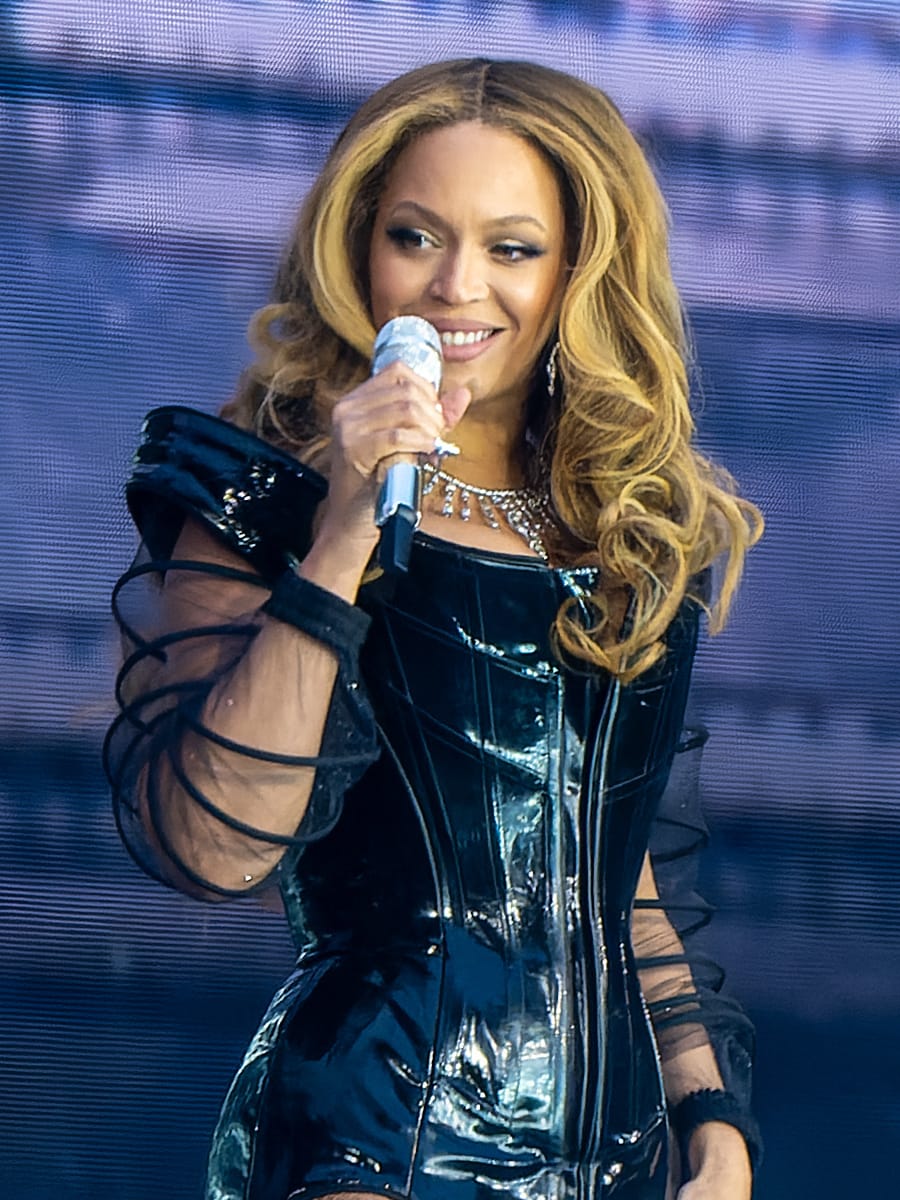
The 2026 Met Gala raised a record $42M for the Costume Institute, up from $31M in 2025. Beyoncé returned as a co-chair after a decade away — alongside Anna Wintour, Nicole Kidman, and Venus Williams — in crystalline Olivier Rousteing armor. Bad Bunny showed up in prosthetic aging makeup as a tribute to Johnny Pacheco, the Fania Records co-founder who built the architecture of New York salsa. Both gestures are doing the same work: the biggest rooms in fashion are now being earned by artists who refuse to optimize for the algorithm. The exhibition theme — "Costume Art" — was answered by absence (a decade of withholding) and by lineage (a tribute to a 1960s Dominican flutist), not by reach.
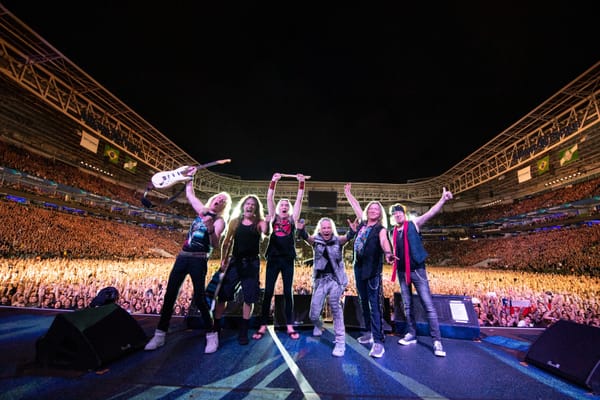
The Rolling Stones launched their 25th studio album "Foreign Tongues" at a Brooklyn release event ahead of a July 10 drop — sixty-plus years into the franchise, the rollout treats the record like a museum opening. Drake, meanwhile, turned the ICEMAN rollout into a participatory art project across Toronto — the album release becomes a receipt for the city, not a chart play.
For a strategist briefing a client this week: the playbook is "earn the right to be slow." The acts who can credibly take a year — or ten — to deliver are the ones owning the room. Speed-to-market is no longer a moat at the top of the cultural pyramid; lineage is.
On Your Radar — Apply This to Your Week
For AI buyers: Anthropic's $30B annualized run rate has overtaken OpenAI's reported $25B for the first time, with sources telling TechCrunch the real number is closer to $40B (OpenAI's CRO disputed the comparison in an internal memo). If your enterprise procurement playbook still defaults to "OpenAI is the standard," reread your contracts. The category-leader question is genuinely contested for the first time since 2022.
For brand and product strategists: Sierra hit $150M ARR in eight quarters with 40%+ Fortune 50 penetration — at a $15.8B post-money valuation. The benchmark for "real AI traction" is no longer demos or model benchmarks; it's enterprise procurement velocity. Update your client diligence questions accordingly: which Fortune 500 contracts have been signed, what's the time-to-deployment, what's the renewal rate.
For sneaker investors: The Air Max 95 Big Bubble "Slate" is the test case for the archive-fidelity premium. Watch the 30-day resale curve. If a first-ever Big Bubble retro of an OG colorway holds 1.5x retail or better, Nike's archive program just became its most predictable revenue line — and every "10th Anniversary," "20th Anniversary," and "OG colorway" SKU in the calendar gets repriced.
For anyone at a financial institution: JPMorgan's $19.8B 2026 tech budget reclassifies AI spend as "core infrastructure" — plumbing, not project. If your firm still has an "AI initiative" that reports separately to the board, you're behind. The org-design implication: AI ROI is no longer a line on a deck. It's the operating expense baseline.
The Uristocrat Take
The maturity premium is a real category now. In AI, the company with the cleaner enterprise sell crossed the company with the louder consumer brand. In culture, the artists who refused to overproduce — Beyoncé taking a decade, the Stones taking three years, Bad Bunny showing up old — collected the biggest rooms of the year. In sneakers, the meaningful drops weren't new models; they were archive releases priced on origin-tooling fidelity. In sports, the playoff scoring chart finally caught up to the on-court reality, and every brand pitched on a decade-old narrative is now misaligned.
Every category is rewarding the same posture: build the infrastructure, honor the lineage, earn permission slowly. The operators who'd been working that way before this week look prescient. The operators who hadn't are about to learn what attention compounds into when it isn't backed by infrastructure. Watch the next 30 days of resale data, the next earnings cycle, and the next round of "AI strategy" decks. Maturity has stopped being a soft signal and started showing up on the comp sheet.
Recent From Uristocrat
- May 8 — WNBA 30th Anniversary Pack, Wembanyama vs. Wolves, Mortal Kombat II, OpenAI's $25B Run Rate
- May 7 — adidas AE1 "Believe That" Debut, Pistons-Cavs and Thunder-Lakers Game 2s, Sierra's $950M Round
- May 6 — BAPE STA "Day & Night," Knicks-76ers Game 2, Cerebras' $26.6B IPO Filing
- May 5 — Patta x Nike Mercurial Vapor 16 "Waves," Lakers-Thunder Game 1, Met Gala "Fashion Is Art," Sierra's $950M Round
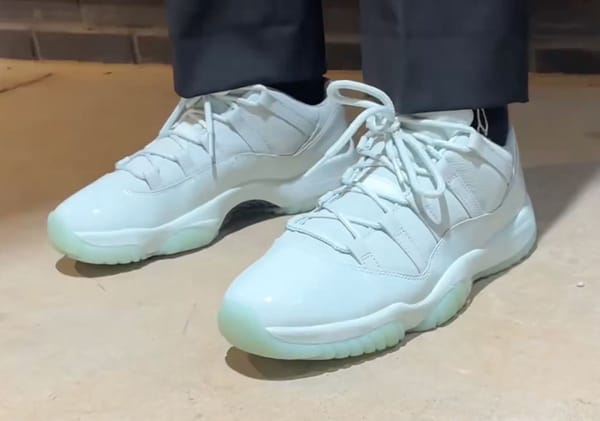
- May 3 — Air Jordan 11 Low "Mother's Day," Two NBA Game 7s, "The Devil Wears Prada 2" $233M Open, Anthropic at $30B
The Intelligence Brief publishes every Saturday. All stories in full at uristocrat.com. If this was useful, send it to someone who'd say the same.
Comments