
May 24–30, 2026 · The week capital stopped building and started buying proven identity
This Week
The most expensive thing in the market right now is not talent, attention, or distribution — it is legitimacy that already exists. This week, the biggest moves in every vertical were acquisitions of proven identity rather than attempts to build new ones: Anthropic raised at a valuation that priced the category position of frontier AI, Tilman Fertitta paid $300 million to resurrect a dormant dynasty's name, Shein bought a brand it could never have manufactured, and Jordan Brand ran a release calendar that was, functionally, a heritage-licensing business. When building is cheap, trust is the scarce asset — and this was a week of people paying full price for it.
Sneakers — What Dropped, What It Means
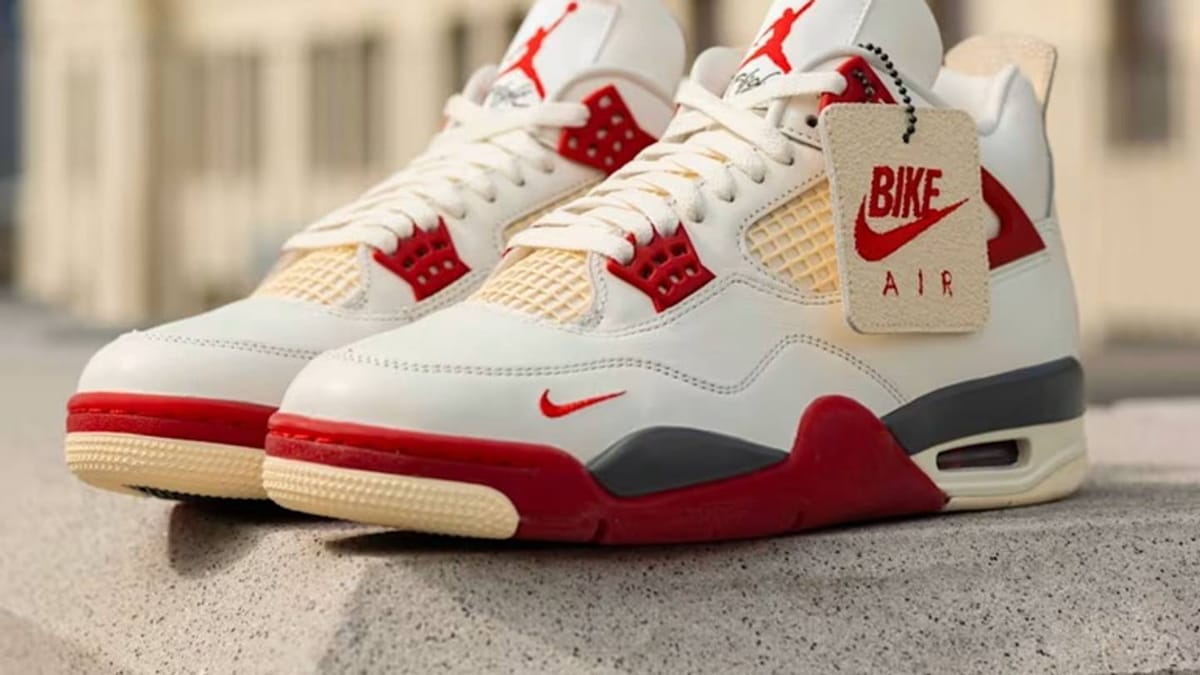
Jordan Brand owned the week, and it did so almost entirely on memory. The Travis Scott Air Jordan 1 Low OG "Pink Pack" arrived May 29 in two colorways at $155 each — the headline drop — followed a day later by the Air Jordan 4 "Toro Bravo" ($220), a 2013 retro reissued untouched, and bracketed by the Air Jordan 12 "Bloodline" ($215) on May 23. Three of the week's marquee releases were retros or a collaborator's spin on a heritage silhouette. The Travis Scott premium isn't about the shoe; it's about borrowed identity — Jordan Brand renting Scott's cultural equity onto its most recognizable last.
The counter-model showed up the same week. Veja and Misci's Paulistana Nolyn, built in pirarucu fish leather at €290, sold novelty — a material story, not a memory. And Nike's Air Foamposite Pro "Gym Red" ($240) split the difference: a heritage mold revived on demand. For a brand strategist, the system is the lesson — Jordan Brand has quietly become a catalog business that monetizes proven colorways at scale, while the growth experiments (Veja's materials, niche collabs) carry the innovation risk. Heritage is the annuity; novelty is the venture bet.
Sports — The Business Behind the Game
The clearest expression of the week's thread came from the WNBA. The league approved Tilman Fertitta's $300 million purchase of the Connecticut Sun, who will relocate and re-emerge as the Houston Comets — the franchise name that won the first four WNBA championships before folding in 2008. Fertitta didn't buy a roster; he bought a dormant dynasty's brand equity and a city's unfinished history. In a league adding expansion teams, reviving a proven name is the more defensible play than minting a new one.
On the court, scarcity drove value too. The Knicks reached the NBA Finals for the first time since 1999, sweeping Cleveland, while the Thunder and Spurs settle a Game 7 tonight — the rarest, most monetizable event in the sport. In the NHL, the Carolina Hurricanes (12–1 this postseason) face the Vegas Golden Knights in a Cup Final opening June 2. And the player market kept pricing proven security: Derwin James signed a three-year, $75.6 million extension with the Chargers, Aaron Rodgers said 2026 will be his final season, and Liverpool parted with Arne Slot after a fifth-place finish. The throughline for anyone building brands around sports: a Knicks Finals run, a revived Comets, a star's farewell tour — the inventory that commands premium money is the inventory with a story already attached. (Our Games to Watch tracks the slate nightly.)
Culture — What's Moving and Why
Fast fashion bought its conscience. Shein acquired Everlane for roughly $100 million — a transaction that makes no sense as a supply-chain move and total sense as a legitimacy purchase. Shein cannot manufacture the "radical transparency" reputation Everlane spent a decade building; it can only buy it. Expect Everlane to operate as a credibility front while Shein absorbs the trust premium. For brand strategists, this is the acquisition playbook of the year: when your reputation is the liability, you don't rehabilitate it, you buy a clean one.
At the top of the market, the same logic ran through Christie's. Jackson Pollock's "Number 7A, 1948" sold for $181.2 million, a record for the artist — blue-chip identity functioning as a store of value, the art-market equivalent of buying the franchise. In music, the release calendar leaned the other way: Kacey Musgraves returned with "Middle of Nowhere" and a wave of legacy acts re-emerged, a reminder that even in culture, the safest bet is a known name with audience already attached.
Technology — The Franchise Trade
The defining number of the week was a valuation. Anthropic announced a $65 billion Series H at a $965 billion valuation — surpassing OpenAI's $852 billion and nearing the trillion-dollar line — on a reported $47 billion revenue run rate, up from $30 billion earlier this year. Strip away the AI framing and this is a franchise trade: investors paying a premium to own the category-leadership position, the same instinct that drove Fertitta to the Comets and Shein to Everlane. Meanwhile OpenAI is preparing a confidential IPO filing, potentially going public as soon as September — the public-market version of cashing in an established identity. Lower down the stack, Decart raised $300 million at nearly a $4 billion valuation, proof the capital is still flowing to challengers — but the headline dollars went to the incumbents whose legitimacy is already priced in.
On Your Radar — Apply This to Your Week
For brand strategists: Shein–Everlane is the template for the legitimacy acquisition. If a client's brand carries a reputation liability, model the cost of buying credibility (acquire a trusted smaller brand and run it semi-independently) against the cost of rehabilitating their own. This week says the market increasingly prefers the former — and so should your deck.
For sneaker investors: Watch the 30-day resale spread on the Travis Scott AJ1 Low "Pink Pack" versus the untouched "Toro Bravo" retro. The gap will tell you what the market is actually paying for — borrowed celebrity equity or pure nostalgia. If the plain retro holds its premium, heritage alone is still the safer store of value.
For anyone pitching, raising, or repositioning: Anthropic's number reframes the bar. The premium is no longer for the best product; it's for the defensible position. Before your next raise or pitch, answer one question in a sentence: what proven identity do you own that a competitor would have to buy rather than build? If you can't name it, that's the work.
The Uristocrat Take
Put the week's transactions side by side — Anthropic's franchise valuation, Fertitta's resurrected Comets, Shein's purchased conscience, Jordan Brand's heritage calendar, a $181 million Pollock — and one structure emerges: in a market where anyone can build, manufacture, or model almost anything, the only durable scarcity left is proven identity. Capital has noticed. It is no longer paying the biggest premiums to create; it is paying them to own what's already trusted. The signal worth watching into June: as OpenAI moves toward its IPO and expansion-era leagues keep minting new teams, who chooses to build a fresh identity from zero — and whether the market still rewards them for it, or quietly marks them down for not just buying one.
The Intelligence Brief publishes every Saturday. All stories in full at uristocrat.com. If this was useful, send it to someone who'd say the same.

Comments