

April 26 – May 2, 2026 · The week the infrastructure layer won.
This Week
Across every vertical we cover, this was the week the surface-level moment lost to the structural buildout underneath it. Brad Stevens won Executive of the Year not for a splashy trade but for engineering a roster under the second apron. Nike did not give Patta a shoe — it gave them an entire World Cup federation kit. Jay-Z was canonized by the New York Times for a four-decade catalog. And Big Tech committed $700 billion in 2026 AI capex with no clear ceiling. Every story this week rewarded depth that compounds, not virality that decays.
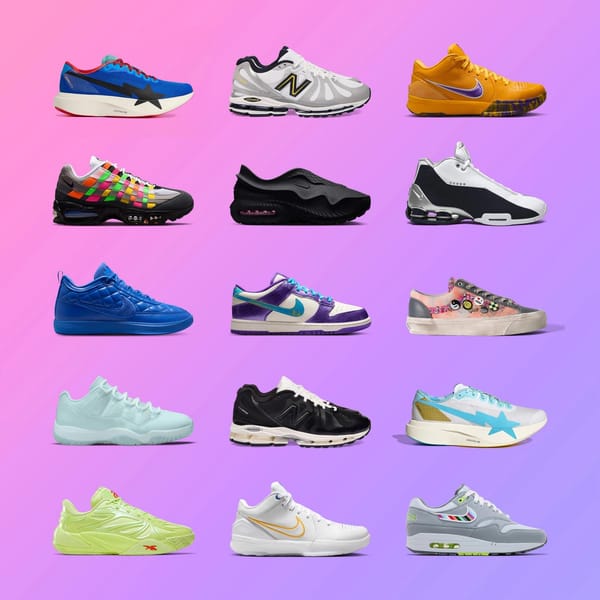
Sneakers — What Dropped, What It Means
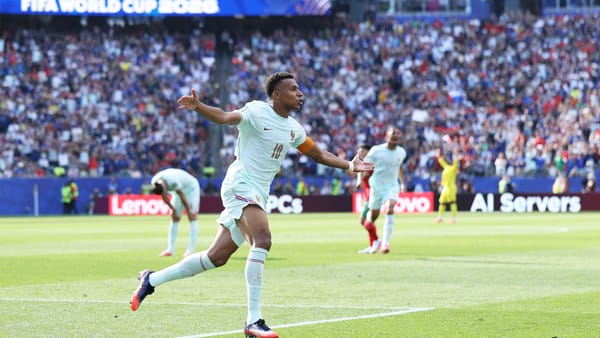
The week's most important sneaker story was not a sneaker. It was the Nike x Patta Netherlands World Cup collection — apparel, anthem jacket, and the "Cryoshot" Mercurial 98 boot dropping May 5 ahead of the World Cup, modeled by Virgil van Dijk. Patta has been a Nike collaborator for years; what changed this week is the unit of work. They were handed a federation, not a colorway. That is the structural escalation: streetwear partners are now trusted with national identity at the highest-visibility sporting event on the planet. If you are a brand strategist evaluating culture deals, the Patta-Holland template is the new ceiling — and it explains why every category leader is racing to build legitimacy with a single, coherent partner instead of laundering credibility across ten micro-collabs.
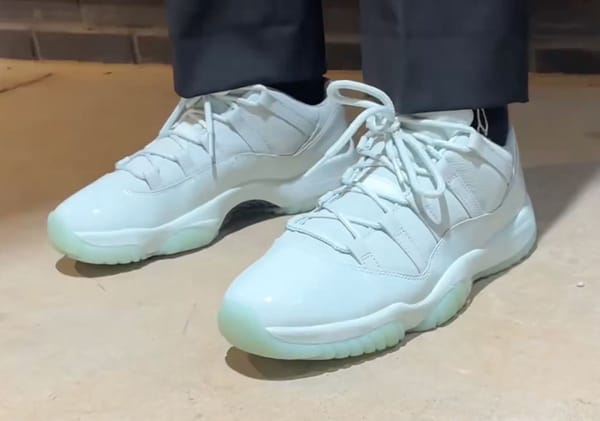
The other release that mattered is the Kobe 3 Low Protro "Mambacita", dropping May 1 — Gigi Bryant's birthday. Vanessa Bryant's Mambacita Sports Foundation is the beneficiary. Compare this to the standard "Mamba Day" April 13 release rhythm: this is a release calendar that maps to a family's actual life, not a marketing quarter. The same structural choice runs through the Air Jordan 6 "Cap and Gown" dropping into graduation season — Jordan Brand has quietly built the most reliable life-event sneaker calendar in the category, and it pulls premium because it shows up when you actually need it. The lifestyle release is also a system: the Air Max 90 "Coconut Milk and Deep Royal" is exactly the spring color rotation Nike has now operationalized at scale.
The thing a brand strategist could not get from a release calendar: the sneaker business is shifting from drop frequency to release-calendar architecture. The brands that win the next 24 months are the ones that map their drops to real-life moments — graduation, Mother's Day, Gigi's birthday, the World Cup — instead of arbitrary Thursdays.
Sports — The Business Behind the Game
The single most important sports story of the week was institutional, not on-court. Brad Stevens won NBA Executive of the Year — his second time in three years — for cutting the Celtics' tax bill from above the second apron all the way out of the luxury tax entirely while still finishing 56-26 with the second-best record in the East. He traded Jrue Holiday and Kristaps Porzingis, let Luke Kornet and Al Horford walk, played a season without Jayson Tatum (Achilles), and the team still won at a 56-win pace. That is the post-apron playbook, and the rest of the league now has to copy it. The new CBA was supposed to penalize spending; Stevens just proved that engineering depth is a more durable competitive advantage than payroll.
The structural sports business story that compounds: San Antonio is back in the Western Conference Semifinals for the first time since the night they lost Kawhi Leonard — eight years of rebuilding rewarded in a single series. The Wembanyama-era Spurs are not just a feel-good story; they are proof that patient asset accumulation under a stable front office still beats franchise reinvention by trade. Meanwhile the Pistons-Magic series and the Lakers-Rockets series are both writing the kind of "first-round Game 7" history that distorts narrative for the rest of the playoffs — and the Knicks-Hawks series turned on a 34-point-per-100 swing tied to KAT's minutes, the kind of analytics-driven coaching adjustment that used to be a footnote and is now the headline.
Frame for brand strategists: every meaningful sports outcome this week was driven by long-horizon institutional decisions, not stars in their prime. If you are pitching sports partnerships, the front office is the new face of the franchise.
Culture — What's Moving and Why
Two cultural moments this week sit on the same axis. Jay-Z made the New York Times' 30 Greatest Living American Songwriters — a list compiled with input from 250+ music insiders — and Pusha T wrote the tribute. The signal is not that Jay-Z is great. The signal is that the institutional canon (the New York Times, of all venues) has fully absorbed hip-hop into the American songwriting tradition, and that the canon-writers chose another rapper to do the placing. That is two layers of legitimacy in one paragraph. For anyone building cultural businesses, this is the proof point that the canon now travels through hip-hop, not around it. Kendrick, Outkast, Missy Elliott and Young Thug also made the list; the genre is no longer arguing for inclusion.
The second is fashion-as-marketing. Lady Gaga and Doechii's runway-video moment functioned as the actual opening statement for The Devil Wears Prada 2 — a film studio borrowing music-industry visual grammar to launch a sequel. Note the inversion: in 2006, the original film made the magazine the lead character. In 2026, the marketing apparatus around the film makes the artists the lead. The center of cultural gravity has moved, and studios are now rotating their launch infrastructure around it.
What the strategist needs in their next client meeting: the institutional canon (NYT lists, museum acquisitions, awards bodies) is now the validating layer for hip-hop and pop culture, not the gatekeeping layer. If your brand is still positioning around the gatekeeper-vs-outsider story, you are five years late.
On Your Radar — Apply This to Your Week
For brand strategists pitching cultural partnerships: The Patta-Holland template is the new ceiling — full federation, single coherent partner, multi-product surface. If your deck is built around a one-off collab moment, restructure it around a sustained partnership unit. The clients writing the biggest checks in 2026 are buying programs, not impressions.
For anyone building or operating under cap-style constraints: Read the Brad Stevens Executive of the Year case as a management text. The takeaway is not "trade your stars." It is that engineering depth under a binding constraint is now scoring higher than maximizing for any one input. If you operate inside a budget, a headcount, or a runway, ask yourself which Holiday-and-Porzingis trade you have not made yet.
For anyone running a tech budget: The $700B Big Tech AI capex number means infrastructure access — compute, power, data center capacity — is the binding constraint of the next 24 months, not model quality. Google's TPU pivot and DeepSeek V4 Pro pricing pressure tell you the same thing from opposite ends. If you are budgeting AI tooling for 2026, lock in capacity contracts before procurement closes — not the cheapest model.
For sneaker investors: Watch the resale curve on the Kobe 3 "Mambacita" and the AJ6 "Cap and Gown" through Mother's Day. If life-event-aligned drops hold premium better than calendar-Thursday drops over the next 60 days, that is a quantifiable signal that Nike's release-architecture pivot is working — and the next 12 months of drop strategy across the industry will follow.
The Uristocrat Take
This week resolved the question of where competitive advantage is going to live for the rest of the decade. It is not in the moment. It is in the stack underneath the moment. Brad Stevens wins because of cap architecture. Patta wins because Nike trusts them with a federation. Jay-Z enters the canon because he built a four-decade catalog. Big Tech commits $700 billion because compute is the moat. Every winner this week was rewarded for what they built before the spotlight arrived.
The forward-looking signal worth watching: capital-intensive moats are quietly becoming the dominant structural story across categories that used to be considered creative or attention-driven. If you are building anything in sneakers, sports, culture, or tech right now, the question is no longer "what is your moment" — it is "what is your stack." The brief next week will be looking for the operators who answered correctly.
Recent From Uristocrat
- Daily Roundup — May 1, 2026: Kobe 3 "Mambacita" drops on Gigi's birthday, NBA Game 6 triple-header, and Apple's Gemini-powered Siri
- Daily Roundup — April 30, 2026: AJ6 "Cap and Gown" drops, NBA Game 6 closeout night, and Big Tech's $700B AI bet
- Daily Roundup — April 29, 2026: AJ3 WMNS "Orange Citrus", NBA Game 5 Wednesday, Devil Wears Prada 2 hits Friday, and Cursor's $50B round
The Intelligence Brief publishes every Saturday. All stories in full at uristocrat.com. If this was useful, send it to someone who'd say the same.
Comments